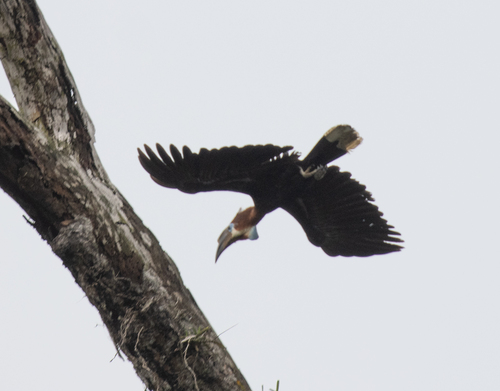
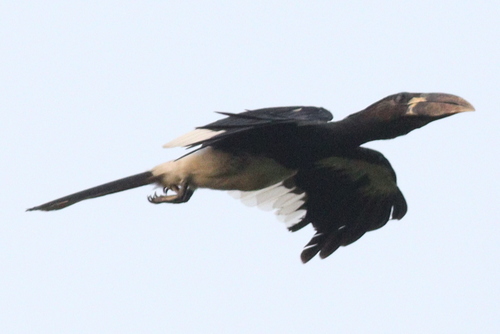
Olive Ibis

Olive Ibis

Bostrychia olivacea

Silhouette: Sheatherius · PhyloPic

LCLeast ConcernNTVUENCR
Daily sighting probability ~10% · With luck
at Taï National Park

In 3 days ~30% in a week ~50%

7 Verified sightings at Taï National Park From 2019 to 2026
7 In 1 park
April Best month
☀️ Diurnal When it's spotted

About the Olive Ibis

The olive ibis (Bostrychia olivacea) is a species of ibis native to dense tropical forests in central Africa. Between 65 and 75 cm in length, it is a small ibis with olive plumage displaying an iridescent sheen. Four subspecies are recognized.

Historically, the olive ibis was included in various genera such as Geronticus, Comatibis and Harpiprion before finally being classified among the Bostrychia. It is also related to the Madagascar crested ibis Lophotibis cristata and Geronticus ibises.

The dwarf olive ibis Bostrychia bocagei of São Tomé was also formerly considered to be a subspecies of the olive ibis, but is now classified as a separate species because of its considerably smaller body size and different morphology.

The various subspecies inhabit different regions of Africa and despite differences in size and colouration; they are still regarded as belonging to the same species. These individual subspecies probably formed by geographic isolation through expansive grasslands or seas that separate each subspecies... Wikipedia →


Sounds

Song0:22

Kenya · 2025

© isaac kilusu · XC1052291 · CC BY-NC-SA 4.0

Flight call0:09

Ivory Coast · 2024

© Raphaël Jordan · XC862619 · CC BY-NC-SA 4.0

Call0:30

Kenya · 2023

© Brendan Sloan · XC817083 · CC BY-NC-ND 4.0

Global Distribution

Parks Where Found

# Park Country Daily sighting probability
1 Taï National Park 🇨🇮 Ivory Coast
~10%

More parks will be added in future updates.

Before you go

What are the chances of seeing an Olive Ibis in Taï National Park?

With luck

About 10% of wildlife watchers report an Olive Ibis sighting in Taï National Park on a given day, based on 7 verified sightings from GBIF citizen-science data from 2019 to 2026. It is the 56th most-seen of the 74 birds we can rate there. Over three days the chance rises to about 30%, and over a week to about 50%, if each day is a fresh chance.

What time of day is best to see an Olive Ibis?

Between 5 and 8 am

Across all the parks we cover, that three-hour window holds the most Olive Ibis sightings with a recorded time, and about 8 in 10 of them come between 6 am and 6 pm: it is a daytime animal.

Where else can you see an Olive Ibis?

Only Taï National Park, in our data

Taï National Park is the only park on Wallace's Line with enough records to rate Olive Ibis sightings: about 10% of wildlife watchers there report one on a given day.

Where does the Olive Ibis sighting chance come from?

GBIF citizen-science records

It is estimated from how often the Olive Ibis is recorded against all the birds logged in Taï National Park (7 verified sightings from 2019 to 2026), calibrated against known sighting rates. Figures are rounded to the nearest 10% because citizen-science data supports honest approximations, not decimals, and months with records from fewer than five people show "—". How it works.

← Back to Taï National Park