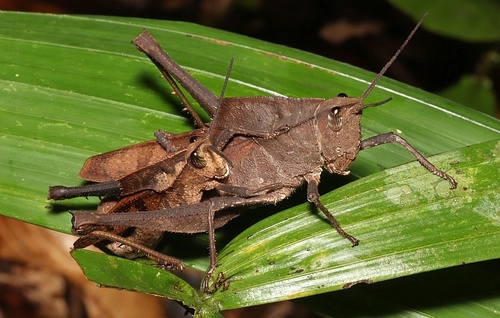
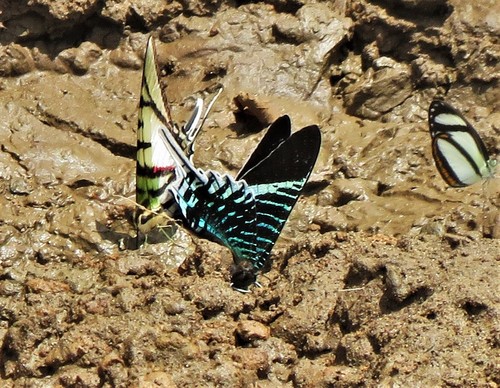
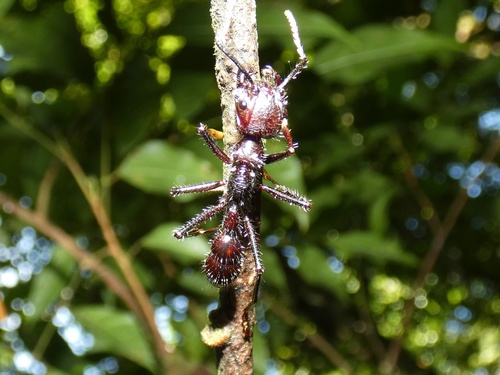
Pterochroza ocellata
Daily sighting probability ~10% · With luck
at Tambopata National Reserve

In 3 days ~30% in a week ~50%

10 Verified sightings at Tambopata National Reserve From 2019 to 2026
70 In all 4 parks
May Best month
🌙 Nocturnal When it's spotted

About the Pterochroza ocellata

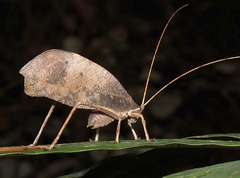
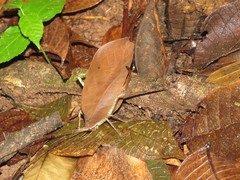
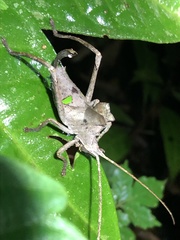
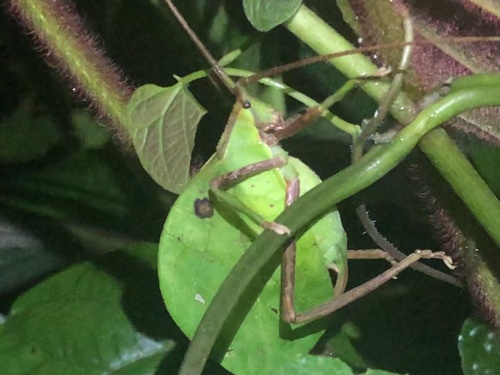
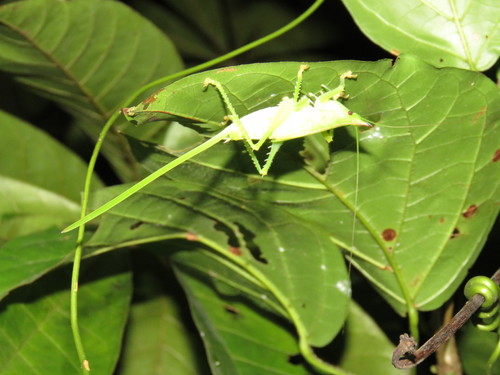
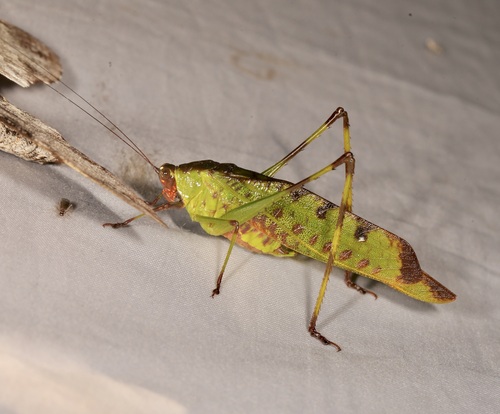
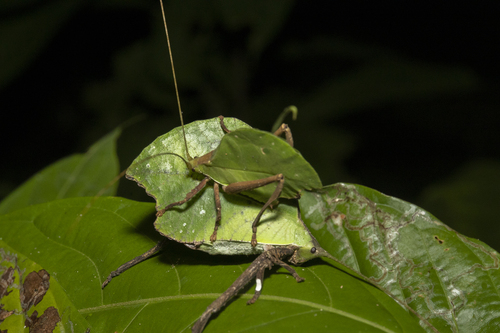
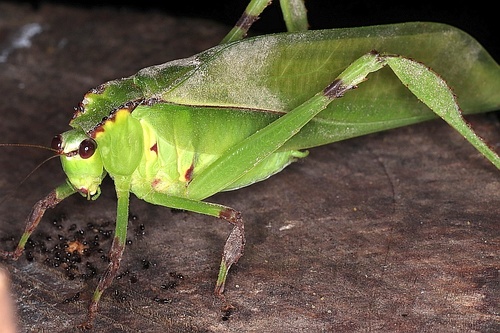
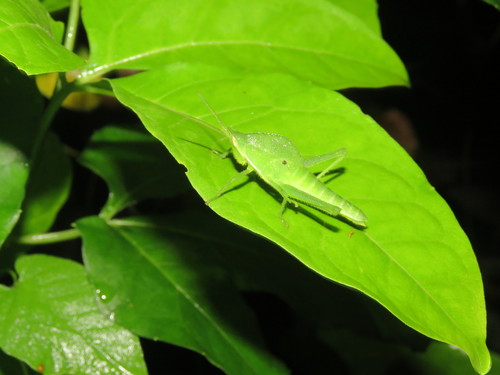
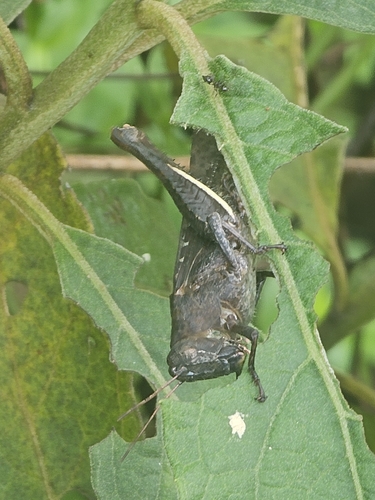
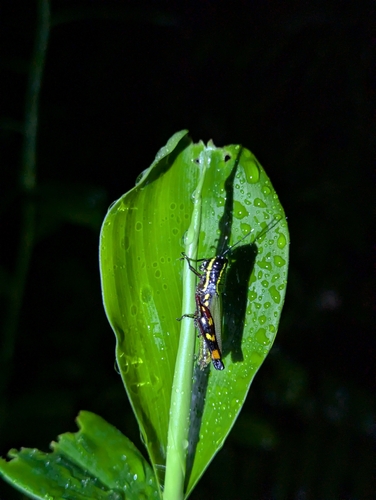
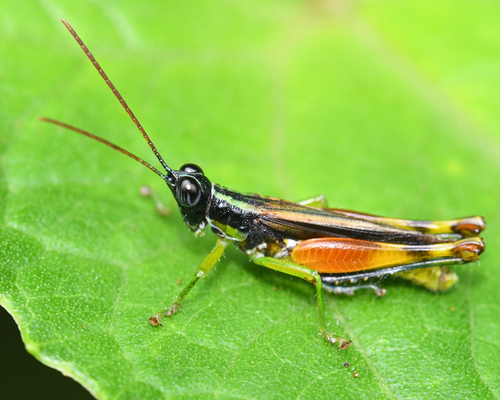
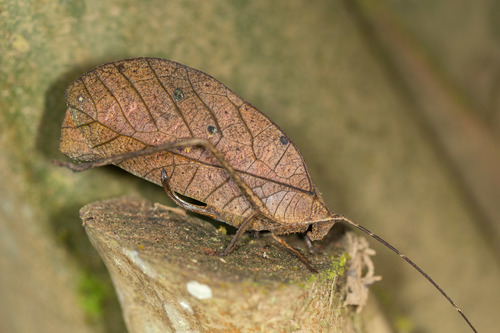
Pterochroza ocellata, the peacock katydid, is an insect in the family Tettigoniidae from the Amazon rainforest in South America. It is the only species in the genus Pterochroza. The species is a leaf-mimic katydid; when it is in repose its camouflage resembles a diseased or dead leaf. The katydid owes both its common name and its specific epithet (ocellata, meaning "marked with little eyes") to its startle display, in which it shows false eye spots on its normally hidden hind wings.

The adult Pterochroza ocellata is about 45mm to 65mm in length. In its protective camouflage it resembles a dried leaf. If in spite of its camouflage it is threatened, the katydid exposes its hind wings, displaying two conspicuous eye spots.

No two individual Pterochroza ocellata are identical in their color pattern or the shape of the wings; this reduces the risk that predators could learn to recognize a fixed visual pattern. As in all katydids, their organs of hearing, or tympana, are on their front legs just below the joint between the femur and the tibia. The antennae are long, even for Tettigoniidae, being two to three times the length of the body.

Pterochroza ocellata... Wikipedia →
Global Distribution

Parks Where Found

# Park Country Daily sighting probability
1 Cuyabeno Wildlife Reserve 🇪🇨 Ecuador
~30%
2 Manu National Park 🇵🇪 Peru
~20%
3 Yasuní National Park 🇪🇨 Ecuador
~10%
4 Tambopata National Reserve 🇵🇪 Peru
~10%

Before you go

What are the chances of seeing a Pterochroza ocellata in Tambopata National Reserve?

With luck

About 10% of wildlife watchers report a Pterochroza ocellata sighting in Tambopata National Reserve on a given day, based on 10 verified sightings from GBIF citizen-science data from 2019 to 2026. It is the 50th most-seen of the 141 insects we can rate there. Over three days the chance rises to about 30%, and over a week to about 50%, if each day is a fresh chance.

When is the best time to see a Pterochroza ocellata in Tambopata National Reserve?

May–June, August and December

In those months about 20% of wildlife watchers report a Pterochroza ocellata in Tambopata National Reserve on a given day, against under 5% in January–April and September–November, the lowest months.

What time of day is best to see a Pterochroza ocellata?

Between 7 and 10 pm

Across all the parks we cover, that three-hour window holds the most Pterochroza ocellata sightings with a recorded time, and about 8 in 10 of them come between 6 pm and 6 am: it is mostly seen at night.

Is Tambopata National Reserve the best place to see a Pterochroza ocellata?

4th of 4

Of the 4 parks where we can rate Pterochroza ocellata sightings, Tambopata National Reserve ranks 4th at about 10%. The best odds are in Cuyabeno Wildlife Reserve (Ecuador, about 30%), Manu National Park (Peru, about 20%) and Yasuní National Park (Ecuador, about 10%).

Which relatives of the Pterochroza ocellata live in Tambopata National Reserve?

Same family: Tettigoniidae

The closest relatives of the Pterochroza ocellata that you can see in Tambopata National Reserve (family Tettigoniidae, Katydids) are Roxelana crassicornis (about 10%), Copiphora gracilis (about 10%) and Euceraia sanguinea (about 10%), with each one's daily chance of a sighting.

Where does the Pterochroza ocellata sighting chance come from?

GBIF citizen-science records

It is estimated from how often the Pterochroza ocellata is recorded against all the insects logged in Tambopata National Reserve (10 verified sightings from 2019 to 2026), calibrated against known sighting rates. Figures are rounded to the nearest 10% because citizen-science data supports honest approximations, not decimals, and months with records from fewer than five people show "—". How it works.

← Back to Tambopata National Reserve