Whistling Grass Frog

Whistling Grass Frog

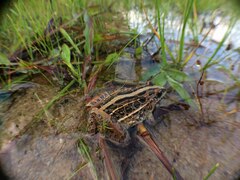
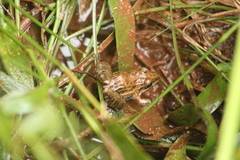
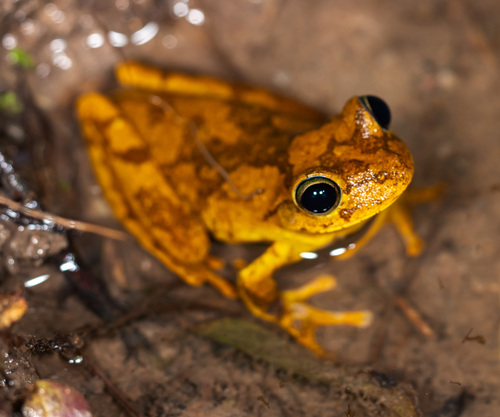
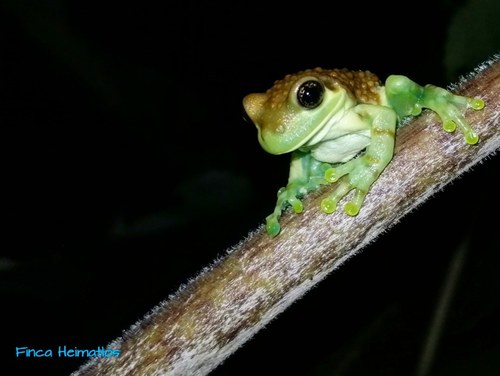
Leptodactylus fuscus

Silhouette: Jose Carlos Arenas-Monroy · PhyloPic

LCLeast ConcernNTVUENCR
Daily sighting probability ~20% · Possible
at Tayrona National Natural Park

In 3 days ~60% in a week ~90%

12 Verified sightings at Tayrona National Natural Park From 2019 to 2026
19 In all 2 parks
May Best month
🌙 Nocturnal When it's spotted

About the Whistling Grass Frog

Leptodactylus fuscus is a species of frog in the family Leptodactylidae. Its local name in Brazil is rã-assobiadora (lit. 'whistling frog'). The English name rufous frog has been proposed by Frank & Ramus and is currently used by the IUCN. It is found in Argentina, Bolivia, Brazil, Colombia, French Guiana, Guyana, Panama, Paraguay, Peru, Suriname, Trinidad and Tobago, and Venezuela.

This frog lives in grassy places, marshes, urban areas, and degraded forests. Scientists observed the frog between 0 and 1750 meters above sea level. This frog has shown a strong tolerance to antropogenic disturbance. Scientists have reported the frog many protected places. In Brazil, about 17 percent of these frogs live in protected parks.

The male frogs call to the female frogs when it rains. The frog deposits eggs in burrows in wet areas and near lagoons. When rainwater floods the burrows, the larvae swim out into nearby bodies of water. Scientists from the IUCN say this frog is least concern of extinction. Wikipedia →

Sounds

Advertisement call0:37

Trinidad & Tobago · 2019

© Chris Harrison · XC892927 · CC BY-NC-SA 4.0

Uncertain0:29

Brazil · 2025

© Fabrício Grigolin · XC1062605 · CC BY-NC-SA 4.0

Recording0:26

Suriname · 2024

© Augustin Bussac · XC929101 · CC BY-NC-SA 4.0

Global Distribution

Parks Where Found

# Park Country Daily sighting probability
1 Tayrona National Natural Park 🇨🇴 Colombia
~20%
2 Main Ridge Forest Reserve 🇹🇹 Trinidad and Tobago
~20%

Before you go

What are the chances of seeing a Whistling Grass Frog in Tayrona National Natural Park?

Possible

About 20% of wildlife watchers report a Whistling Grass Frog sighting in Tayrona National Natural Park on a given day, based on 12 verified sightings from GBIF citizen-science data from 2019 to 2026. It is the 11th most-seen of the 14 amphibians we can rate there. Over three days the chance rises to about 60%, and over a week to about 90%, if each day is a fresh chance.

When is the best time to see a Whistling Grass Frog in Tayrona National Natural Park?

May

In that month about 70% of wildlife watchers report a Whistling Grass Frog in Tayrona National Natural Park on a given day, against under 5% in June–August and October–April, the lowest months.

What time of day is best to see a Whistling Grass Frog?

Between 7 and 10 pm

Across all the parks we cover, that three-hour window holds the most Whistling Grass Frog sightings with a recorded time, and about 8 in 10 of them come between 6 pm and 6 am: it is mostly seen at night.

Is Tayrona National Natural Park the best place to see a Whistling Grass Frog?

Yes

Of the 2 parks where we can rate Whistling Grass Frog sightings, Tayrona National Natural Park has the highest daily chance: about 20%. Next come Main Ridge Forest Reserve (Trinidad and Tobago, about 20%).

Which relatives of the Whistling Grass Frog live in Tayrona National Natural Park?

Same genus: Leptodactylus

The closest relatives of the Whistling Grass Frog that you can see in Tayrona National Natural Park (genus Leptodactylus, Neotropical Grass Frogs) are Spotted Foam-nest Frog (about 40%) and Savage's Thin-toed Frog (about 30%), with each one's daily chance of a sighting.

Where does the Whistling Grass Frog sighting chance come from?

GBIF citizen-science records

It is estimated from how often the Whistling Grass Frog is recorded against all the amphibians logged in Tayrona National Natural Park (12 verified sightings from 2019 to 2026), calibrated against known sighting rates. Figures are rounded to the nearest 10% because citizen-science data supports honest approximations, not decimals, and months with records from fewer than five people show "—". How it works.

← Back to Tayrona National Natural Park