Soldier Grasshopper

Soldier Grasshopper

Chromacris speciosa

Daily sighting probability ~10% · With luck
at Tijuca National Park

In 3 days ~20% in a week ~40%

10 Verified sightings at Tijuca National Park From 2019 to 2026
63 In all 3 parks
November Best month
☀️ Diurnal When it's spotted

About the Soldier Grasshopper

Chromacris speciosa, also known as the soldier grasshopper, is a grasshopper belonging to the family Romaleidae. It is distributed across Central America and South America. It was first described in 1824 by Swedish naturalist Carl Peter Thunberg.

This species belongs to the family Romaleidae which belongs to the suborder Caelifera. There are a few synonyms of Chromacris speciosa including Chromacris stolli, Rhomalea stolli, Acridium xanthopterum, and Gryllus speciosa.

Both the lectotype and syntype of this species were collected in Amapá, Brazil. It has general distribution across South America and Central America. They can be found in countries such as Ecuador (Andes), Colombia, Venezuela, Guyana, eastern Brazil, Peru, Uruguay, Paraguay, and Argentina.

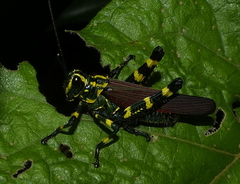
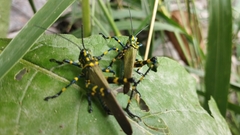
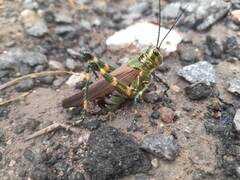
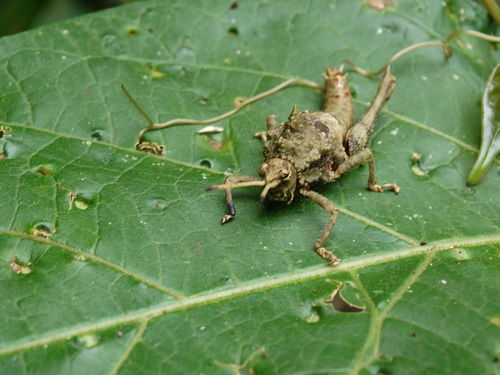
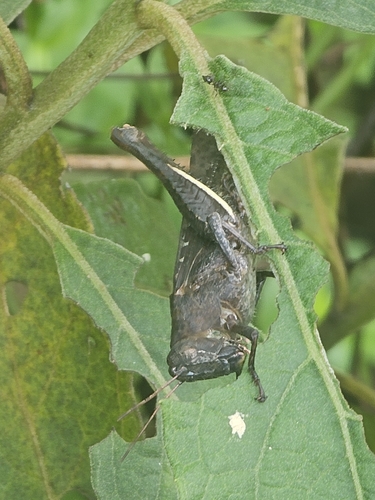
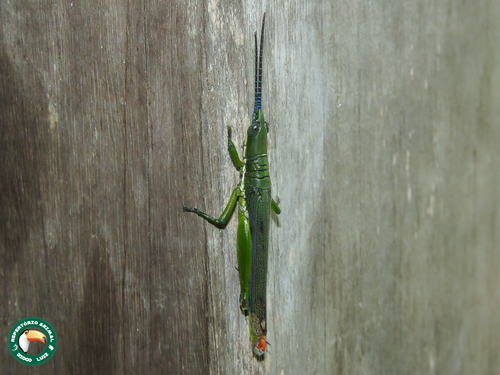
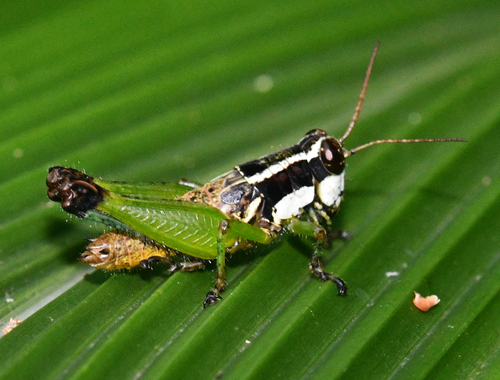
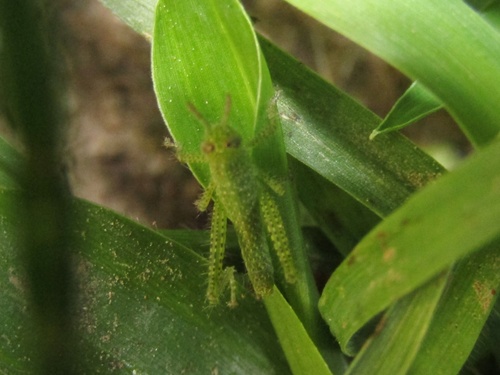
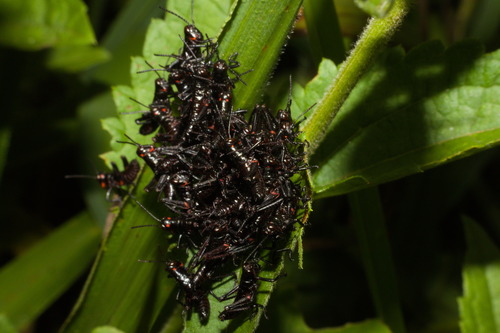
It prefers bush environment with vegetation principally consisting of species in the families such as Solanaceae, Myrtaceae, and Gramineae. It is a medium-size species with a generally dark green color and orange-red hind wings. Yellow strips can be seen across its body. Nymphs of this species are black and red.

Chromacris speciosa: Images... Wikipedia →
Global Distribution

Parks Where Found

# Park Country Daily sighting probability
1 Iguaçu National Park 🇧🇷 Brazil
~10%
2 Iguazú National Park 🇦🇷 Argentina
~10%
3 Tijuca National Park 🇧🇷 Brazil
~10%

Cities Where Found

# City Country Daily sighting probability
1 Cochabamba 🇧🇴 Bolivia
~40%
2 Porto Alegre 🇧🇷 Brazil
~20%
3 Curitiba 🇧🇷 Brazil
~20%
4 Rosario 🇦🇷 Argentina
~20%
5 Cordoba 🇦🇷 Argentina
~10%
6 Niterói 🇧🇷 Brazil
~10%
7 Santa Cruz de la Sierra 🇧🇴 Bolivia
~10%
8 Manaus 🇧🇷 Brazil
~10%
9 Fortaleza 🇧🇷 Brazil
~10%
10 Buenos Aires 🇦🇷 Argentina
~10%

Before you go

What are the chances of seeing a Soldier Grasshopper in Tijuca National Park?

With luck

About 10% of wildlife watchers report a Soldier Grasshopper sighting in Tijuca National Park on a given day, based on 10 verified sightings from GBIF citizen-science data from 2019 to 2026. It is the 53rd most-seen of the 132 insects we can rate there. Over three days the chance rises to about 20%, and over a week to about 40%, if each day is a fresh chance.

When is the best time to see a Soldier Grasshopper in Tijuca National Park?

May and October–March

In those months about 10% of wildlife watchers report a Soldier Grasshopper in Tijuca National Park on a given day, against under 5% in April and June–September, the lowest months.

What time of day is best to see a Soldier Grasshopper?

Between 9 am and noon

Across all the parks we cover, that three-hour window holds the most Soldier Grasshopper sightings with a recorded time, and nearly all of them come between 6 am and 6 pm: it is a daytime animal.

Is Tijuca National Park the best place to see a Soldier Grasshopper?

Among the best

Of the 3 parks where we can rate Soldier Grasshopper sightings, Tijuca National Park ranks 3rd at about 10%, level with the leaders once rounded. The best odds are in Iguaçu National Park (Brazil, about 10%) and Iguazú National Park (Argentina, about 10%).

Which relatives of the Soldier Grasshopper live in Tijuca National Park?

Same order: Orthoptera

The closest relatives of the Soldier Grasshopper that you can see in Tijuca National Park (order Orthoptera, Grasshoppers, Crickets, and Katydids) are Pycnosarcus atavus (about 10%), Abracris flavolineata (about 10%) and Opshomala viridis (about 10%), with each one's daily chance of a sighting.

Where does the Soldier Grasshopper sighting chance come from?

GBIF citizen-science records

It is estimated from how often the Soldier Grasshopper is recorded against all the insects logged in Tijuca National Park (10 verified sightings from 2019 to 2026), calibrated against known sighting rates. Figures are rounded to the nearest 10% because citizen-science data supports honest approximations, not decimals, and months with records from fewer than five people show "—". How it works.

← Back to Tijuca National Park