
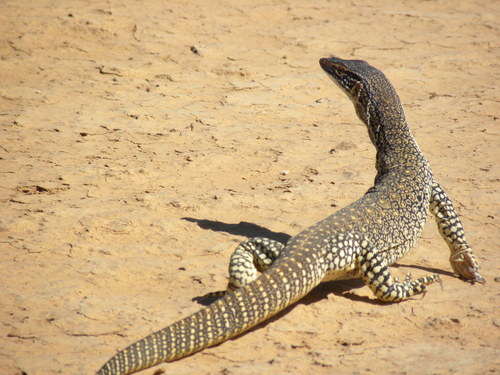
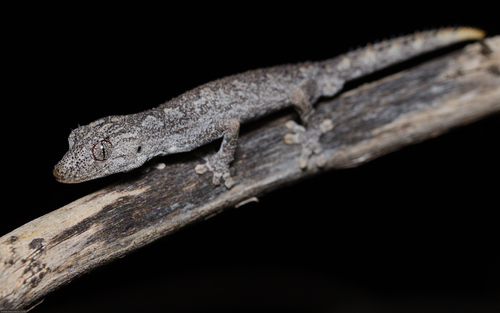
Centralian Bluetongue

Centralian Bluetongue

Tiliqua multifasciata

Silhouette: David Orr · PhyloPic

LCLeast ConcernNTVUENCR Endemic
Daily sighting probability ~20% · Possible
at Uluru-Kata Tjuta National Park

In 3 days ~40% in a week ~70%

5 Verified sightings at Uluru-Kata Tjuta National Park From 2019 to 2026
5 In 1 park
February Best month
🌅 Crepuscular When it's spotted

About the Centralian Bluetongue

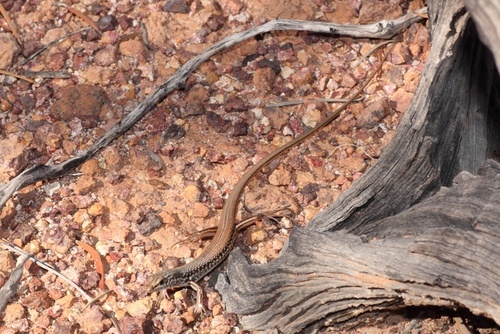
The Centralian blue-tongued skink or Centralian blue-tongue (Tiliqua multifasciata) is a species of skink, occurring predominantly in the far north-west corner of New South Wales, Australia. It is one of six species belonging to the genus Tiliqua; the blue-tongued skinks and the shinglebacks. This species of reptile classifies as a lizard.

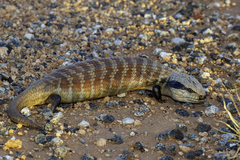
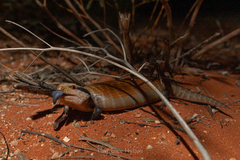
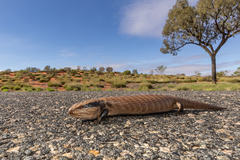
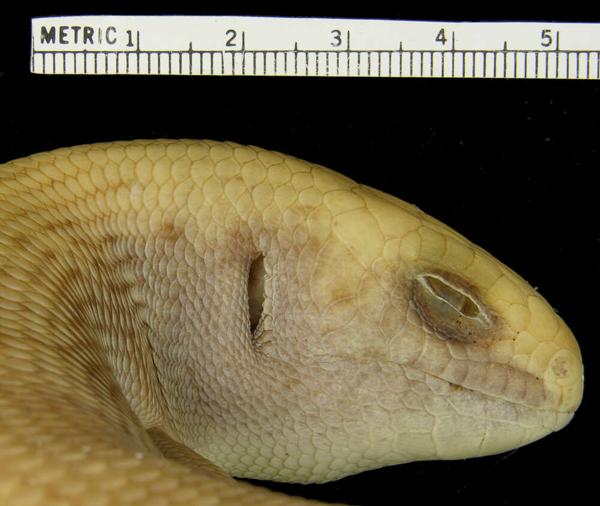
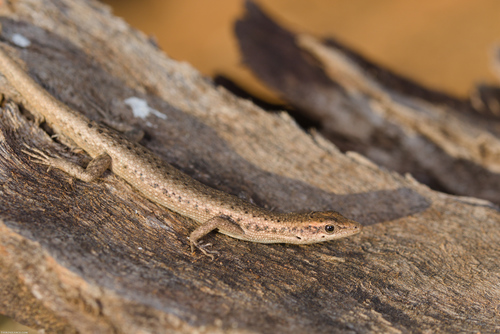
The Centralian blue-tongue is of a very robust build, short body and slender tail, and is among the largest 1% of species in the family Scincidae. Both the forelimb and hindlimb have five digits. The skink is predominantly pale brown to grey in colour with a series of nine or more orange-brown bands along the length of the body and tail. These darker coloured bands are much wider than the paler grey-brown interspaces but are at their narrowest along the mid-dorsal region of the skink. There is a distinguishing black stripe surrounding the eye and extending to just above the ear, and upper-hind areas of limbs are also black. The skink is pale cream to white on the underside.

The geographical distribution of the blue-tongued skink lies throughout the far north-west corner of New South Wales and South... Wikipedia →

Global Distribution

Parks Where Found

# Park Country Daily sighting probability
1 Uluru-Kata Tjuta National Park 🇦🇺 Australia
~20%

More parks will be added in future updates.

Zoos & Centres Where Found

# Zoo / Centre Country
1 Omaha’s Henry Doorly Zoo and Aquarium 🇺🇸 United States In captivity
2 Melbourne Zoo 🇦🇺 Australia In captivity
3 Perth Zoo 🇦🇺 Australia In captivity
4 Featherdale Sydney Wildlife Park 🇦🇺 Australia In captivity

Closest Relatives at Uluru-Kata Tjuta National Park

Before you go

What are the chances of seeing a Centralian Bluetongue in Uluru-Kata Tjuta National Park?

Possible

About 20% of wildlife watchers report a Centralian Bluetongue sighting in Uluru-Kata Tjuta National Park on a given day, based on 5 verified sightings from GBIF citizen-science data from 2019 to 2026. It is the 19th most-seen of the 25 reptiles we can rate there. Over three days the chance rises to about 40%, and over a week to about 70%, if each day is a fresh chance.

When is the best time to see a Centralian Bluetongue in Uluru-Kata Tjuta National Park?

January and February

In those months about 40% of wildlife watchers report a Centralian Bluetongue in Uluru-Kata Tjuta National Park on a given day, against under 5% in March–August and October–December, the lowest months. Those are among Uluru-Kata Tjuta National Park's wettest months, with about 40 mm of rain a month against almost none in July.

What time of day is best to see a Centralian Bluetongue?

Between 8 and 11 am

Across all the parks we cover, that three-hour window holds the most Centralian Bluetongue sightings with a recorded time, and about 6 in 10 of them come between 6 am and 6 pm: it is most active around dawn and dusk.

Where else can you see a Centralian Bluetongue?

Only Uluru-Kata Tjuta National Park, in our data

Uluru-Kata Tjuta National Park is the only park on Wallace's Line with enough records to rate Centralian Bluetongue sightings: about 20% of wildlife watchers there report one on a given day.

Which relatives of the Centralian Bluetongue live in Uluru-Kata Tjuta National Park?

Same family: Scincidae

The closest relatives of the Centralian Bluetongue that you can see in Uluru-Kata Tjuta National Park (family Scincidae, Skinks) are Leonhardi's Ctenotus (about 20%), Massive-gibber Ctenotus (about 20%) and Leopard Ctenotus (about 20%), with each one's daily chance of a sighting.

Where does the Centralian Bluetongue sighting chance come from?

GBIF citizen-science records

It is estimated from how often the Centralian Bluetongue is recorded against all the reptiles logged in Uluru-Kata Tjuta National Park (5 verified sightings from 2019 to 2026), calibrated against known sighting rates. Figures are rounded to the nearest 10% because citizen-science data supports honest approximations, not decimals, and months with records from fewer than five people show "—". How it works.

← Back to Uluru-Kata Tjuta National Park