Leonhardi's Ctenotus

Leonhardi's Ctenotus

Ctenotus leonhardii

Silhouette: David Orr · PhyloPic

LCLeast ConcernNTVUENCR Endemic
Daily sighting probability ~20% · Possible
at Uluru-Kata Tjuta National Park

In 3 days ~60% in a week ~90%

11 Verified sightings at Uluru-Kata Tjuta National Park From 2019 to 2026
11 In 1 park
October Best month
🌅 Crepuscular When it's spotted

About the Leonhardi's Ctenotus

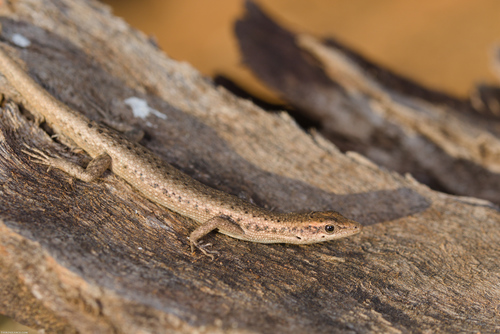
Ctenotus leonhardii, known by the common names Leonhardi's ctenotus, Leonhardi's skink, and the common desert ctenotus, is a species of lizard in the subfamily Sphenomorphinae of the family Scincidae. The species is found in a range of arid and semi-arid regions throughout mainland Australia. Named after German anthropologist Moritz von Leonhardi in 1919, it belongs to the genus Ctenotus, one of the largest genera of lizards in Australia.

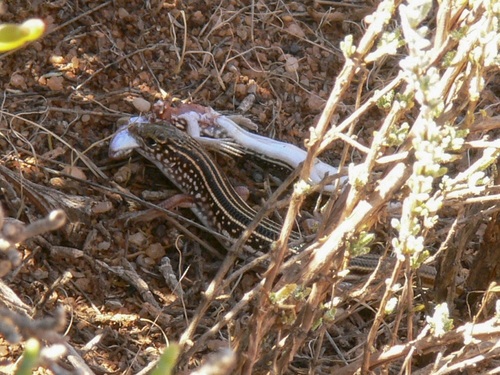
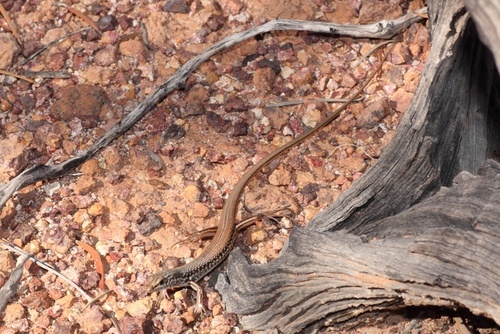
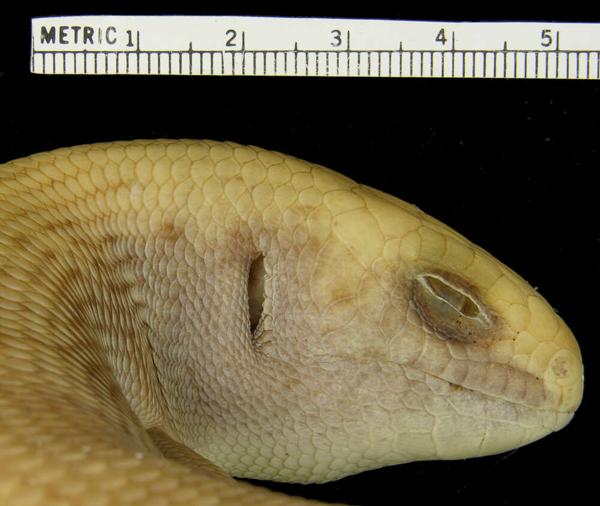
Leonhardi's ctenotus is a small, slender terrestrial skink. This species is typically brown to ochre-brown above, sometimes with a dark brown stripe running down the vertebral row of dorsal scales. There are pale stripes running from the eyes down to the tail on either side, often with a dark brown edge above. Below this stripe is a darker, sometimes black lateral stripe with a complex pattern of white spots over the top. From the groin there is a pale cream stripe running towards the flanks, with a series of white spots near the arms and a continuing pale lateral stripe down the length of the tail. Like all other Ctenotus species, Leonhardi's ctenotus has four limbs, five digits on each limb, and smooth scales, with a distinctive... Wikipedia →

Global Distribution

Parks Where Found

# Park Country Daily sighting probability
1 Uluru-Kata Tjuta National Park 🇦🇺 Australia
~20%

More parks will be added in future updates.

Closest Relatives at Uluru-Kata Tjuta National Park

Before you go

What are the chances of seeing a Leonhardi's Ctenotus in Uluru-Kata Tjuta National Park?

Possible

About 20% of wildlife watchers report a Leonhardi's Ctenotus sighting in Uluru-Kata Tjuta National Park on a given day, based on 11 verified sightings from GBIF citizen-science data from 2019 to 2026. It is the 9th most-seen of the 25 reptiles we can rate there. Over three days the chance rises to about 60%, and over a week to about 90%, if each day is a fresh chance.

When is the best time to see a Leonhardi's Ctenotus in Uluru-Kata Tjuta National Park?

March and October

In those months about 40% of wildlife watchers report a Leonhardi's Ctenotus in Uluru-Kata Tjuta National Park on a given day, against under 5% in February, May, July–September and December, the lowest months.

What time of day is best to see a Leonhardi's Ctenotus?

Between 4 and 7 am

Across all the parks we cover, that three-hour window holds the most Leonhardi's Ctenotus sightings with a recorded time, and about half of them come between 6 am and 6 pm: it is most active around dawn and dusk.

Where else can you see a Leonhardi's Ctenotus?

Only Uluru-Kata Tjuta National Park, in our data

Uluru-Kata Tjuta National Park is the only park on Wallace's Line with enough records to rate Leonhardi's Ctenotus sightings: about 20% of wildlife watchers there report one on a given day.

Which relatives of the Leonhardi's Ctenotus live in Uluru-Kata Tjuta National Park?

Same genus: Ctenotus

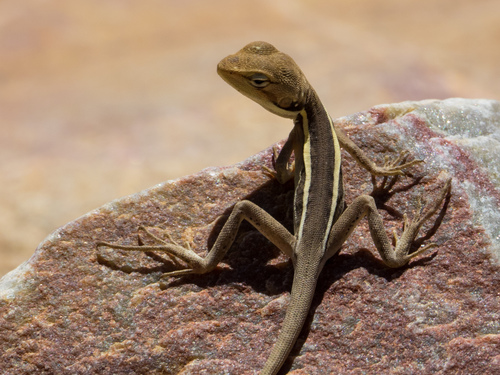
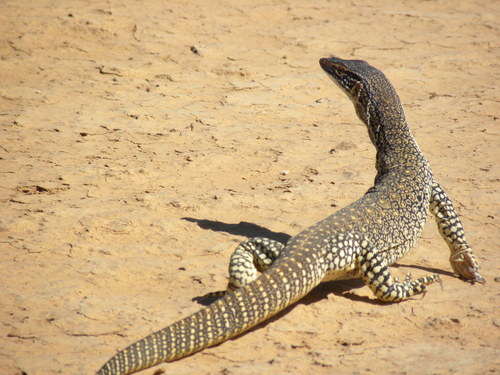
The closest relatives of the Leonhardi's Ctenotus that you can see in Uluru-Kata Tjuta National Park (genus Ctenotus, Ctenotus Skinks) are Massive-gibber Ctenotus (about 20%) and Leopard Ctenotus (about 20%), with each one's daily chance of a sighting.

Where does the Leonhardi's Ctenotus sighting chance come from?

GBIF citizen-science records

It is estimated from how often the Leonhardi's Ctenotus is recorded against all the reptiles logged in Uluru-Kata Tjuta National Park (11 verified sightings from 2019 to 2026), calibrated against known sighting rates. Figures are rounded to the nearest 10% because citizen-science data supports honest approximations, not decimals, and months with records from fewer than five people show "—". How it works.

← Back to Uluru-Kata Tjuta National Park