Northern Spiny-tailed Gecko

Northern Spiny-tailed Gecko

Strophurus ciliaris

Silhouette: Beth Reinke · PhyloPic

LCLeast ConcernNTVUENCR Endemic
Daily sighting probability ~30% · Possible
at Uluru-Kata Tjuta National Park

In 3 days ~70% in a week ~90%

14 Verified sightings at Uluru-Kata Tjuta National Park From 2019 to 2026
79 In all 5 parks
January Best month
🌙 Nocturnal When it's spotted

About the Northern Spiny-tailed Gecko

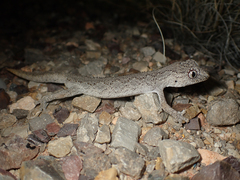
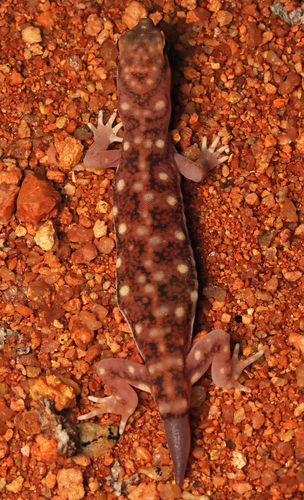
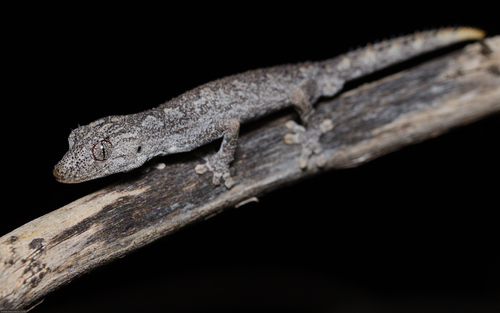
The northern spiny-tailed gecko (Strophurus ciliaris) is a species of lizard in the family Diplodactylidae. The species is endemic to Australia. The meaning of the scientific name or binomial, Strophurus ciliaris, comes from strophurus meaning "turning-tail" and ciliaris meaning "eyelashed", referring to the spines above the eyes.

S. ciliaris is highly variable in colour. This species can vary from a uniform grey colour, with few black or orange scales, to rich brown, with a mottled pattern of grey, white, and orange scales. Spines are present along the tail, and long spines are generally present above the eyes, giving the impression of being eye-lashed.

The average length for a member of this species is 89 mm (3.5 in). Females are known to be significantly larger than males. S. ciliaris an oviparous species that has a clutch size of two. Members of the genus Strophurus have the ability to squirt a harmless, smelly, fluid from their tails. This is used as a deterrent for birds and other predations whilst they are perching in shrubs. Another defence mechanism that S. ciliaris has is bright palate colour. Wikipedia →
Global Distribution

Parks Where Found

# Park Country Daily sighting probability
1 Cape Range 🇦🇺 Australia
~40%
2 Uluru-Kata Tjuta National Park 🇦🇺 Australia
~30%
3 Ningaloo Marine Park 🇦🇺 Australia
~30%
4 Litchfield National Park 🇦🇺 Australia
~20%
5 Kakadu National Park 🇦🇺 Australia
~10%

Zoos & Centres Where Found

# Zoo / Centre Country
1 Zoo Pilsen 🇨🇿 Czechia In captivity

Before you go

What are the chances of seeing a Northern Spiny-tailed Gecko in Uluru-Kata Tjuta National Park?

Possible

About 30% of wildlife watchers report a Northern Spiny-tailed Gecko sighting in Uluru-Kata Tjuta National Park on a given day, based on 14 verified sightings from GBIF citizen-science data from 2019 to 2026. It is the 6th most-seen of the 25 reptiles we can rate there. Over three days the chance rises to about 70%, and over a week to about 90%, if each day is a fresh chance.

When is the best time to see a Northern Spiny-tailed Gecko in Uluru-Kata Tjuta National Park?

January

In that month about 60% of wildlife watchers report a Northern Spiny-tailed Gecko in Uluru-Kata Tjuta National Park on a given day, against under 5% in February, May–June, August and December, the lowest months. That is one of Uluru-Kata Tjuta National Park's wettest months, with about 65 mm of rain against almost none in July.

What time of day is best to see a Northern Spiny-tailed Gecko?

Between 7 and 10 pm

Across all the parks we cover, that three-hour window holds the most Northern Spiny-tailed Gecko sightings with a recorded time, and about 8 in 10 of them come between 6 pm and 6 am: it is mostly seen at night.

Is Uluru-Kata Tjuta National Park the best place to see a Northern Spiny-tailed Gecko?

2nd of 5

Of the 5 parks where we can rate Northern Spiny-tailed Gecko sightings, Uluru-Kata Tjuta National Park ranks 2nd at about 30%. The best odds are in Cape Range (Australia, about 40%).

Where does the Northern Spiny-tailed Gecko sighting chance come from?

GBIF citizen-science records

It is estimated from how often the Northern Spiny-tailed Gecko is recorded against all the reptiles logged in Uluru-Kata Tjuta National Park (14 verified sightings from 2019 to 2026), calibrated against known sighting rates. Figures are rounded to the nearest 10% because citizen-science data supports honest approximations, not decimals, and months with records from fewer than five people show "—". How it works.

← Back to Uluru-Kata Tjuta National Park