Central Netted Ground-dragon

Central Netted Ground-dragon

Ctenophorus nuchalis

Silhouette: Caroline M. Dong · PhyloPic

LCLeast ConcernNTVUENCR Endemic
Daily sighting probability ~60% · Likely
at Uluru-Kata Tjuta National Park

In 3 days >90%

77 Verified sightings at Uluru-Kata Tjuta National Park From 2019 to 2026
77 In 1 park
February Best month
🌅 Crepuscular When it's spotted

About the Central Netted Ground-dragon

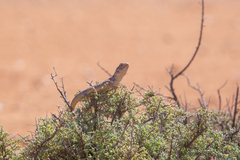
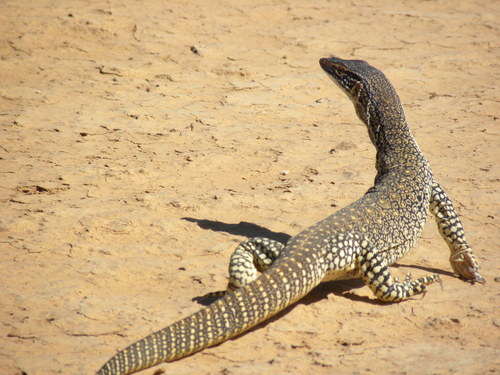
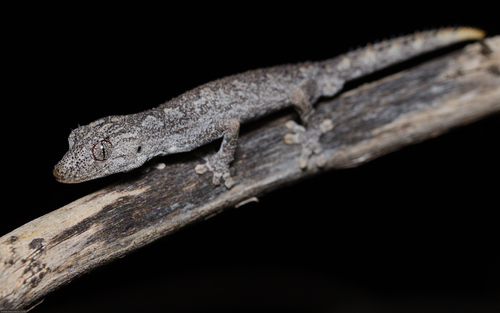
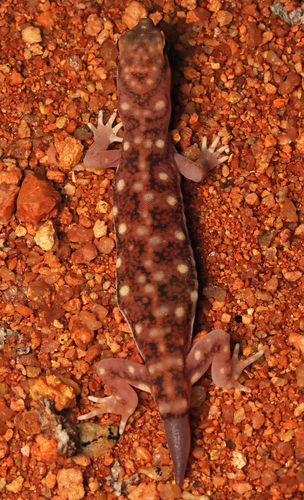
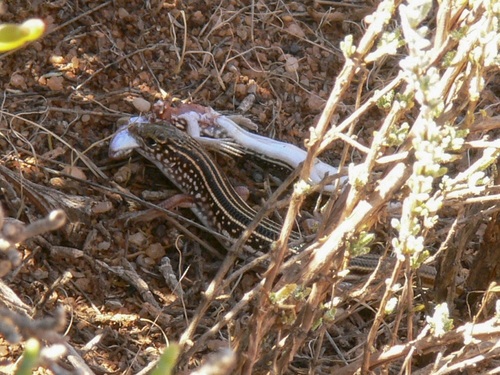
The central netted dragon or central netted ground dragon (Ctenophorus nuchalis) is a species of agamid lizard occurring in a wide range of arid to semiarid regions of Australia. It is widespread across the continent, commonly found in open, sandy, desert habitats. It is a popular pet and can often be found in zoos.

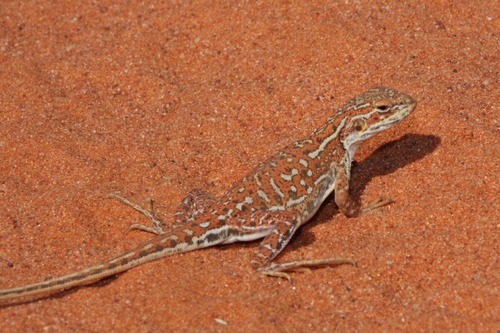
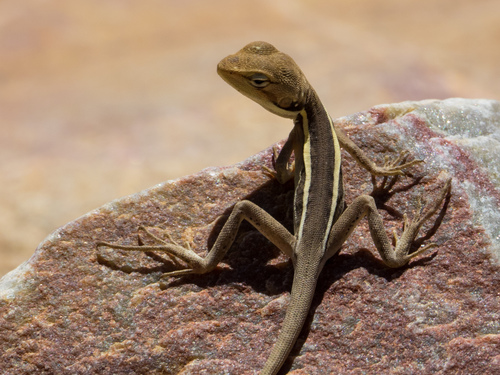
The central netted dragon is a medium-sized terrestrial lizard with a pale reddish-brown to bright orange-brown body. It gets its name from the dark-chocolate brown, reticulated (net-like) pattern which overlays its head and body. This pattern acts as camouflage, helping the lizard to blend in with its habitat to avoid predators. Its limbs are short and strong, with long toes and strong claws, which allow it to run at great speeds and dig burrows.

The head is short and blunt in comparison to other iguanids and agamids, thought to be related to its herbivorous and burrowing behaviour. The ears are exposed, and a row of enlarged scales curves under each eye. Small spines surround the head. It has a low crest along the top of the neck, a narrow vertebral stripe along the length of the body, and the scales of the body are small and smooth to the touch... Wikipedia →

Global Distribution

Parks Where Found

# Park Country Daily sighting probability
1 Uluru-Kata Tjuta National Park 🇦🇺 Australia
~60%

More parks will be added in future updates.

Zoos & Centres Where Found

# Zoo / Centre Country
1 Alice Springs Desert Park 🇦🇺 Australia In captivity
2 Taronga Zoo 🇦🇺 Australia In captivity
3 Hartley’s Crocodile Adventures 🇦🇺 Australia In captivity
4 Sydney Zoo 🇦🇺 Australia In captivity
5 Adelaide Zoo 🇦🇺 Australia In captivity
6 Featherdale Sydney Wildlife Park 🇦🇺 Australia In captivity
7 Sea Life Sydney Aquarium 🇦🇺 Australia In captivity
8 Wild Life Sydney 🇦🇺 Australia In captivity
9 Wildlife HQ Zoo 🇦🇺 Australia In captivity

Before you go

What are the chances of seeing a Central Netted Ground-dragon in Uluru-Kata Tjuta National Park?

Likely

About 60% of wildlife watchers report a Central Netted Ground-dragon sighting in Uluru-Kata Tjuta National Park on a given day, based on 77 verified sightings from GBIF citizen-science data from 2019 to 2026. It is the 2nd most-seen of the 25 reptiles we can rate there. Over three days the chance rises to over 90%, if each day is a fresh chance.

When is the best time to see a Central Netted Ground-dragon in Uluru-Kata Tjuta National Park?

January–February and April

In those months about 80% of wildlife watchers report a Central Netted Ground-dragon in Uluru-Kata Tjuta National Park on a given day, against about 30% in June, the lowest month. Those are among Uluru-Kata Tjuta National Park's wettest months, with about 30 mm of rain a month against almost none in July.

What time of day is best to see a Central Netted Ground-dragon?

Between 1 and 4 am

Across all the parks we cover, that three-hour window holds the most Central Netted Ground-dragon sightings with a recorded time, and about 6 in 10 of them come between 6 pm and 6 am: it is most active around dawn and dusk.

Where else can you see a Central Netted Ground-dragon?

Only Uluru-Kata Tjuta National Park, in our data

Uluru-Kata Tjuta National Park is the only park on Wallace's Line with enough records to rate Central Netted Ground-dragon sightings: about 60% of wildlife watchers there report one on a given day.

Where does the Central Netted Ground-dragon sighting chance come from?

GBIF citizen-science records

It is estimated from how often the Central Netted Ground-dragon is recorded against all the reptiles logged in Uluru-Kata Tjuta National Park (77 verified sightings from 2019 to 2026), calibrated against known sighting rates. Figures are rounded to the nearest 10% because citizen-science data supports honest approximations, not decimals, and months with records from fewer than five people show "—". How it works.

← Back to Uluru-Kata Tjuta National Park