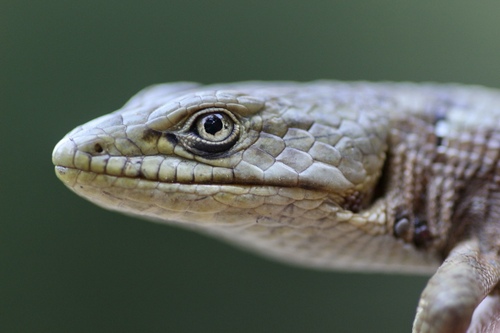
Angulate Tortoise

Angulate Tortoise

Chersina angulata

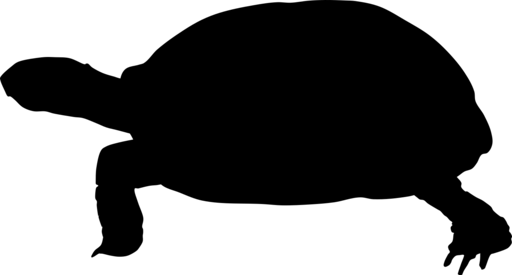
Silhouette: Andrew A. Farke · PhyloPic

LCLeast ConcernNTVUENCR
Daily sighting probability ~90% · Very likely
at West Coast National Park

In 3 days >90%

518 Verified sightings at West Coast National Park From 2019 to 2026
1,779 In all 5 parks
September Best month
☀️ Diurnal When it's spotted

About the Angulate Tortoise

The angulate tortoise (Chersina angulata) is a species of tortoise found in dry areas and coastal scrub vegetation in South Africa. It is the only living member of the genus Chersina. This species is highly distinctive and is now classified by itself, in the monotypic Chersina genus. While it differs considerably from all other tortoise species, its closest relatives, according to phylogenetic studies, are the tiny "padloper" (Homopus) tortoise species, with which it shares its southern African habitat.

Internationally it is known by the two names of "angulate" and "bowsprit" tortoise. Locally in southern Africa however, it is uniformly known as the "angulate" tortoise in English, and as the rooipens skilpad ("red-belly tortoise") in Afrikaans.

A small, shy tortoise with a relatively variable shell, they can often be distinguished by their prominent "bowsprits", which are protrusions of the "gular" shields, from their plastrons under their chins. These are used by males to fight for territory or females. Uniquely, this species has only one gular shield under its chin; all other southern African tortoises have a divided/double... Wikipedia →

Global Distribution

Parks Where Found

# Park Country Daily sighting probability
1 West Coast National Park 🇿🇦 South Africa
~90%
2 De Hoop Nature Reserve 🇿🇦 South Africa
~50%
3 Table Mountain National Park 🇿🇦 South Africa
~30%
4 Addo Elephant National Park 🇿🇦 South Africa
~30%
5 Garden Route National Park 🇿🇦 South Africa
~30%

Cities Where Found

# City Country Daily sighting probability
1 Cape Town 🇿🇦 South Africa
~30%

Zoos & Centres Where Found

# Zoo / Centre Country
1 Schönbrunn Zoo 🇦🇹 Austria In captivity
2 World of Birds Wildlife Sanctuary and Monkey Park 🇿🇦 South Africa In captivity
3 A Cupulatta 🇫🇷 France In captivity
4 National Marine Aquarium of Namibia 🇳🇦 Namibia In captivity
5 Exotic Animal World 🇿🇦 South Africa In captivity
6 Tropicarium Park 🇮🇹 Italy In captivity

Before you go

What are the chances of seeing an Angulate Tortoise in West Coast National Park?

Very likely

About 90% of wildlife watchers report an Angulate Tortoise sighting in West Coast National Park on a given day, based on 518 verified sightings from GBIF citizen-science data from 2019 to 2026. It is the most-seen of the 23 reptiles we can rate there. Over three days the chance rises to over 90%, if each day is a fresh chance.

When is the best time to see an Angulate Tortoise in West Coast National Park?

June to November

In those months about 90% of wildlife watchers report an Angulate Tortoise in West Coast National Park on a given day, against about 80% in December to May, the lowest months. Those are among West Coast National Park's wettest months, with about 35 mm of rain a month against 5 mm in February.

What time of day is best to see an Angulate Tortoise?

Between 10 am and 1 pm

Across all the parks we cover, that three-hour window holds the most Angulate Tortoise sightings with a recorded time, and nearly all of them come between 6 am and 6 pm: it is a daytime animal.

Is West Coast National Park the best place to see an Angulate Tortoise?

Yes

Of the 5 parks where we can rate Angulate Tortoise sightings, West Coast National Park has the highest daily chance: about 90%. Next come De Hoop Nature Reserve (South Africa, about 50%) and Table Mountain National Park (South Africa, about 30%). All parks ranked.

Where does the Angulate Tortoise sighting chance come from?

GBIF citizen-science records

It is estimated from how often the Angulate Tortoise is recorded against all the reptiles logged in West Coast National Park (518 verified sightings from 2019 to 2026), calibrated against known sighting rates. Figures are rounded to the nearest 10% because citizen-science data supports honest approximations, not decimals, and months with records from fewer than five people show "—". How it works.

← Back to West Coast National Park