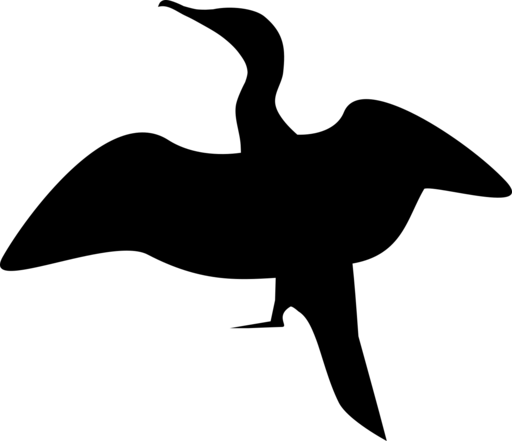
Black-faced Cormorant

Black-faced Cormorant

Phalacrocorax fuscescens

Silhouette: L. Shyamal · PhyloPic

LCLeast ConcernNTVUENCR Endemic
Daily sighting probability ~10% · With luck
at Wilsons Promontory National Park

In 3 days ~30% in a week ~60%

80 Verified sightings at Wilsons Promontory National Park From 2019 to 2026
755 In all 4 parks
October Best month
☀️ Diurnal When it's spotted

About the Black-faced Cormorant

The black-faced cormorant (Phalacrocorax fuscescens), also known as the black-faced shag, is a medium-sized member of the cormorant family. Upperparts, including facial skin and bill, are black, with white underparts. It is endemic to coastal regions of southern Australia.

Like other cormorant species, the black-faced cormorant is a large aquatic bird, with a long hooked bill, webbed feet, and monochromatic plumage. This is one of the largest cormorants found in south-western Australia and has pied plumage with the upper half of its body black and the undersides white. Its face is naked and black, hence the "black-faced" name, and the tail, feet, and thighs are also black. The back feathers are glossy, and its bill is dark grey with a prominent hook at the tip. It has blue-green eyes. When flying, it holds its head level or lower than its body and holds its wings in a cross-shape like most cormorants.

Species that are similar in appearance include the pied cormorant (slightly larger) and the little pied cormorant (slightly smaller). The breeding and non-breeding plumages are very similar, with the formation of fine white streaks along the neck during... Wikipedia →

Global Distribution

Parks Where Found

# Park Country Daily sighting probability
1 Maria Island National Park 🇦🇺 Australia
~50%
2 Freycinet National Park 🇦🇺 Australia
~40%
3 Wilsons Promontory National Park 🇦🇺 Australia
~10%
4 Great Otway National Park 🇦🇺 Australia
~10%

Cities Where Found

# City Country Daily sighting probability
1 Hobart 🇦🇺 Australia
~10%
2 Melbourne 🇦🇺 Australia
<5%

Zoos & Centres Where Found

# Zoo / Centre Country
1 Melbourne Zoo 🇦🇺 Australia In captivity
2 Ménagerie du Jardin des Plantes 🇫🇷 France In captivity

Before you go

What are the chances of seeing a Black-faced Cormorant in Wilsons Promontory National Park?

With luck

About 10% of wildlife watchers report a Black-faced Cormorant sighting in Wilsons Promontory National Park on a given day, based on 80 verified sightings from GBIF citizen-science data from 2019 to 2026. It is the 53rd most-seen of the 138 birds we can rate there. Over three days the chance rises to about 30%, and over a week to about 60%, if each day is a fresh chance.

When is the best time to see a Black-faced Cormorant in Wilsons Promontory National Park?

June and October

In those months about 20% of wildlife watchers report a Black-faced Cormorant in Wilsons Promontory National Park on a given day, against under 5% in July, September and November, the lowest months.

What time of day is best to see a Black-faced Cormorant?

Between 10 am and 1 pm

Across all the parks we cover, that three-hour window holds the most Black-faced Cormorant sightings with a recorded time, and nearly all of them come between 6 am and 6 pm: it is a daytime animal.

Is Wilsons Promontory National Park the best place to see a Black-faced Cormorant?

3rd of 4

Of the 4 parks where we can rate Black-faced Cormorant sightings, Wilsons Promontory National Park ranks 3rd at about 10%. The best odds are in Maria Island National Park (Australia, about 50%) and Freycinet National Park (Australia, about 40%).

Which relatives of the Black-faced Cormorant live in Wilsons Promontory National Park?

Same genus: Phalacrocorax

The closest relatives of the Black-faced Cormorant that you can see in Wilsons Promontory National Park (genus Phalacrocorax, Typical Old World Cormorants) are Little Black Cormorant (about 20%), Great Cormorant (about 10%) and Australian Pied Cormorant (about 10%), with each one's daily chance of a sighting.

Where does the Black-faced Cormorant sighting chance come from?

GBIF citizen-science records

It is estimated from how often the Black-faced Cormorant is recorded against all the birds logged in Wilsons Promontory National Park (80 verified sightings from 2019 to 2026), calibrated against known sighting rates. Figures are rounded to the nearest 10% because citizen-science data supports honest approximations, not decimals, and months with records from fewer than five people show "—". How it works.

← Back to Wilsons Promontory National Park