

Completed


Brown Bear
Ursus arctos
Silhouette: Tracy A. Heath · PhyloPic
- KingdomAnimalia (Animals)
- PhylumChordata (Chordates)
- ClassMammalia (Mammals)
- OrderCarnivora (Carnivorans)
- FamilyUrsidae (Bears)
- GenusUrsus (Holarctic Bears)
- SpeciesUrsus arctos (Brown Bear)
In 3 days >90%
1,077 Verified sightings at Yellowstone National Park From 2019 to 2026
3,448 In all 15 parks
May Best month
🌅 Crepuscular When it's spotted

Completed

Completed


Completed
About the Brown Bear
The brown bear (Ursus arctos) is a large bear native to Eurasia and North America. Of the land carnivorans, it is rivaled in size only by its closest relative, the polar bear, which is much less variable in size and slightly bigger on average. The brown bear is a sexually dimorphic species, as adult males are larger and more compactly built than females. The fur ranges in color from cream to reddish to dark brown. It has evolved large hump muscles, unique among bears, and paws up to 21 cm (8.3 in) wide and 36 cm (14 in) long, to effectively dig through dirt. Its teeth are similar to those of other bears and reflect its dietary plasticity.
Throughout the brown bear's range, it inhabits mainly forested habitats in elevations of up to 5,000 m (16,000 ft). It is omnivorous, and consumes a variety of plant and animal species. Contrary to popular belief, the brown bear derives 90% of its diet from plants. When hunting, it will target animals as small as insects and rodents to those as large as moose or muskoxen. In parts of coastal Alaska, brown bears predominantly feed on spawning salmon that come near shore to lay their eggs. For most of the year, it is a usually solitary animal that associates only when mating or raising cubs. Females give birth to an average of one to three cubs that remain with their mother for 1.5 to 4.5 years. It is a long-lived animal, with an average lifespan of 25 years in the wild. Attacks on humans, though widely reported, are generally rare.
While the brown bear's range has shrunk, and it has faced local extinctions across its wide range, it remains listed as a least concern species by the International Union for Conservation of Nature (IUCN) with a total estimated population in 2017 of 110,000. Populations that were hunted to extinction in the 19th and 20th centuries are the Atlas bear of North Africa and the Californian, Ungavan and Mexican populations of the grizzly bear of North America. Many of the populations in the southern parts of Eurasia are highly endangered as well. One of the smaller-bodied forms, the Himalayan brown bear, is critically endangered: it occupies only 2% of its former range and is threatened by uncontrolled poaching for its body parts. The Marsican brown bear of central Italy is one of several currently isolated populations of the Eurasian brown bear and is believed to have a population of only about 50 bears.
The brown bear is considered to be one of the most popular of the world's charismatic megafauna. Wikipedia →
Sounds
Recording0:11
Slovenia · 2025
© Jakob Stanič · iNaturalist · CC BY-NC 4.0
Recording0:13
Slovenia · 2025
© Nicoleta · iNaturalist · CC BY-NC 4.0
Recent sightings of Brown Bear in Yellowstone National Park
LIVEiNaturalistGlobal Distribution
Parks Where Found
| # | Park | Country | Daily sighting probability |
|---|---|---|---|
| 1 | Katmai National Park | 🇺🇸 United States | |
| 2 | Denali National Park | 🇺🇸 United States | |
| 3 | Yellowstone National Park | 🇺🇸 United States | |
| 4 | Kluane National Park | 🇨🇦 Canada | |
| 5 | Wrangell-St. Elias National Park | 🇺🇸 United States | |
| 6 | Glacier National Park | 🇺🇸 United States | |
| 7 | Jasper National Park | 🇨🇦 Canada | |
| 8 | Grand Teton National Park | 🇺🇸 United States | |
| 9 | Tatra National Park | 🇸🇰 Slovakia | |
| 10 | Great Bear Rainforest | 🇨🇦 Canada | |
| 11 | Banff National Park | 🇨🇦 Canada | |
| 12 | Picos de Europa National Park | 🇪🇸 Spain | |
| 13 | Kenai Fjords National Park | 🇺🇸 United States | |
| 14 | Aigüestortes National Park | 🇪🇸 Spain | |
| 15 | Pyrénées National Park | 🇫🇷 France |
Zoos & Centres Where Found
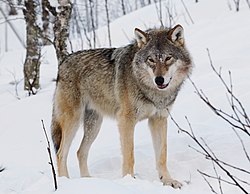
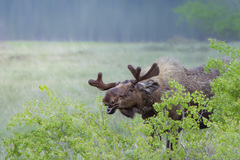
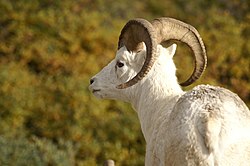
Closest Relatives at Yellowstone National Park




Before you go
What are the chances of seeing a Brown Bear in Yellowstone National Park?
Likely
About 60% of wildlife watchers report a Brown Bear sighting in Yellowstone National Park on a given day, based on 1,077 verified sightings from GBIF citizen-science data from 2019 to 2026. It is the 4th most-seen of the 32 mammals we can rate there. Over three days the chance rises to over 90%, if each day is a fresh chance.
When is the best time to see a Brown Bear in Yellowstone National Park?
May
In that month about 80% of wildlife watchers report a Brown Bear in Yellowstone National Park on a given day, against under 5% in January and February, the lowest months.
What time of day is best to see a Brown Bear?
Between 5 and 8 pm
Across all the parks we cover, that three-hour window holds the most Brown Bear sightings with a recorded time, and about 6 in 10 of them come between 6 am and 6 pm: it is most active around dawn and dusk.
Is Yellowstone National Park the best place to see a Brown Bear?
3rd of 15
Of the 15 parks where we can rate Brown Bear sightings, Yellowstone National Park ranks 3rd at about 60%. The best odds are in Katmai National Park (United States, over 90%) and Denali National Park (United States, about 80%). All parks ranked.
Where does the Brown Bear sighting chance come from?
GBIF citizen-science records
It is estimated from how often the Brown Bear is recorded against all the mammals logged in Yellowstone National Park (1,077 verified sightings from 2019 to 2026), calibrated against known sighting rates. Figures are rounded to the nearest 10% because citizen-science data supports honest approximations, not decimals, and months with records from fewer than five people show "—". How it works.
