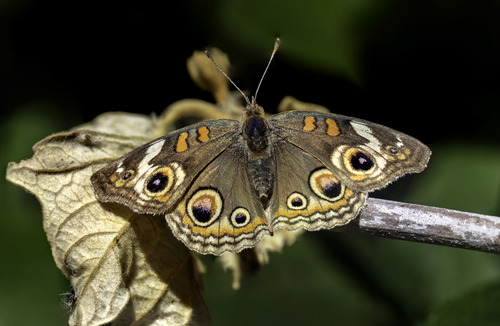
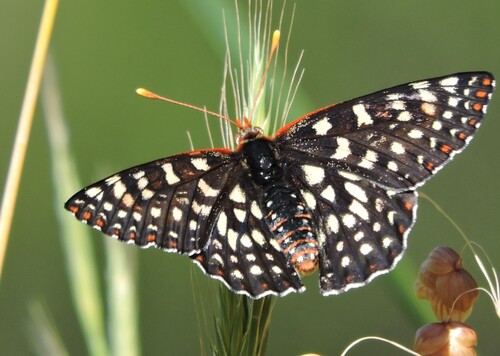
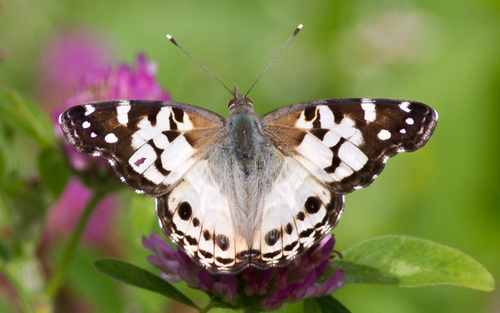
Common Ringlet

Common Ringlet

Coenonympha california

Daily sighting probability ~10% · With luck
at Yosemite National Park

In 3 days ~30% in a week ~60%

46 Verified sightings at Yosemite National Park From 2019 to 2026
309 In all 11 parks
May Best month
☀️ Diurnal When it's spotted

About the Common Ringlet

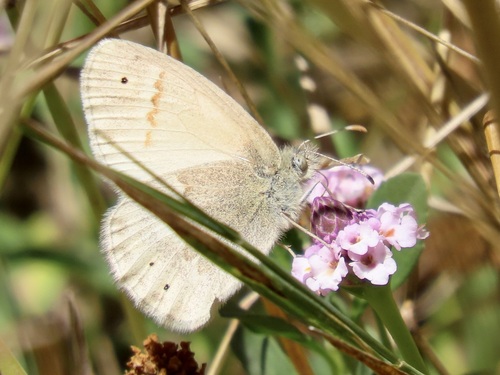
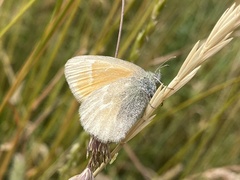
Coenonympha california, also known as the California ringlet or common ringlet, is a species of butterfly native to North America. Although it has previously been considered a subspecies of Coenonympha tullia, genetic testing suggests it is a separate species.

Extreme phenotypic variation across several geographic ranges and subspecies populations characterizes Coenonympha california's wing shape. The wings' dorsal ground color varies, ranging from mild ochre, deep orange-ochre, yellow, and pale/white. An inconsistent presentation of submarginal eyespots, called ocelli, on the ventral hind wings closely correspond with this variation. Some butterflies can have many well-developed, dark ocelli within a single location, or they can have none at all. Additionally, the species exhibits localized intergradation, where characteristics like eyespot count and ground color create wide, continuous geographic clines instead of distinct morphological boundaries between nominal subspecies.

Coenonympha california contains the following subspecies: Coenonympha california mcisaaci Coenonympha california galactinus Coenonympha california benjamini Coenonympha... Wikipedia →
Global Distribution

Parks Where Found

# Park Country Daily sighting probability
1 Acadia National Park 🇺🇸 United States
~20%
2 Elk Island National Park 🇨🇦 Canada
~20%
3 Rocky Mountain National Park 🇺🇸 United States
~10%
4 Gros Morne National Park 🇨🇦 Canada
~10%
5 Yosemite National Park 🇺🇸 United States
~10%
6 Yellowstone National Park 🇺🇸 United States
~10%
7 Redwood National Park 🇺🇸 United States
~10%
8 Grand Teton National Park 🇺🇸 United States
~10%
9 Sequoia and Kings Canyon National Parks 🇺🇸 United States
~10%
10 Glacier National Park 🇺🇸 United States
~10%
11 Banff National Park 🇨🇦 Canada
~10%

Cities Where Found

# City Country Daily sighting probability
1 Calgary 🇨🇦 Canada
~10%
2 Toronto 🇨🇦 Canada
~10%
3 Edmonton 🇨🇦 Canada
~10%
4 Montreal 🇨🇦 Canada
~10%
5 Detroit 🇺🇸 United States
<5%
6 San Francisco 🇺🇸 United States
<5%
7 Boston 🇺🇸 United States
<5%
8 Minneapolis [Saint Paul] 🇺🇸 United States
<5%
9 Portland 🇺🇸 United States
<5%
10 San Diego 🇺🇸 United States
<5%

Before you go

What are the chances of seeing a Common Ringlet in Yosemite National Park?

With luck

About 10% of wildlife watchers report a Common Ringlet sighting in Yosemite National Park on a given day, based on 46 verified sightings from GBIF citizen-science data from 2019 to 2026. It is the 39th most-seen of the 227 insects we can rate there. Over three days the chance rises to about 30%, and over a week to about 60%, if each day is a fresh chance.

When is the best time to see a Common Ringlet in Yosemite National Park?

April and May

In those months about 20% of wildlife watchers report a Common Ringlet in Yosemite National Park on a given day, against under 5% in October to February, the lowest months.

What time of day is best to see a Common Ringlet?

Between 11 am and 2 pm

Across all the parks we cover, that three-hour window holds the most Common Ringlet sightings with a recorded time, and about 9 in 10 of them come between 6 am and 6 pm: it is a daytime animal.

Which relatives of the Common Ringlet live in Yosemite National Park?

Same family: Nymphalidae

The closest relatives of the Common Ringlet that you can see in Yosemite National Park (family Nymphalidae, Brush-footed Butterflies) are Limenitis bredowii (about 40%), California Tortoiseshell (about 30%) and Mormon Fritillary (about 20%), with each one's daily chance of a sighting.

Where does the Common Ringlet sighting chance come from?

GBIF citizen-science records

It is estimated from how often the Common Ringlet is recorded against all the insects logged in Yosemite National Park (46 verified sightings from 2019 to 2026), calibrated against known sighting rates. Figures are rounded to the nearest 10% because citizen-science data supports honest approximations, not decimals, and months with records from fewer than five people show "—". How it works.

← Back to Yosemite National Park