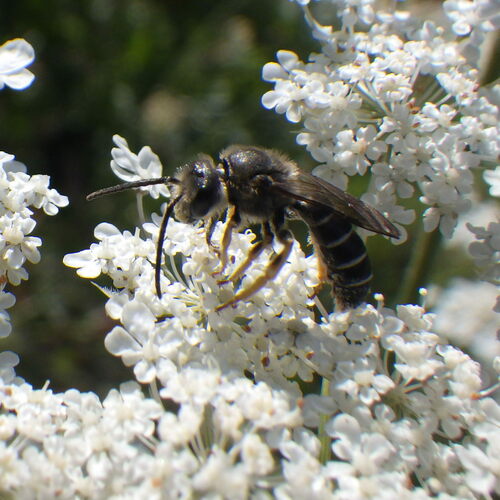
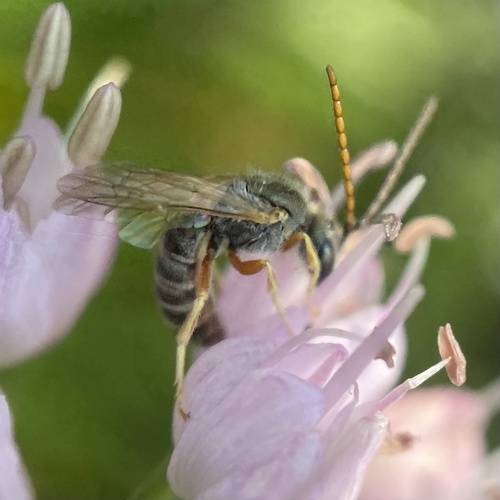
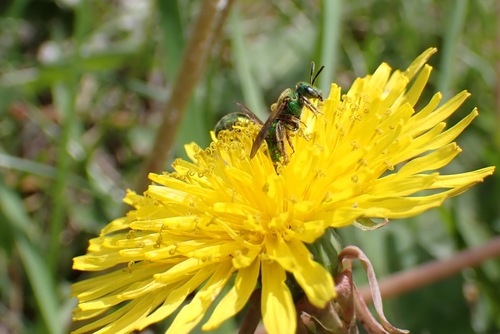
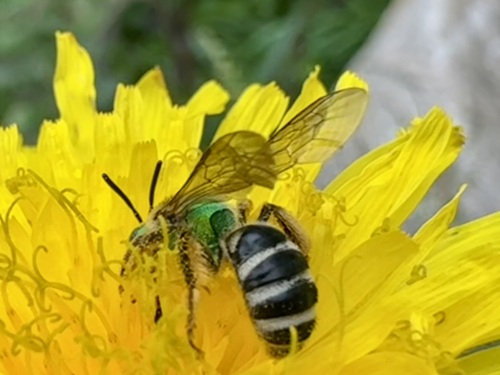
Ligated Furrow Bee

Ligated Furrow Bee

Halictus ligatus

Daily sighting probability ~10% · With luck
at Acadia National Park

In 3 days ~20% in a week ~40%

12 Verified sightings at Acadia National Park From 2019 to 2026
60 In all 3 parks
July Best month
☀️ Diurnal When it's spotted

About the Ligated Furrow Bee

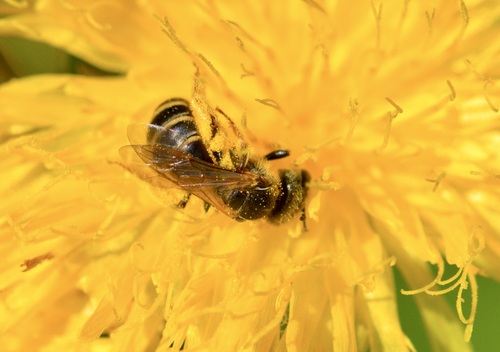
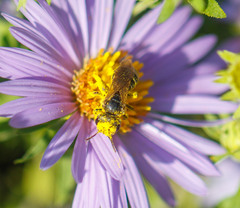
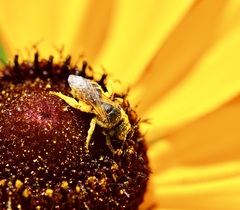
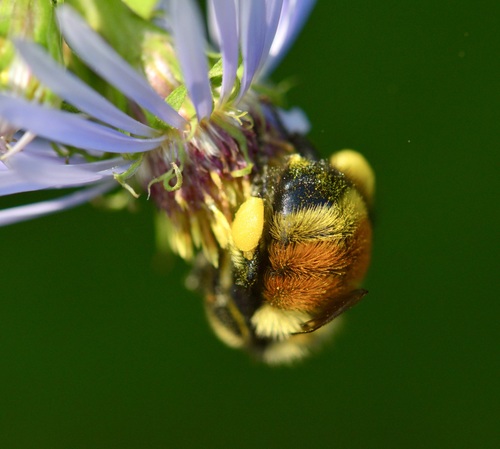
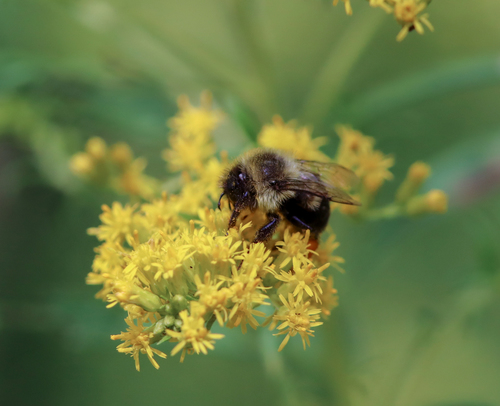
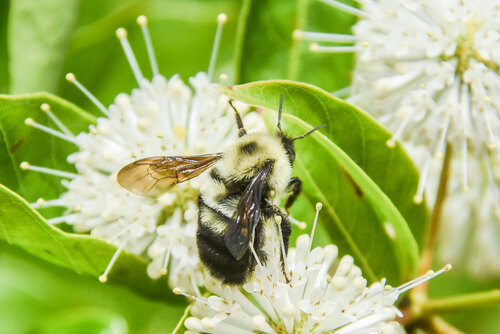
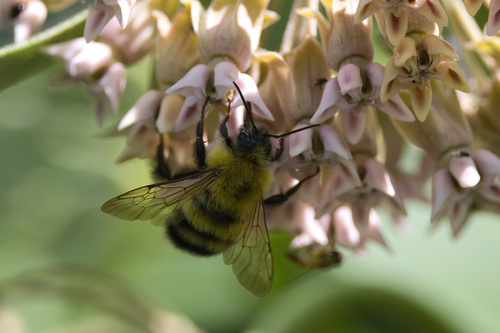
Halictus ligatus is a species of sweat bee from the family Halictidae, among the species that mine or burrow into the ground to create their nests. H. ligatus, like Lasioglossum zephyrus, is a primitively eusocial bee species, in which aggression is one of the most influential behaviors for establishing hierarchy within the colony, and H. ligatus exhibits both reproductive division of labor and overlapping generations.

Halictus ligatus was originally described by Thomas Say in 1837. The genus name Halictus refers to a group of sweat bees of the family Halictidae and order Hymenoptera known for their eusocial behavior and underground nesting. Within Halictidae, the subfamily Halictinae is unique for the substantial diversity in social behavior exhibited among species or within species, such as in H. rubicundus. For instance, species of this subfamily may exhibit either solitary nesting, communal nesting, cleptoparasitism, social parasitism, or primitive eusociality similar to H. ligatus.

The appearance of H. ligatus individuals closely resembles other members of the genus Halictus. These individuals are easily differentiated... Wikipedia →

Global Distribution

Parks Where Found

# Park Country Daily sighting probability
1 Acadia National Park 🇺🇸 United States
~10%
2 Great Smoky Mountains National Park 🇺🇸 United States
~10%
3 Big Bend National Park 🇺🇸 United States
~10%

Cities Where Found

# City Country Daily sighting probability
1 Valencia 🇻🇪 Venezuela
~20%
2 Boston 🇺🇸 United States
~20%
3 Minneapolis [Saint Paul] 🇺🇸 United States
~20%
4 Austin 🇺🇸 United States
~10%
5 Salt Lake City 🇺🇸 United States
~10%
6 Denver 🇺🇸 United States
~10%
7 Mesa 🇺🇸 United States
~10%
8 Phoenix 🇺🇸 United States
~10%
9 Detroit 🇺🇸 United States
~10%
10 Portland 🇺🇸 United States
~10%

Before you go

What are the chances of seeing a Ligated Furrow Bee in Acadia National Park?

With luck

About 10% of wildlife watchers report a Ligated Furrow Bee sighting in Acadia National Park on a given day, based on 12 verified sightings from GBIF citizen-science data from 2019 to 2026. It is the 178th most-seen of the 405 insects we can rate there. Over three days the chance rises to about 20%, and over a week to about 40%, if each day is a fresh chance.

When is the best time to see a Ligated Furrow Bee in Acadia National Park?

June–August and October

In those months about 10% of wildlife watchers report a Ligated Furrow Bee in Acadia National Park on a given day, against under 5% in September and November–May, the lowest months.

What time of day is best to see a Ligated Furrow Bee?

Between 9 am and noon

Across all the parks we cover, that three-hour window holds the most Ligated Furrow Bee sightings with a recorded time, and about 9 in 10 of them come between 6 am and 6 pm: it is a daytime animal.

Is Acadia National Park the best place to see a Ligated Furrow Bee?

Yes

Of the 3 parks where we can rate Ligated Furrow Bee sightings, Acadia National Park has the highest daily chance: about 10%. Next come Great Smoky Mountains National Park (United States, about 10%) and Big Bend National Park (United States, about 10%).

Where does the Ligated Furrow Bee sighting chance come from?

GBIF citizen-science records

It is estimated from how often the Ligated Furrow Bee is recorded against all the insects logged in Acadia National Park (12 verified sightings from 2019 to 2026), calibrated against known sighting rates. Figures are rounded to the nearest 10% because citizen-science data supports honest approximations, not decimals, and months with records from fewer than five people show "—". How it works.

← Back to Acadia National Park