Twice-Stabbed Stink Bug

Twice-Stabbed Stink Bug

Cosmopepla lintneriana

Daily sighting probability ~10% · With luck
at Acadia National Park

In 3 days ~20% in a week ~50%

21 Verified sightings at Acadia National Park From 2019 to 2026
88 In all 5 parks
July Best month
☀️ Diurnal When it's spotted

About the Twice-Stabbed Stink Bug

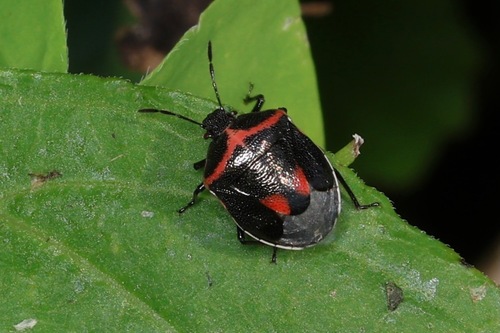
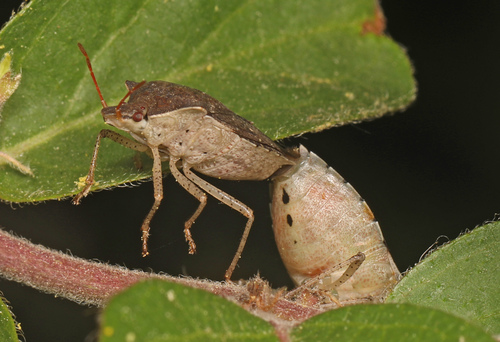
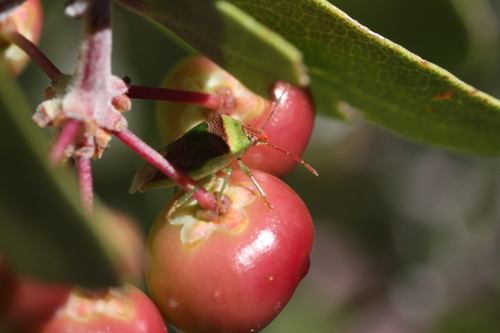
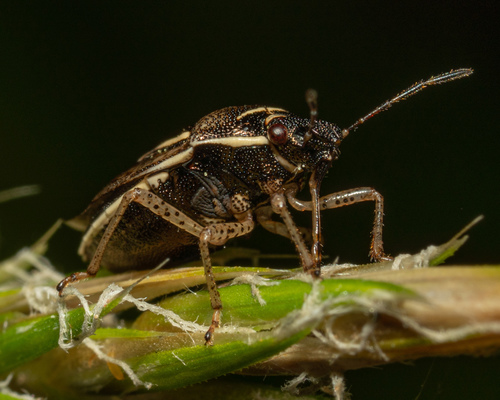
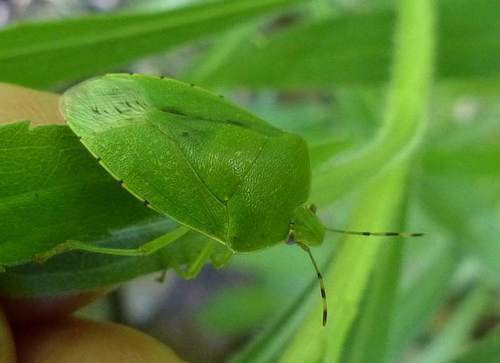
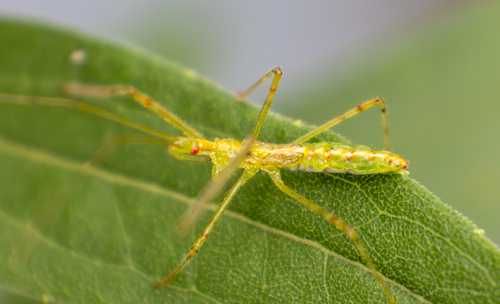
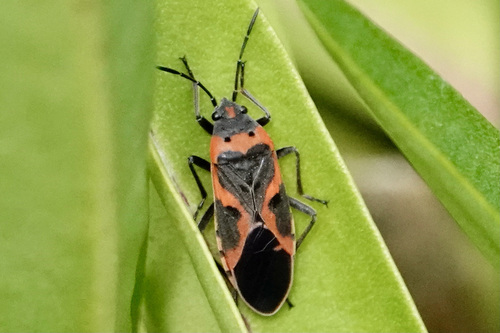
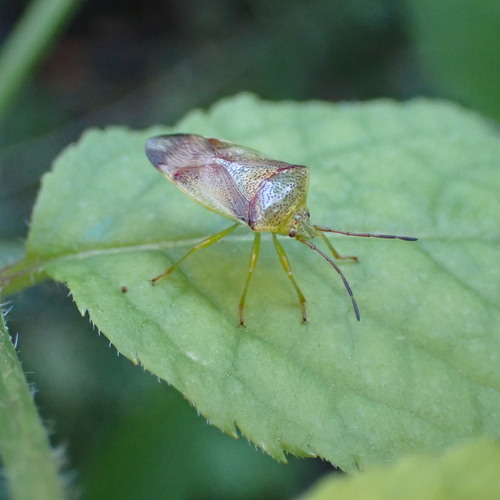
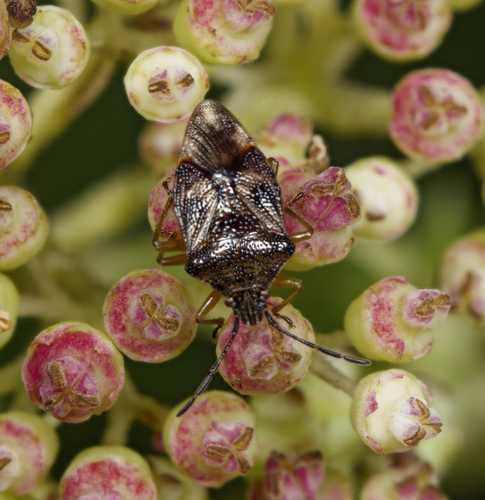
Cosmopepla lintneriana, the twice-stabbed stink bug, is a species of insect in the family Pentatomidae. Cosmopepla lintneriana was first described in 1798 by Johan Christian Fabricius as Cimex carnifex, and then again in 1865 by Thomas Say as Cosmopepla bimaculata. Cosmopepla lintneriana is hosted by a variety of plants, including milk thistle, echinacea, asparagus, oats, mint and goldenrod, and is widespread throughout North America, from Canada to Mexico. Adult C. lintneriana are black with a red, orange, or yellow band across the pronotum and a short red stripe along the midline, and two red spots at the apex of the scutellum. Nymph coloration ranges from red to white with black markings that change as they grow. Wikipedia →

Global Distribution

Parks Where Found

# Park Country Daily sighting probability
1 Elk Island National Park 🇨🇦 Canada
~10%
2 Shenandoah National Park 🇺🇸 United States
~10%
3 Riding Mountain National Park 🇨🇦 Canada
~10%
4 Acadia National Park 🇺🇸 United States
~10%
5 Great Smoky Mountains National Park 🇺🇸 United States
<5%

Cities Where Found

# City Country Daily sighting probability
1 Edmonton 🇨🇦 Canada
~10%
2 Minneapolis [Saint Paul] 🇺🇸 United States
~10%
3 Boston 🇺🇸 United States
~10%
4 Detroit 🇺🇸 United States
~10%
5 Calgary 🇨🇦 Canada
~10%
6 Toronto 🇨🇦 Canada
~10%
7 Philadelphia 🇺🇸 United States
<5%
8 Chicago 🇺🇸 United States
<5%
9 New York City 🇺🇸 United States
<5%
10 Vancouver 🇨🇦 Canada
<5%

Before you go

What are the chances of seeing a Twice-Stabbed Stink Bug in Acadia National Park?

With luck

About 10% of wildlife watchers report a Twice-Stabbed Stink Bug sighting in Acadia National Park on a given day, based on 21 verified sightings from GBIF citizen-science data from 2019 to 2026. It is the 119th most-seen of the 405 insects we can rate there. Over three days the chance rises to about 20%, and over a week to about 50%, if each day is a fresh chance.

When is the best time to see a Twice-Stabbed Stink Bug in Acadia National Park?

June to October

In those months about 10% of wildlife watchers report a Twice-Stabbed Stink Bug in Acadia National Park on a given day, against under 5% in November to May, the lowest months.

What time of day is best to see a Twice-Stabbed Stink Bug?

Between noon and 3 pm

Across all the parks we cover, that three-hour window holds the most Twice-Stabbed Stink Bug sightings with a recorded time, and about 9 in 10 of them come between 6 am and 6 pm: it is a daytime animal.

Is Acadia National Park the best place to see a Twice-Stabbed Stink Bug?

Among the best

Of the 5 parks where we can rate Twice-Stabbed Stink Bug sightings, Acadia National Park ranks 4th at about 10%, level with the leaders once rounded. The best odds are in Elk Island National Park (Canada, about 10%), Shenandoah National Park (United States, about 10%) and Riding Mountain National Park (Canada, about 10%).

Which relatives of the Twice-Stabbed Stink Bug live in Acadia National Park?

Same family: Pentatomidae

The closest relatives of the Twice-Stabbed Stink Bug that you can see in Acadia National Park (family Pentatomidae, Stink Bugs) are Dusky Stink Bug (about 10%) and Green Burgundy Stink Bug (about 10%), with each one's daily chance of a sighting.

Where does the Twice-Stabbed Stink Bug sighting chance come from?

GBIF citizen-science records

It is estimated from how often the Twice-Stabbed Stink Bug is recorded against all the insects logged in Acadia National Park (21 verified sightings from 2019 to 2026), calibrated against known sighting rates. Figures are rounded to the nearest 10% because citizen-science data supports honest approximations, not decimals, and months with records from fewer than five people show "—". How it works.

← Back to Acadia National Park