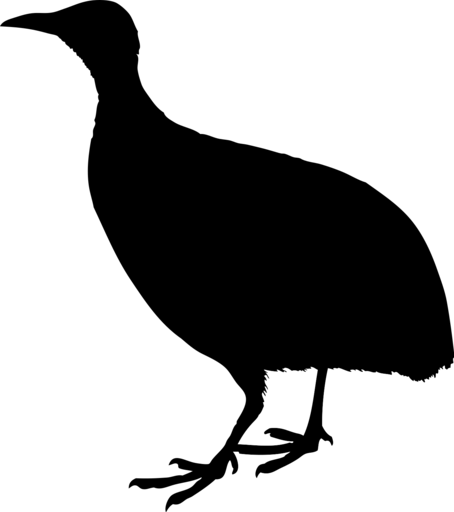
White-throated Tinamou

White-throated Tinamou

Tinamus guttatus

Silhouette: George Edward Lodge · PhyloPic

LCNTNear ThreatenedVUENCR
Daily sighting probability ~10% · With luck
at Amacayacu National Natural Park

In 3 days ~30% in a week ~60%

106 Verified sightings at Amacayacu National Natural Park From 2019 to 2026
646 In all 6 parks
January Best month
🌙 Nocturnal When it's spotted

About the White-throated Tinamou

The white-throated tinamou (Tinamus guttatus) is a species of bird native to the Amazon rainforest of Brazil, northern Bolivia, southeastern Colombia, northeastern Ecuador, eastern Peru and southern Venezuela. The scientific name for the white-throated tinamou, Tinamus guttatus, originates from two different languages. Tinamus was the name given to the tinamou by the Kalina people. Guttatus means "speckled" in Latin. This may be in reference to the yellowish-white spots on a white-throated tinamou's lower back.

All tinamous are from the family Tinamidae and members of the infraclass Palaeognathae. Tinamous are the only members from their infraclass that aren't ratites, and can even fly, albeit poorly. All paleognaths evolved from prehistoric flying birds, and tinamous are the closest living relative of these birds. The white-throated tinamou is a member of the genus Tinamus, which consists of some of the larger tinamous, the white-throated tinamou being the smallest member of the genus. It was first described by Austrian ornithologist August von Pelzeln in 1863. It is a monotypic species, meaning it doesn't branch off into subspecies. Wikipedia →

Sounds

Song0:07

Brazil · 2026

© JAYRSON ARAUJO DE OLIVEIRA · XC1186065 · CC BY-NC-SA 4.0

Canto0:06

Brazil · 2015

© Caio Brito · XC428089 · CC BY-NC-SA 4.0

Song0:17

Peru · 2019

© Rainforest Connection · XC621782 · CC BY-NC-SA 4.0

Global Distribution

Parks Where Found

# Park Country Daily sighting probability
1 Amacayacu National Natural Park 🇨🇴 Colombia
~10%
2 Tambopata National Reserve 🇵🇪 Peru
~10%
3 Yasuní National Park 🇪🇨 Ecuador
~10%
4 Manu National Park 🇵🇪 Peru
<5%
5 Cuyabeno Wildlife Reserve 🇪🇨 Ecuador
<5%
6 Sierra de la Macarena National Park 🇨🇴 Colombia
<5%

Before you go

What are the chances of seeing a White-throated Tinamou in Amacayacu National Natural Park?

With luck

About 10% of wildlife watchers report a White-throated Tinamou sighting in Amacayacu National Natural Park on a given day, based on 106 verified sightings from GBIF citizen-science data from 2019 to 2026. It is the 127th most-seen of the 436 birds we can rate there. Over three days the chance rises to about 30%, and over a week to about 60%, if each day is a fresh chance.

When is the best time to see a White-throated Tinamou in Amacayacu National Natural Park?

January

In that month about 30% of wildlife watchers report a White-throated Tinamou in Amacayacu National Natural Park on a given day, against under 5% in May–August and November–December, the lowest months.

What time of day is best to see a White-throated Tinamou?

Between 7 and 10 pm

Across all the parks we cover, that three-hour window holds the most White-throated Tinamou sightings with a recorded time, and about 8 in 10 of them come between 6 pm and 6 am: it is mostly seen at night.

Is Amacayacu National Natural Park the best place to see a White-throated Tinamou?

Yes

Of the 6 parks where we can rate White-throated Tinamou sightings, Amacayacu National Natural Park has the highest daily chance: about 10%. Next come Tambopata National Reserve (Peru, about 10%) and Yasuní National Park (Ecuador, about 10%).

Where does the White-throated Tinamou sighting chance come from?

GBIF citizen-science records

It is estimated from how often the White-throated Tinamou is recorded against all the birds logged in Amacayacu National Natural Park (106 verified sightings from 2019 to 2026), calibrated against known sighting rates. Figures are rounded to the nearest 10% because citizen-science data supports honest approximations, not decimals, and months with records from fewer than five people show "—". How it works.

← Back to Amacayacu National Natural Park