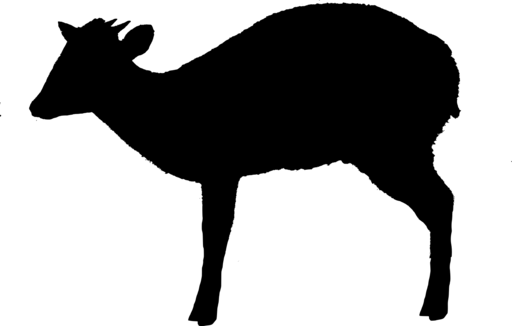
Natal Duiker

Natal Duiker

Cephalophus natalensis

Silhouette: Kai Caspar · PhyloPic

LCLeast ConcernNTVUENCR
Daily sighting probability ~50% · Likely
at Arusha National Park

In 3 days ~90% in a week >90%

29 Verified sightings at Arusha National Park From 2019 to 2026
218 In all 5 parks
April Best month
☀️ Diurnal When it's spotted

About the Natal Duiker

The red forest duiker, Natal duiker, or Natal red duiker (Cephalophus natalensis) is a small antelope found in central to southern Africa. It is one of 22 extant species form the subfamily Cephalophinae. While the red forest duiker is very similar to the common duiker, it is smaller in size and has a distinguishing reddish coloring. Additionally, the red forest duiker favors a denser bush habitat than the common duiker. The Natal red duiker is more diurnal and less secretive than most forest duikers, so therefore it is easier for them to be observed. In 1999, red forest duikers had an estimated wild population of 42,000 individuals.

Red forest duikers have a body length of up to 1 m (3.3 ft), a typical shoulder height of 43 cm (17 in), and an average mass of 14 kg (31 lb). Both sexes have short, straight horns about 6 cm (2.4 in) long, although in females they may be smaller in size. Towards the base, the horns have coarse rings and longitudinal striations, but they are smooth towards the tips. The longest recorded length of horns for the red forest duiker is 11 cm (4.3 in).

The red forest duiker is a rich reddish-brown in color, although the underparts are typically... Wikipedia →

Sounds

Recording0:13

Kenya · 2024

© Simon Musila · iNaturalist · CC BY-NC 4.0

Global Distribution

Parks Where Found

# Park Country Daily sighting probability
1 Arusha National Park 🇹🇿 Tanzania
~50%
2 iSimangaliso Wetland Park 🇿🇦 South Africa
~40%
3 uMkhuze Game Reserve 🇿🇦 South Africa
~20%
4 Gorongosa National Park 🇲🇿 Mozambique
~20%
5 Hluhluwe-Imfolozi Park 🇿🇦 South Africa
~10%

Cities Where Found

# City Country Daily sighting probability
1 Nairobi 🇰🇪 Kenya
~30%
2 Durban 🇿🇦 South Africa
~10%

Before you go

What are the chances of seeing a Natal Duiker in Arusha National Park?

Likely

About 50% of wildlife watchers report a Natal Duiker sighting in Arusha National Park on a given day, based on 29 verified sightings from GBIF citizen-science data from 2019 to 2026. It is the 10th most-seen of the 16 mammals we can rate there. Over three days the chance rises to about 90%, and over a week to over 90%, if each day is a fresh chance.

When is the best time to see a Natal Duiker in Arusha National Park?

March and April

In those months about 70% of wildlife watchers report a Natal Duiker in Arusha National Park on a given day, against about 10% in May, the lowest month. Those are among Arusha National Park's wettest months, with about 330 mm of rain a month against 65 mm in September.

What time of day is best to see a Natal Duiker?

Between 2 and 5 pm

Across all the parks we cover, that three-hour window holds the most Natal Duiker sightings with a recorded time, and nearly all of them come between 6 am and 6 pm: it is a daytime animal.

Is Arusha National Park the best place to see a Natal Duiker?

Yes

Of the 5 parks where we can rate Natal Duiker sightings, Arusha National Park has the highest daily chance: about 50%. Next come iSimangaliso Wetland Park (South Africa, about 40%) and uMkhuze Game Reserve (South Africa, about 20%). All parks ranked.

Which relatives of the Natal Duiker live in Arusha National Park?

Same family: Bovidae

The closest relatives of the Natal Duiker that you can see in Arusha National Park (family Bovidae, Bovids) are Waterbuck (about 80%), Northern Bushbuck (about 80%) and African Buffalo (about 60%), with each one's daily chance of a sighting.

Where does the Natal Duiker sighting chance come from?

GBIF citizen-science records

It is estimated from how often the Natal Duiker is recorded against all the mammals logged in Arusha National Park (29 verified sightings from 2019 to 2026), calibrated against known sighting rates. Figures are rounded to the nearest 10% because citizen-science data supports honest approximations, not decimals, and months with records from fewer than five people show "—". How it works.

← Back to Arusha National Park