About the Marsh Wren
The marsh wren (Cistothorus palustris) is a small North American songbird of the wren family. It was formerly called the long-billed marsh wren to distinguish it from the sedge wren, then known as the short-billed marsh wren.
The marsh wren was described by the Scottish-American ornithologist Alexander Wilson in 1810 and given the binomial name Certhia palustris. The current genus Cistothorus was introduced by the German ornithologist Jean Cabanis in 1850. There are 15 recognised subspecies.
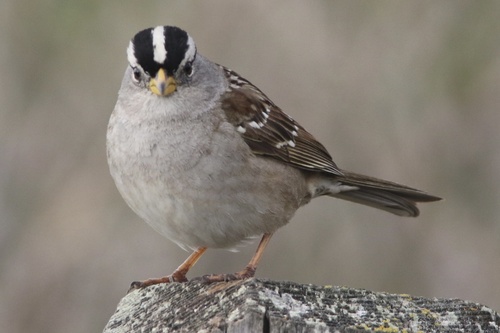
Etymology: from Greek 'κιστος' (cistos, "a shrub") and 'θουρος' (thouros, "leaping, or running through") and Latin 'palustris' ("marshy"). Adults have brown upperparts with a light brown belly and flanks and a white throat and breast. The back is black with white stripes. They have a dark cap with a white line over the eyes and a short thin bill.
The male's song is a loud gurgle used to declare ownership of territory; western males have a more varied repertoire. This little bird is native to Canada, Mexico, and the United States. Their breeding habitat is marshes with tall vegetation such as cattails across North America. In the western United States, some birds... Wikipedia →