About the Common Red Soldier Beetle
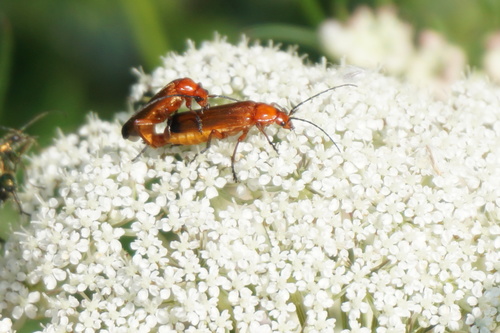
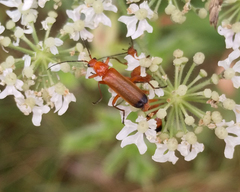
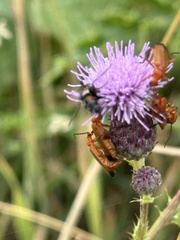
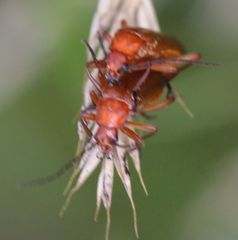
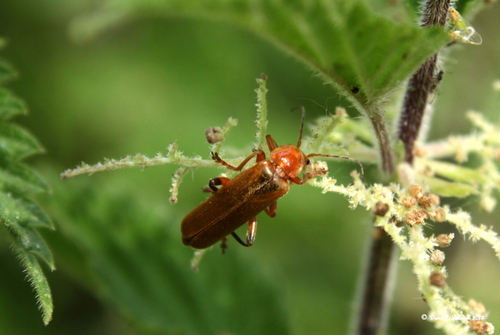
Rhagonycha fulva, the common red soldier beetle, also misleadingly known as the bloodsucker beetle, and popularly known in England as the hogweed bonking beetle is a species of soldier beetle (Cantharidae). Rhagonycha fulva was first described by Giovanni Antonio Scopoli in 1763 in Entomologia Carniolica as Cantharis fulva.
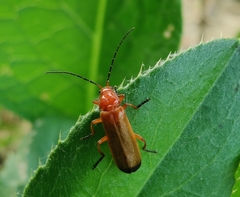
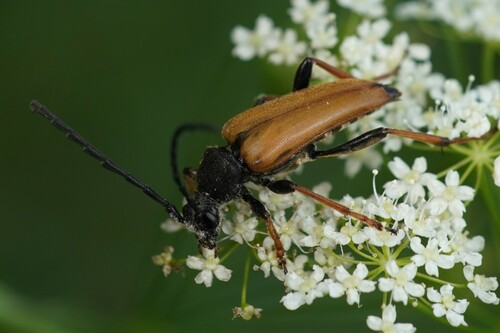
Rhagonycha fulva measures 8–10 millimetres (0.31–0.39 in) in length. Its antennae are black, occasionally the first segment is orange. The head and pronotum are orange and shiny, with fine pubescence visible on the head. The shape of the pronotum is variable, but it narrows towards the head. The elytra cover the wings and most of the abdomen and are a dark shiny red, and terminate in a clearly visible black patch on the apical end – this is one of the key identifying features. The femora and tibiae are orange, but the tarsi are black; the third segment of the tarsi is simple rather than bilobed.
All soldier beetles are soft-bodied, resulting in the German name of this species as Roter Weichkäfer (meaning "red soft beetle"). This beetle is very common in Europe and Anatolia. Introduced to North America, it is well... Wikipedia →