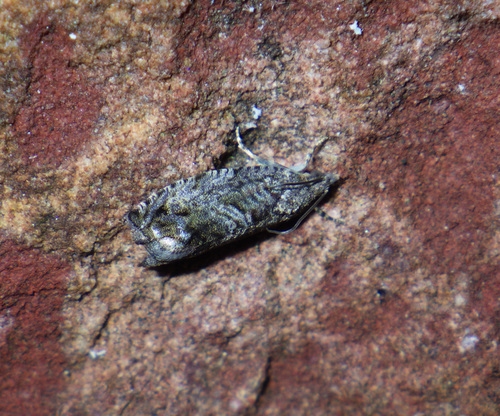
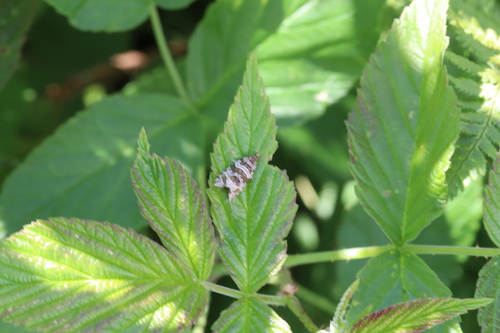
Garden Rose Tortrix

Garden Rose Tortrix

Acleris variegana

Daily sighting probability <5% · Rare
at Bavarian Forest National Park

In 3 days ~10% in a week ~30%

6 Verified sightings at Bavarian Forest National Park From 2019 to 2026
93 In all 4 parks
September Best month
☀️🌙 Day & Night When it's spotted

About the Garden Rose Tortrix

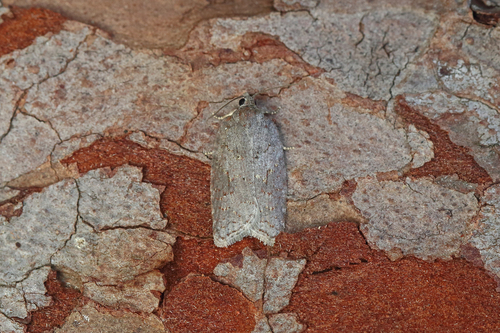
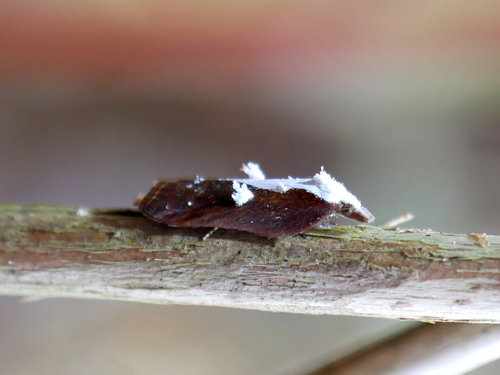
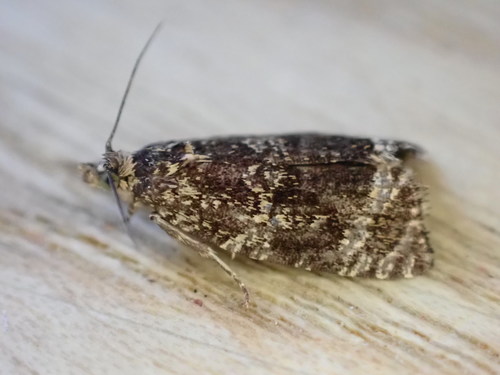
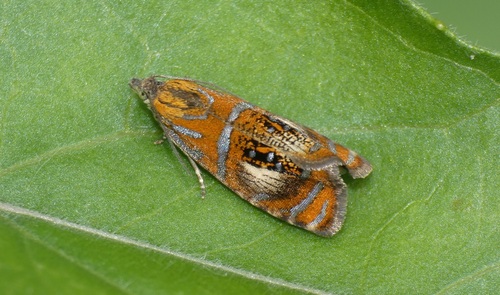
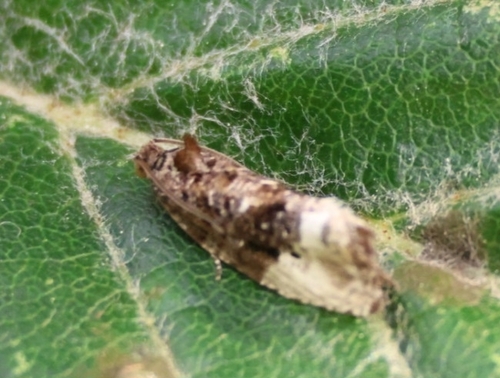
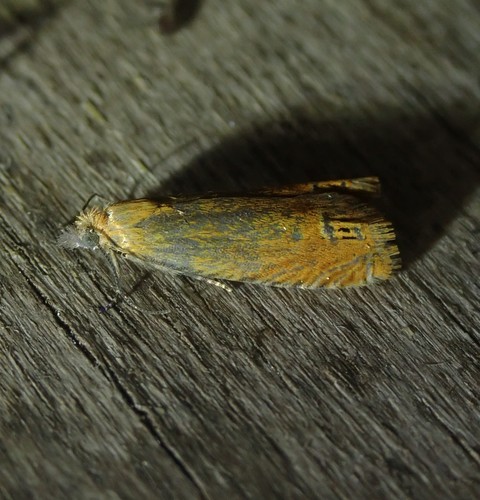
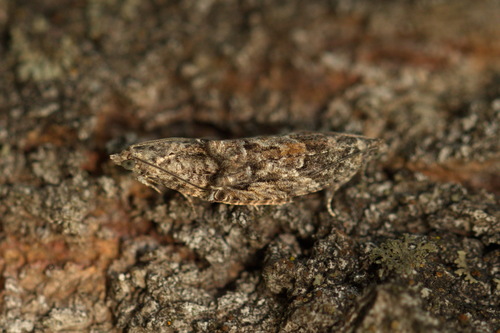
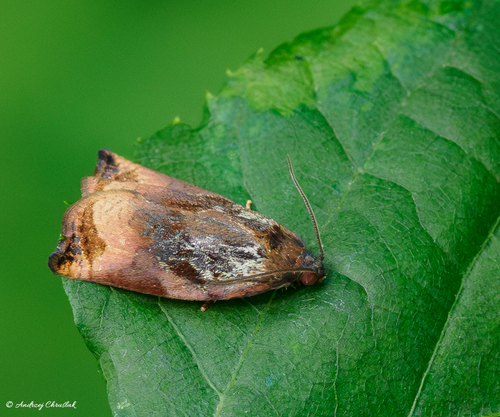
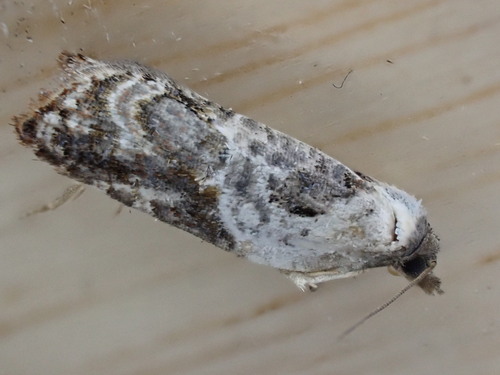
Acleris variegana, the garden rose tortricid moth or fruit tortricid, is a moth of the family Tortricidae. It has a Palearctic distribution. The moth flies from July to September mainly at night and is attracted to bright lights. The larvae feed on various trees and shrubs including rose and apple.

The fore wing is parallel-sided with an oblique external margin. The basal half is white or yellowish-white and there is a grayish-brown triangular spot close to the wing root. The distal part of the wing is reddish- or violet-brown, edged by a narrow grayish-yellow strip. The hind wing is brownish-gray. The wingspan is 14–20 millimetres (0.55–0.79 in). Julius von Kennel provides a full description.

The eggs are oval, light yellow for the summer generation and milky-white or orange for over-wintering eggs. The larva is yellowish with a shiny brown head. The pupa is 8–9 mm (0.31–0.35 in) long. Hatching caterpillars in spring eat fruit buds. Later they tie leaves into bundles with the help of webbing that they spin. They can skeletonize young leaves and also do damage to buds, flowers, ovaries and unripe fruits. In spring, eggs are laid in large batches. Moths... Wikipedia →
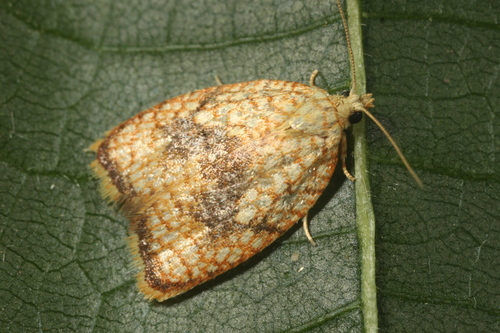
Global Distribution

Parks Where Found

# Park Country Daily sighting probability
1 Wadden Sea National Park 🇩🇪 Germany
~10%
2 Cévennes National Park 🇫🇷 France
~10%
3 Bavarian Forest National Park 🇩🇪 Germany
<5%
4 Pyrénées National Park 🇫🇷 France
<5%

Cities Where Found

# City Country Daily sighting probability
1 London 🇬🇧 United Kingdom
~10%
2 Manchester 🇬🇧 United Kingdom
~10%
3 Birmingham 🇬🇧 United Kingdom
~10%
4 Dublin 🇮🇪 Ireland
~10%
5 Vienna 🇦🇹 Austria
<5%
6 Seattle 🇺🇸 United States
<5%
7 Vancouver 🇨🇦 Canada
<5%

Before you go

What are the chances of seeing a Garden Rose Tortrix in Bavarian Forest National Park?

Rare

Under 5% of wildlife watchers report a Garden Rose Tortrix sighting in Bavarian Forest National Park on a given day, based on 6 verified sightings from GBIF citizen-science data from 2019 to 2026. It is the 964th most-seen of the 1115 insects we can rate there. Over three days the chance rises to about 10%, and over a week to about 30%, if each day is a fresh chance.

When is the best time to see a Garden Rose Tortrix in Bavarian Forest National Park?

September and October

In those months about 10% of wildlife watchers report a Garden Rose Tortrix in Bavarian Forest National Park on a given day, against under 5% in November to August, the lowest months.

What time of day is best to see a Garden Rose Tortrix?

Between 11 pm and 2 am

Across all the parks we cover, that three-hour window holds the most Garden Rose Tortrix sightings with a recorded time, and about 7 in 10 of them come between 6 pm and 6 am: it is seen both by day and at night.

Is Bavarian Forest National Park the best place to see a Garden Rose Tortrix?

3rd of 4

Of the 4 parks where we can rate Garden Rose Tortrix sightings, Bavarian Forest National Park ranks 3rd at under 5%. The best odds are in Wadden Sea National Park (Germany, about 10%) and Cévennes National Park (France, about 10%).

Which relatives of the Garden Rose Tortrix live in Bavarian Forest National Park?

Same genus: Acleris

The closest relatives of the Garden Rose Tortrix that you can see in Bavarian Forest National Park (genus Acleris) are Maple Leaftier Moth (about 10%) and Ashy Button (about 10%), with each one's daily chance of a sighting.

Where does the Garden Rose Tortrix sighting chance come from?

GBIF citizen-science records

It is estimated from how often the Garden Rose Tortrix is recorded against all the insects logged in Bavarian Forest National Park (6 verified sightings from 2019 to 2026), calibrated against known sighting rates. Figures are rounded to the nearest 10% because citizen-science data supports honest approximations, not decimals, and months with records from fewer than five people show "—". How it works.

← Back to Bavarian Forest National Park