Migrant Hawker

Migrant Hawker

Aeshna mixta

Daily sighting probability <5% · Rare
at Bavarian Forest National Park

In 3 days ~10% in a week ~30%

5 Verified sightings at Bavarian Forest National Park From 2019 to 2026
75 In all 6 parks
November Best month
☀️ Diurnal When it's spotted

About the Migrant Hawker

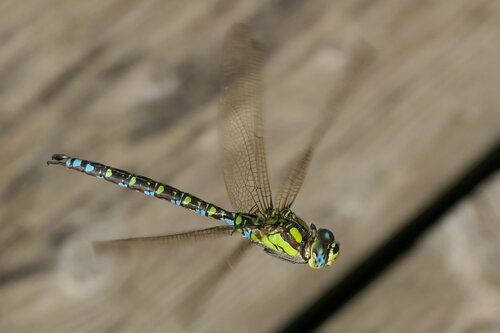
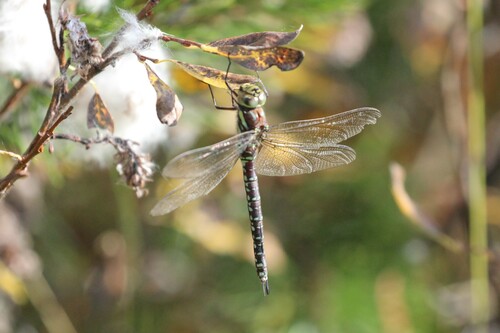
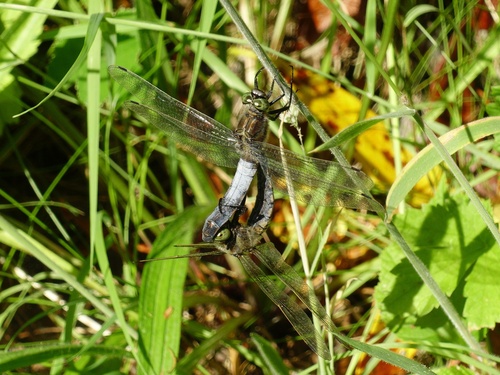
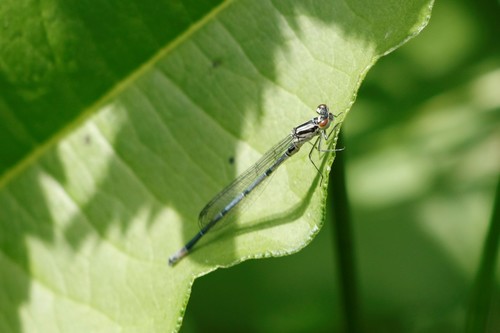
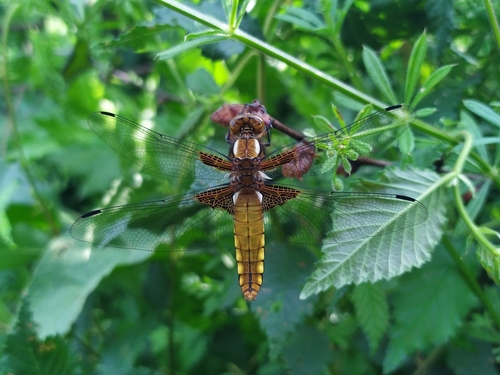
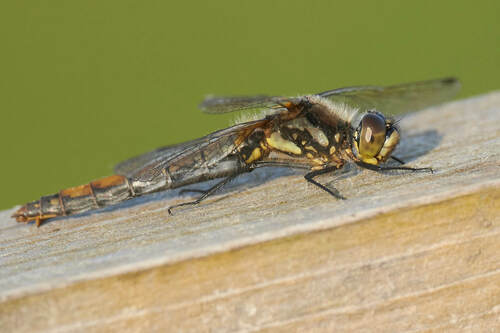
The migrant hawker or autumn hawker (Aeshna mixta) is one of the smaller species of hawker dragonflies. It can be found away from water but for breeding it prefers still or slow-flowing water and can tolerate brackish sites. The flight period is from July to the middle of November. A. mixta occurs in North Africa, southern and central Europe to southern Scandinavia and the Baltic region.

A. mixta is a small Aeshna which appears dark in flight. It is similar in appearance to other Aeshna species but has a characteristic "golf-tee" shaped mark on the second segment of the abdomen (S2) which is diagnostic. In flight it looks like a small Emperor dragonfly with a blue abdomen which, when seen from the side, curves down. The main identification problem in the field is distinguishing this species from A. affinis where the two species fly together. The markings on the side of the thorax are different in A. affinis and A. mixta. In A. affinis the sides of the thorax are greeny yellow with fine black lines along the sutures. In A. mixta the sides of the thorax are similar in colour but the yellow is separated by dark brown areas so it gives the appearance of having two... Wikipedia →

Global Distribution

Parks Where Found

# Park Country Daily sighting probability
1 Kiskunság National Park 🇭🇺 Hungary
~20%
2 Doñana National Park 🇪🇸 Spain
~10%
3 Wadden Sea National Park 🇩🇪 Germany
~10%
4 Snowdonia National Park 🇬🇧 United Kingdom
~10%
5 Bavarian Forest National Park 🇩🇪 Germany
<5%
6 Sierra de Guadarrama National Park 🇪🇸 Spain
<5%

Cities Where Found

# City Country Daily sighting probability
1 Brussels 🇧🇪 Belgium
~20%
2 London 🇬🇧 United Kingdom
~10%
3 Dublin 🇮🇪 Ireland
~10%
4 Milan 🇮🇹 Italy
~10%
5 Helsinki 🇫🇮 Finland
~10%
6 Liverpool 🇬🇧 United Kingdom
~10%
7 Copenhagen 🇩🇰 Denmark
~10%
8 Birmingham 🇬🇧 United Kingdom
~10%
9 Rotterdam [The Hague] 🇳🇱 Netherlands
~10%
10 Leeds 🇬🇧 United Kingdom
~10%

Before you go

What are the chances of seeing a Migrant Hawker in Bavarian Forest National Park?

Rare

Under 5% of wildlife watchers report a Migrant Hawker sighting in Bavarian Forest National Park on a given day, based on 5 verified sightings from GBIF citizen-science data from 2019 to 2026. It is the 964th most-seen of the 1115 insects we can rate there. Over three days the chance rises to about 10%, and over a week to about 30%, if each day is a fresh chance.

When is the best time to see a Migrant Hawker in Bavarian Forest National Park?

August–September and November

In those months about 10% of wildlife watchers report a Migrant Hawker in Bavarian Forest National Park on a given day, against under 5% in October and December–July, the lowest months.

What time of day is best to see a Migrant Hawker?

Between 1 and 4 pm

Across all the parks we cover, that three-hour window holds the most Migrant Hawker sightings with a recorded time, and about 9 in 10 of them come between 6 am and 6 pm: it is a daytime animal.

Is Bavarian Forest National Park the best place to see a Migrant Hawker?

5th of 6

Of the 6 parks where we can rate Migrant Hawker sightings, Bavarian Forest National Park ranks 5th at under 5%. The best odds are in Kiskunság National Park (Hungary, about 20%), Doñana National Park (Spain, about 10%) and Wadden Sea National Park (Germany, about 10%).

Which relatives of the Migrant Hawker live in Bavarian Forest National Park?

Same genus: Aeshna

The closest relatives of the Migrant Hawker that you can see in Bavarian Forest National Park (genus Aeshna, Hawkers and Typical Darners) are Southern Hawker (about 10%) and Sedge Darner (about 10%), with each one's daily chance of a sighting.

Where does the Migrant Hawker sighting chance come from?

GBIF citizen-science records

It is estimated from how often the Migrant Hawker is recorded against all the insects logged in Bavarian Forest National Park (5 verified sightings from 2019 to 2026), calibrated against known sighting rates. Figures are rounded to the nearest 10% because citizen-science data supports honest approximations, not decimals, and months with records from fewer than five people show "—". How it works.

← Back to Bavarian Forest National Park