Small Elephant Hawkmoth

Small Elephant Hawkmoth

Deilephila porcellus

Daily sighting probability ~10% · With luck
at Bavarian Forest National Park

In 3 days ~20% in a week ~40%

13 Verified sightings at Bavarian Forest National Park From 2019 to 2026
248 In all 11 parks
May Best month
☀️🌙 Day & Night When it's spotted

About the Small Elephant Hawkmoth

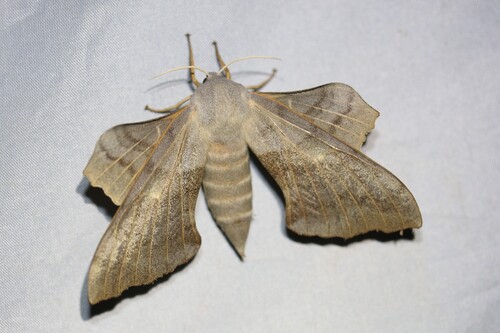
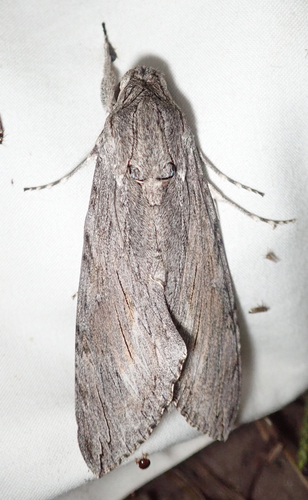
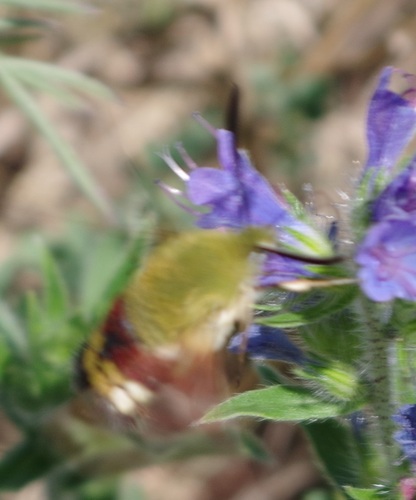
Deilephila porcellus, the small elephant hawk-moth, is a moth of the family Sphingidae. The species was first described by Carl Linnaeus in his 1758 10th edition of Systema Naturae. It is found in Europe, North Africa and West Asia.

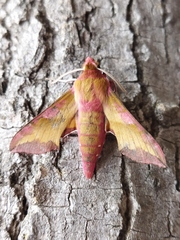
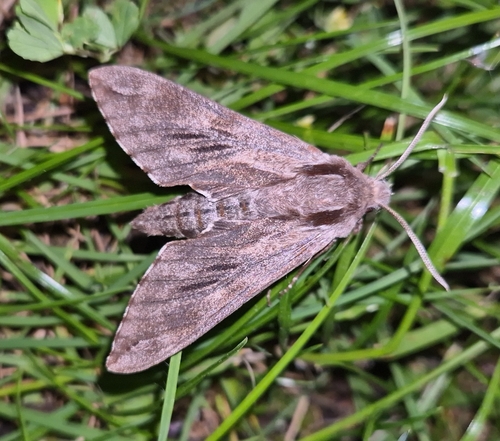
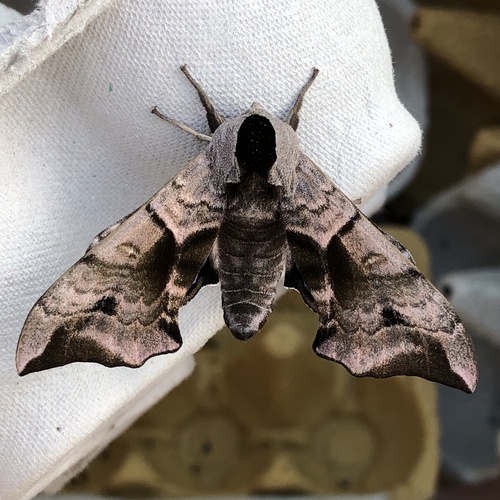
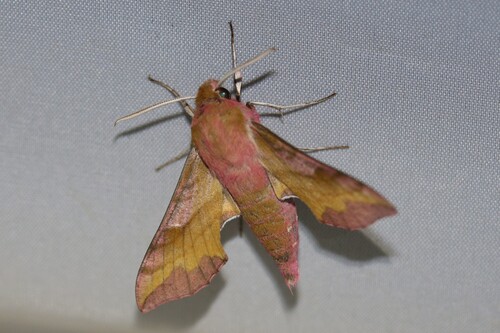
The wingspan is 45–51 millimeters (1.8–2.0 in). The moth flies from May to July depending on the location. The forewings are ochreous with a faint olive tinge; the front margin is edged and blotched with pinkish, and there is a broad but irregular band of the same colour on the outer margin. The hindwings are blackish on their upper margin, pinkish on their outer margin, and ochreous tinged with olive between. The fringes are chequered whitish, sometimes tinged with pink. The head, thorax, and body are pinkish, more or less variegated with olive; the thorax has a patch of white hairs above the base of the wings. It is highly variable in colouration. In drier and warmer and arid areas of Asia Minor and Central Asia the pink colouration is absent. Form rosea Zerny is intermediate; f. indistincta Tutt is pinkish grey; f. suellus is yellowish sandy buff.

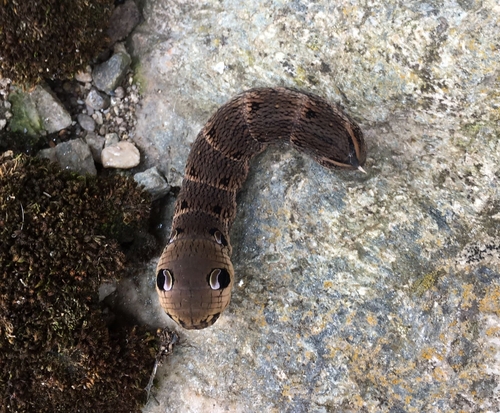
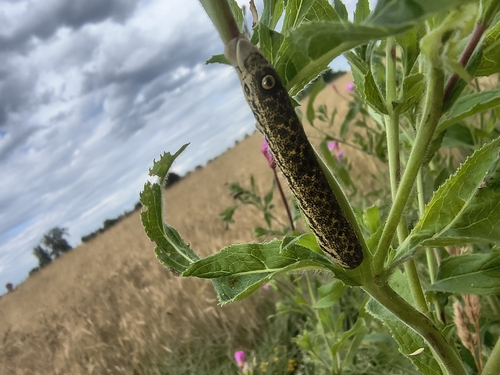
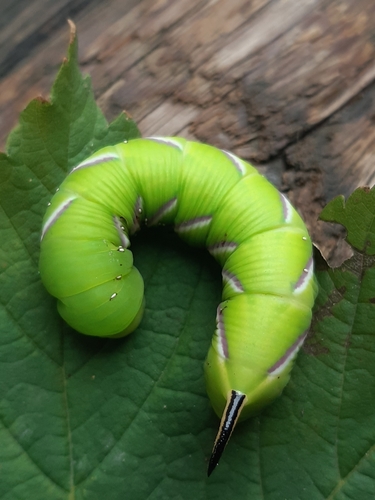
The larva is greyish brown or darker grey, merging into yellowish... Wikipedia →
Global Distribution

Parks Where Found

# Park Country Daily sighting probability
1 Aigüestortes National Park 🇪🇸 Spain
~20%
2 Mercantour National Park 🇫🇷 France
~20%
3 Pyrénées National Park 🇫🇷 France
~10%
4 Vanoise National Park 🇫🇷 France
~10%
5 Cévennes National Park 🇫🇷 France
~10%
6 Triglav National Park 🇸🇮 Slovenia
~10%
7 Ecrins National Park 🇫🇷 France
~10%
8 Wadden Sea National Park 🇩🇪 Germany
~10%
9 Fertő-Hanság National Park 🇭🇺 Hungary
~10%
10 Bavarian Forest National Park 🇩🇪 Germany
~10%
11 Snowdonia National Park 🇬🇧 United Kingdom
~10%

Cities Where Found

# City Country Daily sighting probability
1 London 🇬🇧 United Kingdom
~10%
2 Manchester 🇬🇧 United Kingdom
<5%
3 Cologne 🇩🇪 Germany
<5%
4 Berlin 🇩🇪 Germany
<5%
5 Vienna 🇦🇹 Austria
<5%
6 Prague 🇨🇿 Czechia
<5%
7 Copenhagen 🇩🇰 Denmark
<5%
8 Moscow 🇷🇺 Russia
<5%

Before you go

What are the chances of seeing a Small Elephant Hawkmoth in Bavarian Forest National Park?

With luck

About 10% of wildlife watchers report a Small Elephant Hawkmoth sighting in Bavarian Forest National Park on a given day, based on 13 verified sightings from GBIF citizen-science data from 2019 to 2026. It is the 402nd most-seen of the 1115 insects we can rate there. Over three days the chance rises to about 20%, and over a week to about 40%, if each day is a fresh chance.

When is the best time to see a Small Elephant Hawkmoth in Bavarian Forest National Park?

May to August

In those months about 10% of wildlife watchers report a Small Elephant Hawkmoth in Bavarian Forest National Park on a given day, against under 5% in September to April, the lowest months.

What time of day is best to see a Small Elephant Hawkmoth?

Between 10 pm and 1 am

Across all the parks we cover, that three-hour window holds the most Small Elephant Hawkmoth sightings with a recorded time, and about 6 in 10 of them come between 6 pm and 6 am: it is seen both by day and at night.

Is Bavarian Forest National Park the best place to see a Small Elephant Hawkmoth?

10th of 11

Of the 11 parks where we can rate Small Elephant Hawkmoth sightings, Bavarian Forest National Park ranks 10th at about 10%. The best odds are in Aigüestortes National Park (Spain, about 20%), Mercantour National Park (France, about 20%) and Pyrénées National Park (France, about 10%).

Where does the Small Elephant Hawkmoth sighting chance come from?

GBIF citizen-science records

It is estimated from how often the Small Elephant Hawkmoth is recorded against all the insects logged in Bavarian Forest National Park (13 verified sightings from 2019 to 2026), calibrated against known sighting rates. Figures are rounded to the nearest 10% because citizen-science data supports honest approximations, not decimals, and months with records from fewer than five people show "—". How it works.

← Back to Bavarian Forest National Park