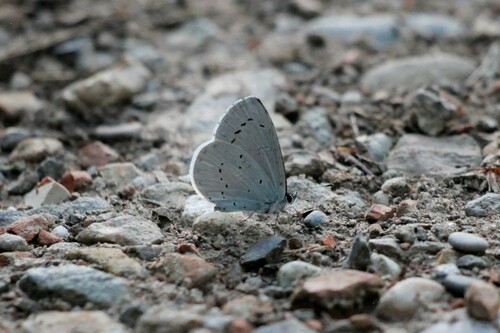
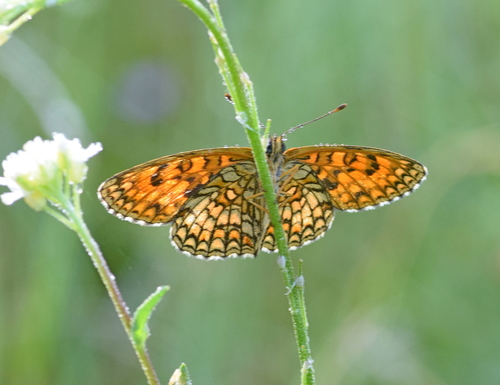
Oak Eggar

Oak Eggar

Lasiocampa quercus

Daily sighting probability ~20% · Possible
at Biebrza National Park

In 3 days ~50% in a week ~80%

9 Verified sightings at Biebrza National Park From 2019 to 2026
768 In all 16 parks
September Best month
☀️ Diurnal When it's spotted

About the Oak Eggar

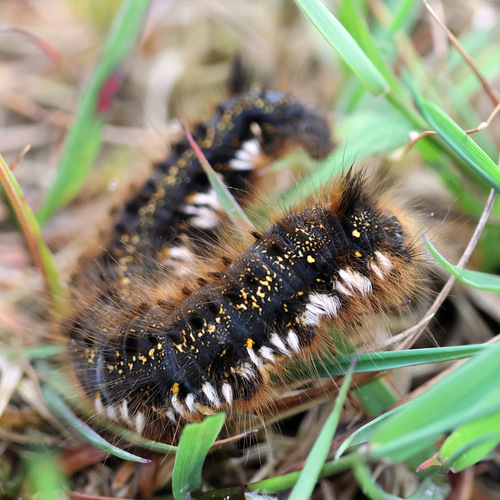
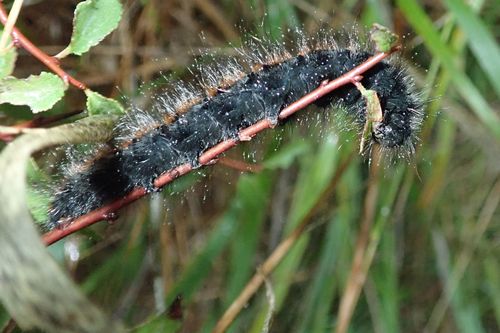
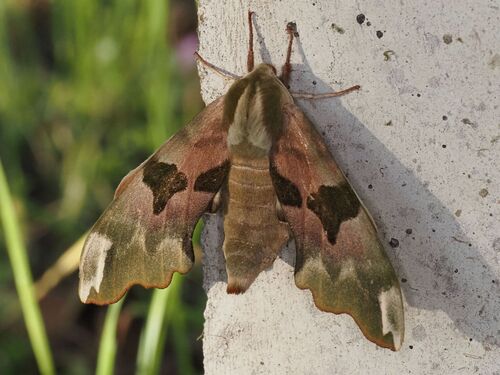
The oak eggar (Lasiocampa quercus) is a common moth of the family Lasiocampidae found in Europe and northern and western parts of Asia. It feeds on a variety of plant species (mainly heather and bilberry), and may develop over two years in higher latitudes, where it may be known as the northern eggar. Its specific name quercus refers to the fact that its cocoon generally resembles an acorn, not that its primary food source is oak.

The oak eggar's habitat is wide-ranging, including scrub, heath, moor, downland, hedges and sea cliffs, reflecting the larva's very varied range of food plants. The moth's wingspan is about 45 mm (male) to 75 mm (female), the female being larger and paler than the male. It is Britain's largest day-flying moth.

The oak eggar is on the wing for about two months between May and September, depending on the latitude. In more northerly latitudes, development can span two years, with larvae overwintering the first year, and the pupae in the second year. In northern areas it is known as the northern eggar; this was formerly thought to be a separate species, but is generally assumed to be a subspecies Lasiocampa quercus callunae... Wikipedia →

Global Distribution

Parks Where Found

# Park Country Daily sighting probability
1 Hohe Tauern National Park 🇦🇹 Austria
~40%
2 Cairngorms National Park 🇬🇧 United Kingdom
~40%
3 Tatra National Park 🇸🇰 Slovakia
~40%
4 Snowdonia National Park 🇬🇧 United Kingdom
~30%
5 Aigüestortes National Park 🇪🇸 Spain
~20%
6 Biebrza National Park 🇵🇱 Poland
~20%
7 Triglav National Park 🇸🇮 Slovenia
~20%
8 Pyrénées National Park 🇫🇷 France
~20%
9 Ecrins National Park 🇫🇷 France
~20%
10 Mercantour National Park 🇫🇷 France
~20%
11 Vanoise National Park 🇫🇷 France
~20%
12 Wadden Sea National Park 🇩🇪 Germany
~10%
13 Cévennes National Park 🇫🇷 France
~10%
14 Bavarian Forest National Park 🇩🇪 Germany
~10%
15 Fertő-Hanság National Park 🇭🇺 Hungary
~10%
16 Sierra de Guadarrama National Park 🇪🇸 Spain
<5%

Cities Where Found

# City Country Daily sighting probability
1 Naples 🇮🇹 Italy
~10%
2 Porto 🇵🇹 Portugal
~10%
3 Paris 🇫🇷 France
~10%
4 Rome 🇮🇹 Italy
~10%
5 Brussels 🇧🇪 Belgium
~10%
6 Lyon 🇫🇷 France
~10%
7 Lisbon 🇵🇹 Portugal
~10%
8 Rotterdam [The Hague] 🇳🇱 Netherlands
<5%
9 Barcelona 🇪🇸 Spain
<5%
10 Vienna 🇦🇹 Austria
<5%

Before you go

What are the chances of seeing an Oak Eggar in Biebrza National Park?

Possible

About 20% of wildlife watchers report an Oak Eggar sighting in Biebrza National Park on a given day, based on 9 verified sightings from GBIF citizen-science data from 2019 to 2026. It is the 40th most-seen of the 97 insects we can rate there. Over three days the chance rises to about 50%, and over a week to about 80%, if each day is a fresh chance.

When is the best time to see an Oak Eggar in Biebrza National Park?

May and September

In those months about 30% of wildlife watchers report an Oak Eggar in Biebrza National Park on a given day, against under 5% in March–April, August and October, the lowest months. December has too few records to rate.

What time of day is best to see an Oak Eggar?

Between 1 and 4 pm

Across all the parks we cover, that three-hour window holds the most Oak Eggar sightings with a recorded time, and about 9 in 10 of them come between 6 am and 6 pm: it is a daytime animal.

Which relatives of the Oak Eggar live in Biebrza National Park?

Same family: Lasiocampidae

The closest relatives of the Oak Eggar that you can see in Biebrza National Park (family Lasiocampidae, Lappet Moths) are Drinker Moth (about 40%) and Fox Moth (about 30%), with each one's daily chance of a sighting.

Where does the Oak Eggar sighting chance come from?

GBIF citizen-science records

It is estimated from how often the Oak Eggar is recorded against all the insects logged in Biebrza National Park (9 verified sightings from 2019 to 2026), calibrated against known sighting rates. Figures are rounded to the nearest 10% because citizen-science data supports honest approximations, not decimals, and months with records from fewer than five people show "—". How it works.

← Back to Biebrza National Park