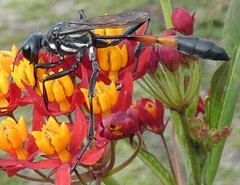
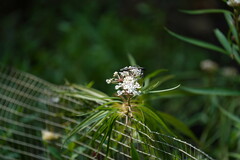
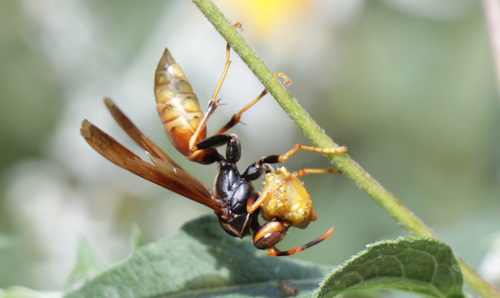
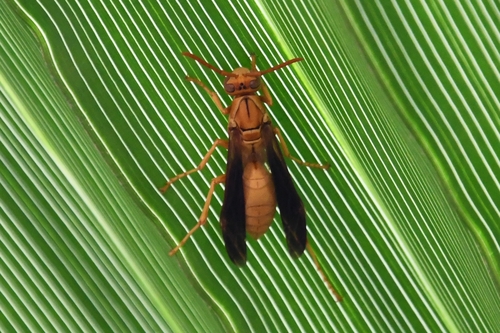
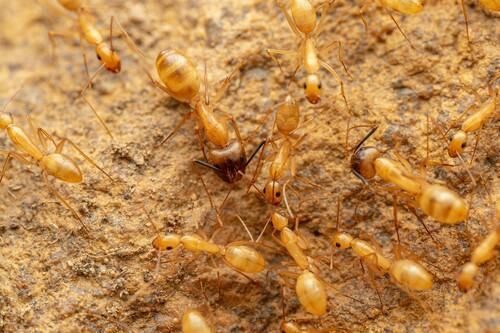
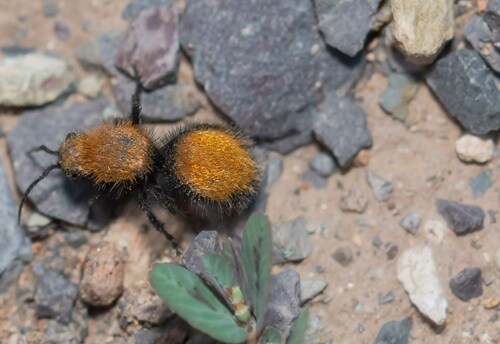
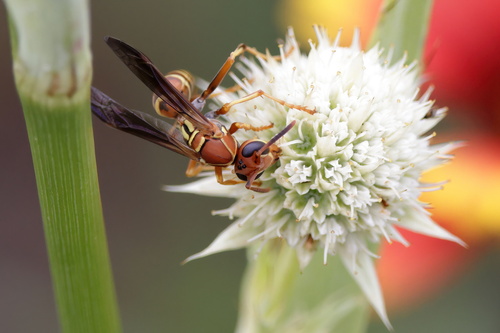
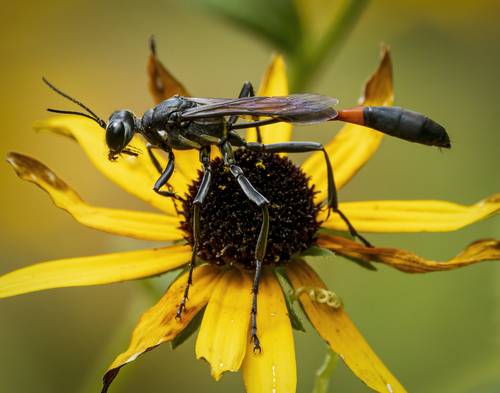
Common Thread-Waisted Wasp

Common Thread-Waisted Wasp

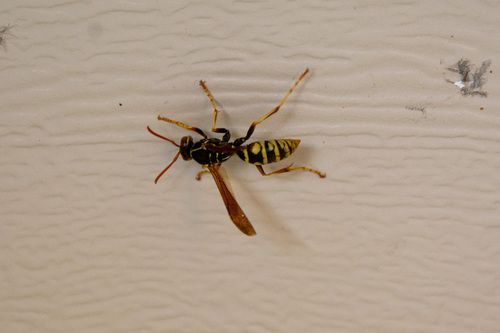
Ammophila procera

Daily sighting probability <5% · Rare
at Big Bend National Park

In 3 days ~10% in a week ~30%

5 Verified sightings at Big Bend National Park From 2019 to 2026
5 In 1 park
August Best month
☀️ Diurnal When it's spotted

About the Common Thread-Waisted Wasp

Ammophila procera, the common thread-waisted wasp, is a species of thread-waisted wasp in the family Sphecidae. It is a common species, found in southern Canada, the United States, and Mexico, and south to Central America.

Ammophila procera generally live in open areas with soft or sandy soil where they can burrow nests. The adult female digs a burrow. After completing the burrow, it seals the entrance and makes flight around the area, memorizing landmarks such as rocks, plants, etc. It uses these landmarks to locate the burrow when it returns, sometimes days later.

It then captures and paralyzes prey, usually a moth caterpillar or sawfly larva, and drags it to the burrows where it lays a single egg on the prey. The female then seals the nest with dirt and debris. Despite sealing the nest, some females will "hijack" another's nest, replacing the egg in the nest with their own.

The egg typically hatches after two days, and the larva feeds on the caterpillar for about five days before it pupates within the nest. It emerges from the nest with fully formed wings. The adults feed primarily on flower nectar. Wikipedia →
Global Distribution

Parks Where Found

# Park Country Daily sighting probability
1 Big Bend National Park 🇺🇸 United States
<5%

More parks will be added in future updates.

Cities Where Found

# City Country Daily sighting probability
1 Orlando 🇺🇸 United States
<5%
2 Houston 🇺🇸 United States
<5%
3 Boston 🇺🇸 United States
<5%
4 Dallas 🇺🇸 United States
<5%
5 New York City 🇺🇸 United States
<5%
6 Washington 🇺🇸 United States
<5%

Before you go

What are the chances of seeing a Common Thread-Waisted Wasp in Big Bend National Park?

Rare

Under 5% of wildlife watchers report a Common Thread-Waisted Wasp sighting in Big Bend National Park on a given day, based on 5 verified sightings from GBIF citizen-science data from 2019 to 2026. It is the 283rd most-seen of the 329 insects we can rate there. Over three days the chance rises to about 10%, and over a week to about 30%, if each day is a fresh chance.

When is the best time to see a Common Thread-Waisted Wasp in Big Bend National Park?

March, July–August and October–November

In those months about 10% of wildlife watchers report a Common Thread-Waisted Wasp in Big Bend National Park on a given day, against under 5% in April–June, September and December–February, the lowest months.

What time of day is best to see a Common Thread-Waisted Wasp?

Between 9 am and noon

Across all the parks we cover, that three-hour window holds the most Common Thread-Waisted Wasp sightings with a recorded time, and about 8 in 10 of them come between 6 am and 6 pm: it is a daytime animal.

Where else can you see a Common Thread-Waisted Wasp?

Only Big Bend National Park, in our data

Big Bend National Park is the only park on Wallace's Line with enough records to rate Common Thread-Waisted Wasp sightings: under 5% of wildlife watchers there report one on a given day.

Which relatives of the Common Thread-Waisted Wasp live in Big Bend National Park?

Same order: Hymenoptera

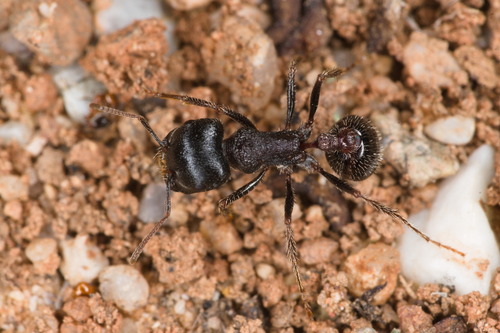
The closest relatives of the Common Thread-Waisted Wasp that you can see in Big Bend National Park (order Hymenoptera, Ants, Bees, Wasps, and Sawflies) are Comanche Paper Wasp (about 30%), Rough Harvester Ant (about 20%) and Western Carpenter Bee (about 20%), with each one's daily chance of a sighting.

Where does the Common Thread-Waisted Wasp sighting chance come from?

GBIF citizen-science records

It is estimated from how often the Common Thread-Waisted Wasp is recorded against all the insects logged in Big Bend National Park (5 verified sightings from 2019 to 2026), calibrated against known sighting rates. Figures are rounded to the nearest 10% because citizen-science data supports honest approximations, not decimals, and months with records from fewer than five people show "—". How it works.

← Back to Big Bend National Park