About the Eastern Phoebe
The eastern phoebe (Sayornis phoebe) is a small passerine bird. The genus name Sayornis is constructed from the specific part of Charles Lucien Bonaparte's name for Say's phoebe, Muscicapa saya, and Ancient Greek ornis, "bird". Phoebe is an alternative name for the Roman moon goddess Diana, but it may also have been chosen to imitate the bird's call.
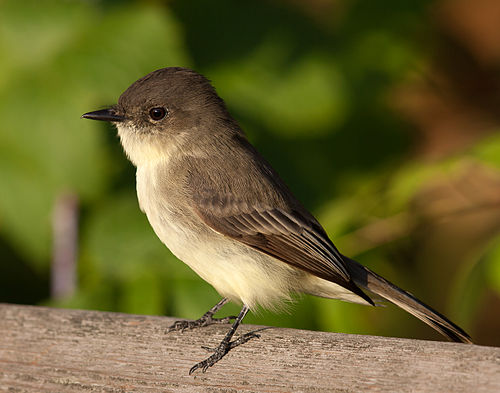
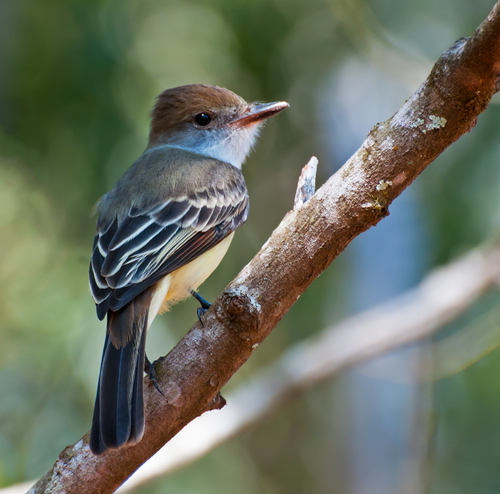
Measurements: Length: 5.5–6.7 in (14–17 cm) Weight: 0.6–0.7 oz (16–21 g) Wingspan: 10.2–11.0 in (26–28 cm) This species appears remarkably big-headed, especially if it puffs up the small crest. Its plumage is gray-brown above. It has a white throat, dirty gray breast, and buffish underparts which become whiter during the breeding season. Two indistinct buff bars are present on each wing. Its all-dark bill and lack of an eye ring and wingbars distinguish it from other North American tyrant flycatchers, and it pumps its tail up and down like other phoebes when perching on a branch. The eastern phoebe's call is a sharp chip, and the song, from which it may get its name, is fee-bee.
The eastern wood pewee (Contopus virens) is extremely similar in appearance. It lacks the buff hue usually present on the lighter parts of the... Wikipedia →