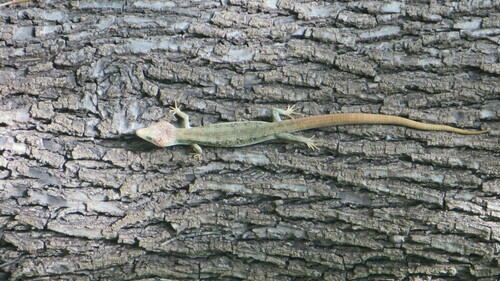
Great Plains Skink

Great Plains Skink

Plestiodon obsoletus

Silhouette: David Orr · PhyloPic

LCLeast ConcernNTVUENCR
Daily sighting probability ~10% · With luck
at Big Bend National Park

In 3 days ~20% in a week ~50%

12 Verified sightings at Big Bend National Park From 2019 to 2026
18 In all 2 parks
July Best month
☀️ Diurnal When it's spotted

About the Great Plains Skink

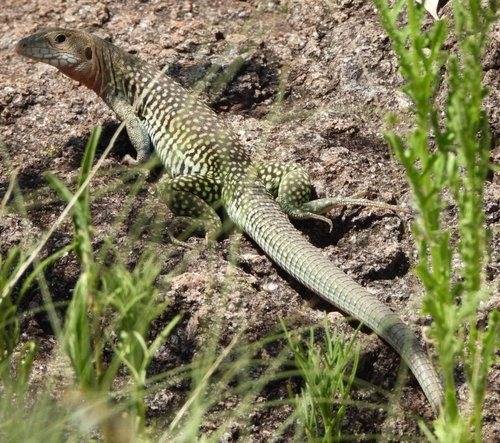
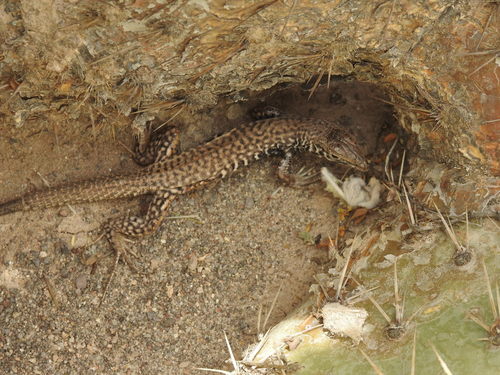
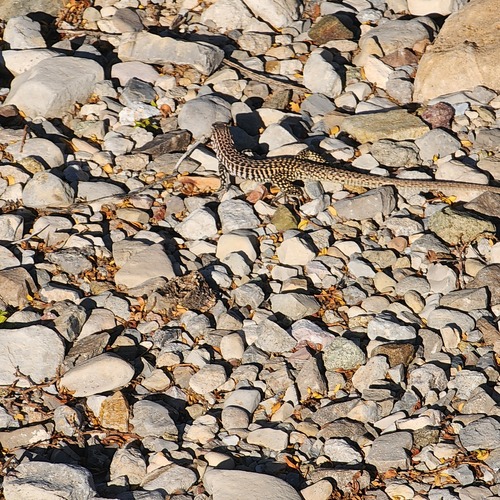
The Great Plains skink (Plestiodon obsoletus) is a species of lizard endemic to North America. The Great Plains skink, together with the broad-headed skink, is the largest skink of the genus Plestiodon. It reaches a length of 9 to 13 cm from snout to vent (SVL) or up to nearly 34 cm total length (including the tail).

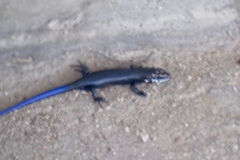
This lizard is light gray or beige in color; its dorsal scales have black or dark brown edges. The scales on the sides run diagonally. The belly is yellow. Juveniles are black with white spots on the lips and the head and have a blue or bluish tail.

The Great Plains skink is very common on the Great Plains, ranging from southeastern Wyoming and Nebraska (and also Fremont County, Iowa) southward to eastern Arizona, New Mexico, Texas, and into Mexico. This skink lives in open plains habitat or the eastern foothills of the Rocky Mountains, in areas near water, e.g. irrigation ditches. In southeastern Colorado, it occurs in elevation up to about 1900 m (7200 ft); in northern Colorado, only at elevations below about 1400 m (4500 ft).

The mating season of the Great Plains skink is in April or May.... Wikipedia →

Global Distribution

Parks Where Found

# Park Country Daily sighting probability
1 Guadalupe Mountains National Park 🇺🇸 United States
~10%
2 Big Bend National Park 🇺🇸 United States
~10%

Cities Where Found

# City Country Daily sighting probability
1 Monterrey 🇲🇽 México
<5%

Zoos & Centres Where Found

# Zoo / Centre Country
1 Gladys Porter Zoo 🇺🇸 United States In captivity

Before you go

What are the chances of seeing a Great Plains Skink in Big Bend National Park?

With luck

About 10% of wildlife watchers report a Great Plains Skink sighting in Big Bend National Park on a given day, based on 12 verified sightings from GBIF citizen-science data from 2019 to 2026. It is the 36th most-seen of the 48 reptiles we can rate there. Over three days the chance rises to about 20%, and over a week to about 50%, if each day is a fresh chance.

When is the best time to see a Great Plains Skink in Big Bend National Park?

July

In that month about 30% of wildlife watchers report a Great Plains Skink in Big Bend National Park on a given day, against under 5% in May–June and October–March, the lowest months.

What time of day is best to see a Great Plains Skink?

Between 11 am and 2 pm

Across all the parks we cover, that three-hour window holds the most Great Plains Skink sightings with a recorded time, and about 8 in 10 of them come between 6 am and 6 pm: it is a daytime animal.

Is Big Bend National Park the best place to see a Great Plains Skink?

Among the best

Of the 2 parks where we can rate Great Plains Skink sightings, Big Bend National Park ranks 2nd at about 10%, level with the leaders once rounded. The best odds are in Guadalupe Mountains National Park (United States, about 10%).

Where does the Great Plains Skink sighting chance come from?

GBIF citizen-science records

It is estimated from how often the Great Plains Skink is recorded against all the reptiles logged in Big Bend National Park (12 verified sightings from 2019 to 2026), calibrated against known sighting rates. Figures are rounded to the nearest 10% because citizen-science data supports honest approximations, not decimals, and months with records from fewer than five people show "—". How it works.

← Back to Big Bend National Park