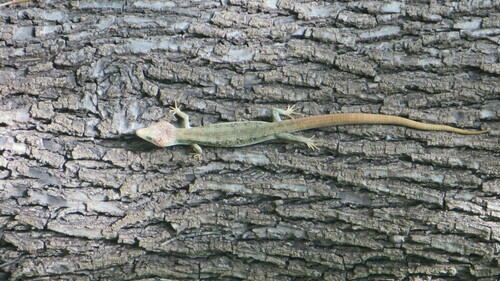
Texas Banded Gecko

Texas Banded Gecko

Coleonyx brevis

Silhouette: Jose Carlos Arenas-Monroy · PhyloPic

LCLeast ConcernNTVUENCR
Daily sighting probability ~20% · Possible
at Big Bend National Park

In 3 days ~50% in a week ~80%

52 Verified sightings at Big Bend National Park From 2019 to 2026
60 In all 2 parks
August Best month
☀️🌙 Day & Night When it's spotted

About the Texas Banded Gecko

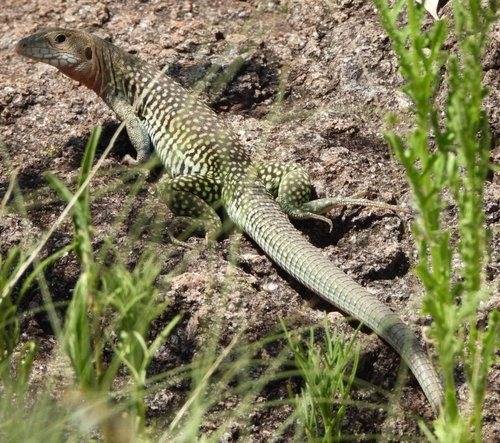
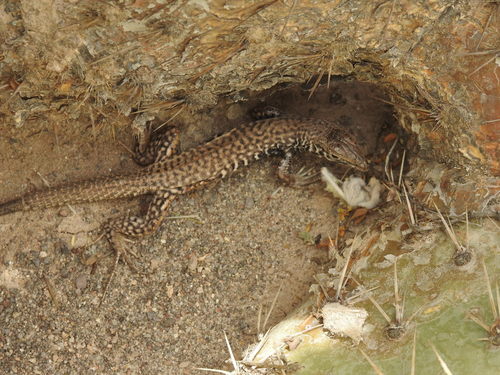
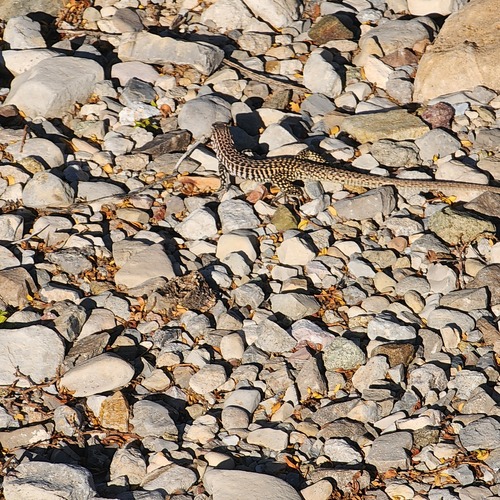
The Texas banded gecko (Coleonyx brevis) is a species of small gecko native to the southwestern United States and northern Mexico. Texas banded geckos are small, terrestrial lizards, rarely exceeding 4 in (10 cm) in length. They have alternating bands of yellow and brown or pink colored banding down their body, generally with black accenting on the bands, and sometimes with varying degrees of black speckling. Hatchlings and juveniles display a banded pattern; the banded pattern gets a more mottled appearance as the gecko becomes an adult.

It is found in western Texas and in southeastern New Mexico in the United States, and in Chihuahua, Coahuila, Nuevo León, and Durango in Mexico. They prefer semi-arid habitats, and are often found around rock piles or canyon crevices.

Primarily nocturnal and carnivorous, they will consume almost any kind of small arthropods. They are capable of vocalizing, and sometimes emit squeaking noises, most often when harassed or handled. Reproduction occurs in the late spring, and they lay one or two eggs, which are surprisingly large compared to the size of the gecko.

Texas banded geckos... Wikipedia →

Global Distribution

Parks Where Found

# Park Country Daily sighting probability
1 Big Bend National Park 🇺🇸 United States
~20%
2 Guadalupe Mountains National Park 🇺🇸 United States
~10%

Closest Relatives at Big Bend National Park

No species of the same family or order lives in Big Bend National Park, so these are its closest relatives here: other reptiles.

Before you go

What are the chances of seeing a Texas Banded Gecko in Big Bend National Park?

Possible

About 20% of wildlife watchers report a Texas Banded Gecko sighting in Big Bend National Park on a given day, based on 52 verified sightings from GBIF citizen-science data from 2019 to 2026. It is the 17th most-seen of the 48 reptiles we can rate there. Over three days the chance rises to about 50%, and over a week to about 80%, if each day is a fresh chance.

When is the best time to see a Texas Banded Gecko in Big Bend National Park?

March and July–September

In those months about 30% of wildlife watchers report a Texas Banded Gecko in Big Bend National Park on a given day, against under 5% in February, the lowest month. Those are among Big Bend National Park's wettest months, with about 35 mm of rain a month against 10 mm in April.

What time of day is best to see a Texas Banded Gecko?

Between 9 pm and midnight

Across all the parks we cover, that three-hour window holds the most Texas Banded Gecko sightings with a recorded time, and about 6 in 10 of them come between 6 pm and 6 am: it is seen both by day and at night.

Is Big Bend National Park the best place to see a Texas Banded Gecko?

Yes

Of the 2 parks where we can rate Texas Banded Gecko sightings, Big Bend National Park has the highest daily chance: about 20%. Next come Guadalupe Mountains National Park (United States, about 10%).

Where does the Texas Banded Gecko sighting chance come from?

GBIF citizen-science records

It is estimated from how often the Texas Banded Gecko is recorded against all the reptiles logged in Big Bend National Park (52 verified sightings from 2019 to 2026), calibrated against known sighting rates. Figures are rounded to the nearest 10% because citizen-science data supports honest approximations, not decimals, and months with records from fewer than five people show "—". How it works.

← Back to Big Bend National Park