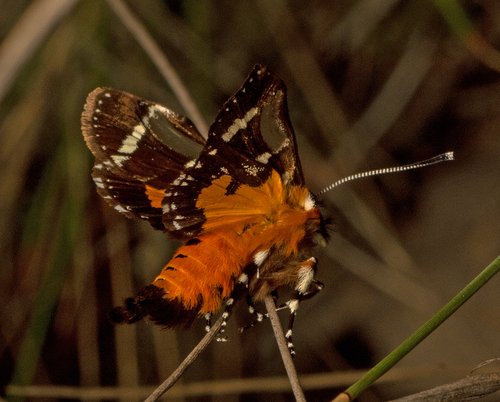
Lily Caterpillar Moth

Lily Caterpillar Moth

Spodoptera picta

Daily sighting probability ~10% · With luck
at Blue Mountains National Park

In 3 days ~10% in a week ~30%

9 Verified sightings at Blue Mountains National Park From 2019 to 2026
30 In all 3 parks
May Best month
☀️ Diurnal When it's spotted

About the Lily Caterpillar Moth

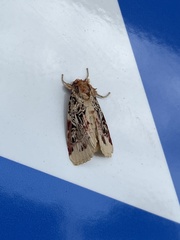
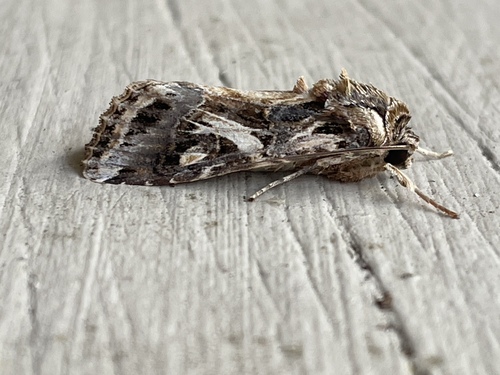
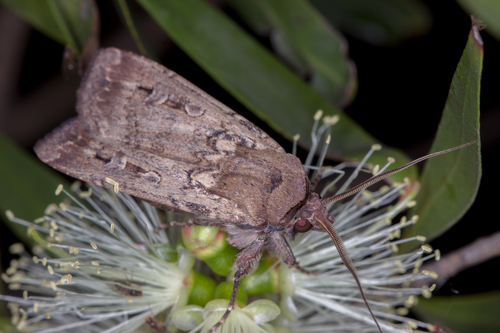
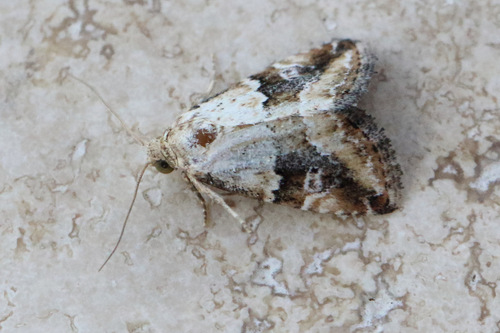
Spodoptera picta, the lily caterpillar, is a moth of the family Noctuidae. It was described by Félix Édouard Guérin-Méneville in 1838. It is found from India, South-east Asia and Japan through Indonesia, Australia and the western part of South Pacific ocean to Fiji. Its caterpillars feeds on the leaves of plants in the Amaryllidaceae and Liliaceae families, and can be a significant pest in gardens.

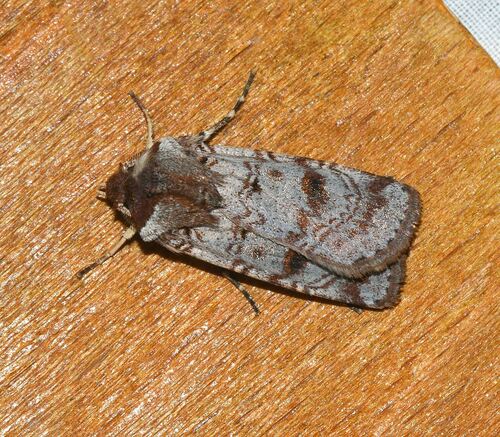
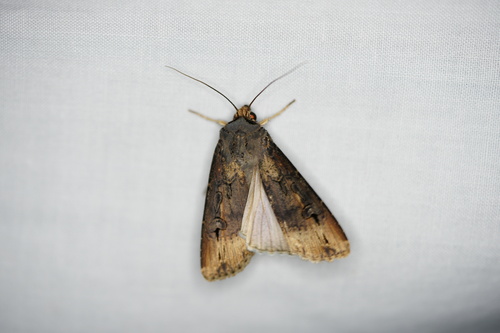
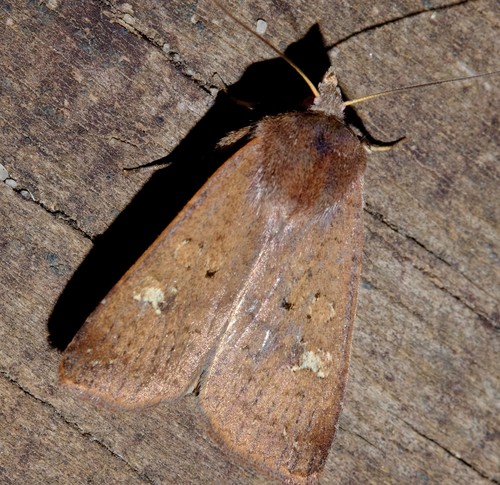
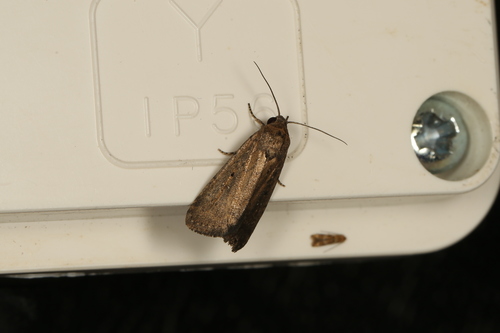
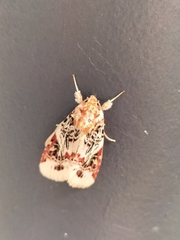
The wingspan is about 40 mm. It is generally an ochreous-white moth, the head and thorax suffused with pinkish red. The forewings have some red on their costal base; there are numerous ill-defined waved black lines present between the base and antemedial line: the orbicular and claviform consisting of black rings; a medial pinkish red band, wide at costa narrowing to inner margin; the reniform with ochreous and black outlines and red centre; the postmedial double waved lines are filled in with ochreous and highly excurved beyond the cell; some black dashes can be seen on reddish patches beyond it. The hindwings are semi-hyaline white.

Caterpillars have smooth skin and are pale grey with a series of longitudinal black lines. Mesothorax also has dark patches with last abdominal... Wikipedia →

Global Distribution

Parks Where Found

# Park Country Daily sighting probability
1 Royal National Park 🇦🇺 Australia
~10%
2 Daintree National Park 🇦🇺 Australia
~10%
3 Blue Mountains National Park 🇦🇺 Australia
~10%

Cities Where Found

# City Country Daily sighting probability
1 Sydney 🇦🇺 Australia
~10%
2 Brisbane 🇦🇺 Australia
~10%
3 Taipei 🇹🇼 Taiwan
<5%
4 Singapore 🇸🇬 Singapore
<5%

Before you go

What are the chances of seeing a Lily Caterpillar Moth in Blue Mountains National Park?

With luck

About 10% of wildlife watchers report a Lily Caterpillar Moth sighting in Blue Mountains National Park on a given day, based on 9 verified sightings from GBIF citizen-science data from 2019 to 2026. It is the 456th most-seen of the 789 insects we can rate there. Over three days the chance rises to about 10%, and over a week to about 30%, if each day is a fresh chance.

When is the best time to see a Lily Caterpillar Moth in Blue Mountains National Park?

May

In that month about 20% of wildlife watchers report a Lily Caterpillar Moth in Blue Mountains National Park on a given day, against under 5% in July to January, the lowest months. That is one of Blue Mountains National Park's driest months, with about 40 mm of rain against 150 mm in March.

What time of day is best to see a Lily Caterpillar Moth?

Between 1 and 4 pm

Across all the parks we cover, that three-hour window holds the most Lily Caterpillar Moth sightings with a recorded time, and about 8 in 10 of them come between 6 am and 6 pm: it is a daytime animal.

Is Blue Mountains National Park the best place to see a Lily Caterpillar Moth?

Among the best

Of the 3 parks where we can rate Lily Caterpillar Moth sightings, Blue Mountains National Park ranks 3rd at about 10%, level with the leaders once rounded. The best odds are in Royal National Park (Australia, about 10%) and Daintree National Park (Australia, about 10%).

Where does the Lily Caterpillar Moth sighting chance come from?

GBIF citizen-science records

It is estimated from how often the Lily Caterpillar Moth is recorded against all the insects logged in Blue Mountains National Park (9 verified sightings from 2019 to 2026), calibrated against known sighting rates. Figures are rounded to the nearest 10% because citizen-science data supports honest approximations, not decimals, and months with records from fewer than five people show "—". How it works.

← Back to Blue Mountains National Park