Psyche
Daily sighting probability ~30% · Possible
at Cat Tien National Park

In 3 days ~60% in a week ~90%

25 Verified sightings at Cat Tien National Park From 2019 to 2026
67 In all 7 parks
February Best month
☀️ Diurnal When it's spotted

About the Psyche

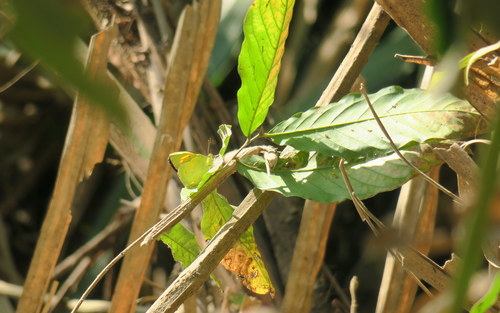
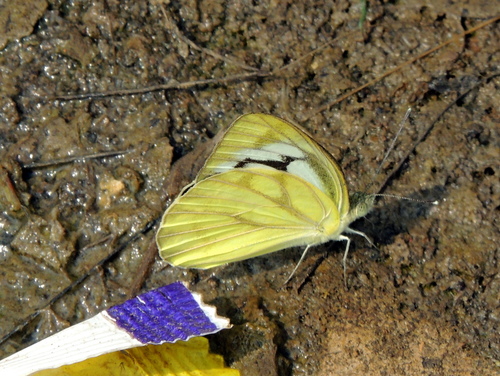
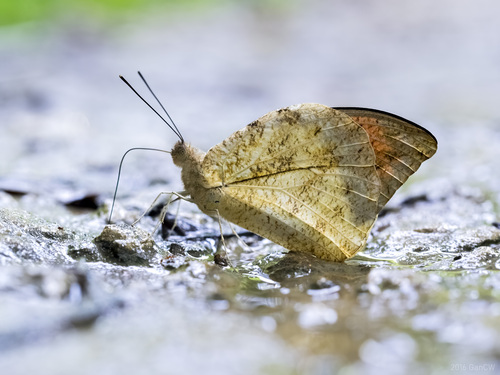
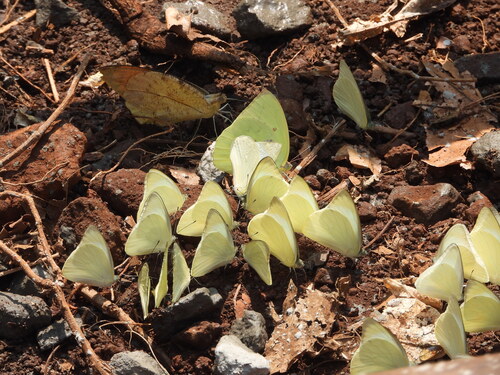
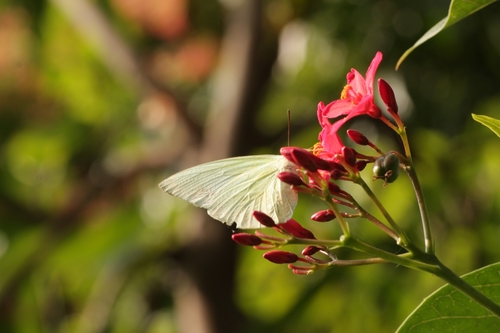
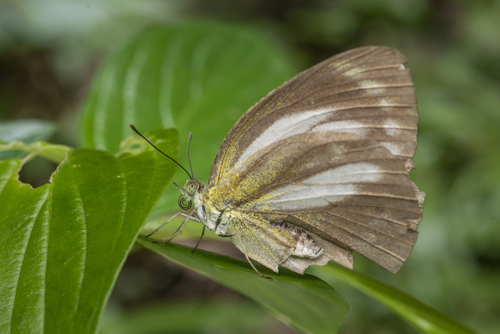
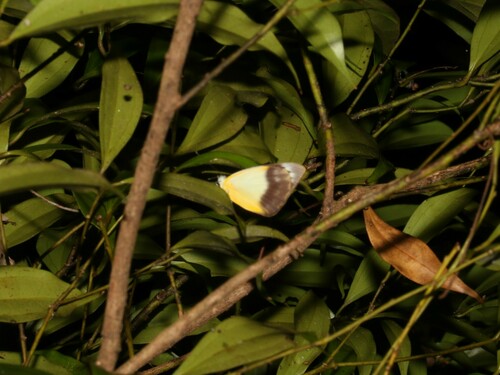
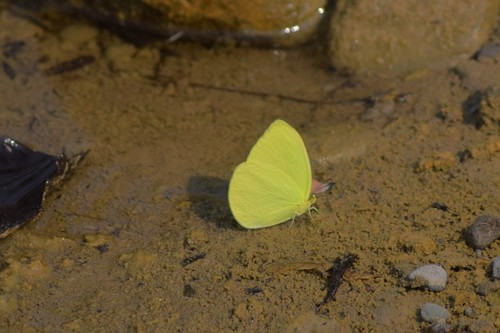
Leptosia nina, the psyche, is a small butterfly of the family Pieridae (the sulphurs, yellows and whites) and is found in Indian subcontinent, southeast Asia and Australia. The upper forewing has a black spot on a mainly white background. The flight is weak and erratic and the body of the butterfly bobs up and down as it beats its wings. They fly low over the grass and the butterfly rarely leaves the ground level.

From Charles Thomas Bingham's The Fauna of British India, Including Ceylon and Burma. Butterflies. Vol 2. (1907) Unpublished manuscript of Lionel de Nicéville gives it the common name of "wandering snowflake" Upperside: white; base of wings very slightly powdered with minute black scales. Forewing: costa speckled obscurely with black; apex black, the inner margin of this inwardly angulate; a very large somewhat pear-shaped post-discal spot also black. Hindwing white, uniform; in most specimens an obscure, extremely slender, terminal black line.

Underside: white; costal margin and apex of forewing broadly, and the whole surface of the hindwing irrorated (speckled) with transverse, very slender, greenish strigae and minute dots; these on the hindwing have... Wikipedia →

Global Distribution

Parks Where Found

# Park Country Daily sighting probability
1 Namdapha National Park 🇮🇳 India
~30%
2 Cat Tien National Park 🇻🇳 Vietnam
~30%
3 Gunung Leuser National Park 🇮🇩 Indonesia
~20%
4 Taman Negara National Park 🇲🇾 Malaysia
~10%
5 Minneriya National Park 🇱🇰 Sri Lanka
~10%
6 Kinabalu Park 🇲🇾 Malaysia
~10%
7 Kaeng Krachan National Park 🇹🇭 Thailand
~10%

Cities Where Found

# City Country Daily sighting probability
1 Guwahati 🇮🇳 India
~40%
2 Yogyakarta 🇮🇩 Indonesia
~40%
3 Jamshedpur 🇮🇳 India
~40%
4 Thiruvananthapuram 🇮🇳 India
~30%
5 Jabalpur 🇮🇳 India
~30%
6 Tasikmalaya 🇮🇩 Indonesia
~30%
7 Dhaka 🇧🇩 Bangladesh
~30%
8 Bhubaneshwar 🇮🇳 India
~30%
9 Kozhikode 🇮🇳 India
~30%
10 Manila 🇵🇭 Philippines
~30%

Before you go

What are the chances of seeing a Psyche in Cat Tien National Park?

Possible

About 30% of wildlife watchers report a Psyche sighting in Cat Tien National Park on a given day, based on 25 verified sightings from GBIF citizen-science data from 2019 to 2026. It is the 20th most-seen of the 125 insects we can rate there. Over three days the chance rises to about 60%, and over a week to about 90%, if each day is a fresh chance.

When is the best time to see a Psyche in Cat Tien National Park?

February, May and December

In those months about 40% of wildlife watchers report a Psyche in Cat Tien National Park on a given day, against under 5% in July and October, the lowest months. Those are among Cat Tien National Park's driest months, with about 110 mm of rain a month against 490 mm in July.

What time of day is best to see a Psyche?

Between 8 and 11 am

Across all the parks we cover, that three-hour window holds the most Psyche sightings with a recorded time, and about 8 in 10 of them come between 6 am and 6 pm: it is a daytime animal.

Is Cat Tien National Park the best place to see a Psyche?

Among the best

Of the 7 parks where we can rate Psyche sightings, Cat Tien National Park ranks 2nd at about 30%, level with the leaders once rounded. The best odds are in Namdapha National Park (India, about 30%).

Which relatives of the Psyche live in Cat Tien National Park?

Same family: Pieridae

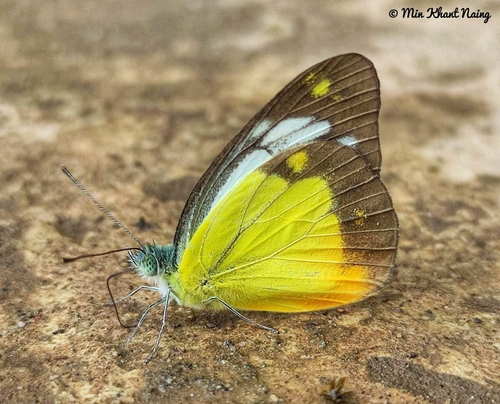
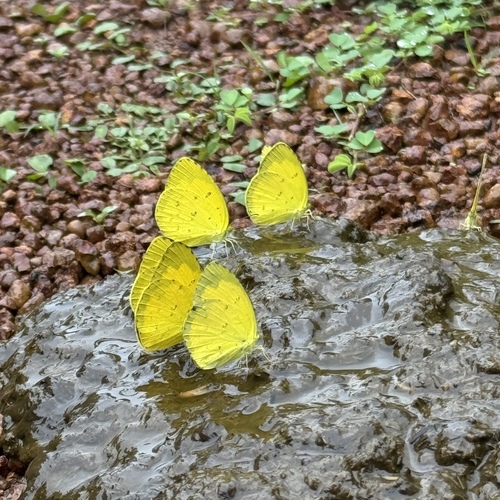
The closest relatives of the Psyche that you can see in Cat Tien National Park (family Pieridae, Whites, Yellows, and Sulphurs) are Yellow Orange Tip (about 40%), Orange Gull (about 30%) and Common Wanderer (about 30%), with each one's daily chance of a sighting.

Where does the Psyche sighting chance come from?

GBIF citizen-science records

It is estimated from how often the Psyche is recorded against all the insects logged in Cat Tien National Park (25 verified sightings from 2019 to 2026), calibrated against known sighting rates. Figures are rounded to the nearest 10% because citizen-science data supports honest approximations, not decimals, and months with records from fewer than five people show "—". How it works.

← Back to Cat Tien National Park