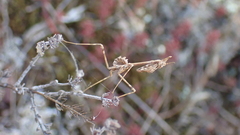
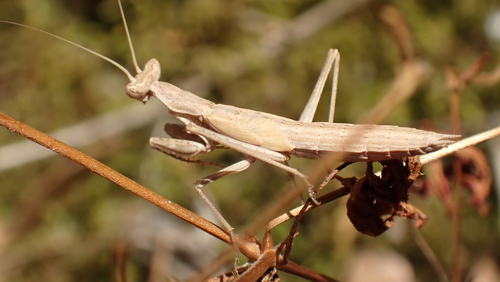
Mediterranean Conehead Mantis

Mediterranean Conehead Mantis

Empusa pennata

Daily sighting probability ~20% · Possible
at Cévennes National Park

In 3 days ~50% in a week ~80%

96 Verified sightings at Cévennes National Park From 2019 to 2026
214 In all 6 parks
February Best month
☀️ Diurnal When it's spotted

About the Mediterranean Conehead Mantis

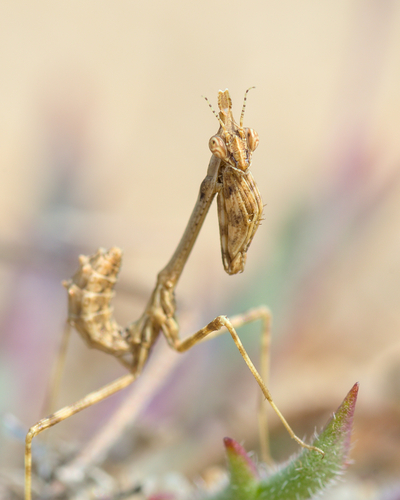
Empusa pennata, or the conehead mantis, is a species of praying mantis in genus Empusa native to the Mediterranean Region. It can be found in Portugal, Spain, southern France, Italy and on the mediterranean coasts of Morocco, Algeria, Tunisia, Libya, Turkey and Egypt. Because of its cryptic nature, or also possibly because of its fragmented, low-density populations, it is rarely encountered in the wild.

Empusa pennata generally has a large, thin body with a low mass, as well as a large pair of wings used for flight. They are mostly found in perennial herbs and scrubs. There are three ways for these insects to find mates: chemical, acoustic, and visual signals. Some predatory insects like mantises rely on cryptic colouration; they use this camouflage to protect themselves from predators and capture prey.

This species of mantis, although similar in size to the common European mantis (Mantis religiosa), is easily distinguished by the protrusion from its crown. Both males and females possess this tall extension from birth, giving them a very 'alien' appearance.

They live in dry, warm environments and use their cryptic colouring of either greens and pinks or various shades... Wikipedia →
Global Distribution

Parks Where Found

# Park Country Daily sighting probability
1 Cévennes National Park 🇫🇷 France
~20%
2 Monfragüe National Park 🇪🇸 Spain
~20%
3 Sierra Nevada National Park 🇪🇸 Spain
~20%
4 Sierra de Guadarrama National Park 🇪🇸 Spain
~10%
5 Pyrénées National Park 🇫🇷 France
~10%
6 Doñana National Park 🇪🇸 Spain
~10%

Cities Where Found

# City Country Daily sighting probability
1 Madrid 🇪🇸 Spain
~10%
2 Barcelona 🇪🇸 Spain
~10%
3 Lisbon 🇵🇹 Portugal
<5%

Before you go

What are the chances of seeing a Mediterranean Conehead Mantis in Cévennes National Park?

Possible

About 20% of wildlife watchers report a Mediterranean Conehead Mantis sighting in Cévennes National Park on a given day, based on 96 verified sightings from GBIF citizen-science data from 2019 to 2026. It is the 52nd most-seen of the 996 insects we can rate there. Over three days the chance rises to about 50%, and over a week to about 80%, if each day is a fresh chance.

When is the best time to see a Mediterranean Conehead Mantis in Cévennes National Park?

February

In that month about 40% of wildlife watchers report a Mediterranean Conehead Mantis in Cévennes National Park on a given day, against under 5% in November, the lowest month.

What time of day is best to see a Mediterranean Conehead Mantis?

Between 2 and 5 pm

Across all the parks we cover, that three-hour window holds the most Mediterranean Conehead Mantis sightings with a recorded time, and about 8 in 10 of them come between 6 am and 6 pm: it is a daytime animal.

Is Cévennes National Park the best place to see a Mediterranean Conehead Mantis?

Yes

Of the 6 parks where we can rate Mediterranean Conehead Mantis sightings, Cévennes National Park has the highest daily chance: about 20%. Next come Monfragüe National Park (Spain, about 20%) and Sierra Nevada National Park (Spain, about 20%).

Which relatives of the Mediterranean Conehead Mantis live in Cévennes National Park?

Same order: Mantodea

The closest relatives of the Mediterranean Conehead Mantis that you can see in Cévennes National Park (order Mantodea, Mantises) are European Mantis (about 30%) and Grey Mantis (about 10%), with each one's daily chance of a sighting.

Where does the Mediterranean Conehead Mantis sighting chance come from?

GBIF citizen-science records

It is estimated from how often the Mediterranean Conehead Mantis is recorded against all the insects logged in Cévennes National Park (96 verified sightings from 2019 to 2026), calibrated against known sighting rates. Figures are rounded to the nearest 10% because citizen-science data supports honest approximations, not decimals, and months with records from fewer than five people show "—". How it works.

← Back to Cévennes National Park