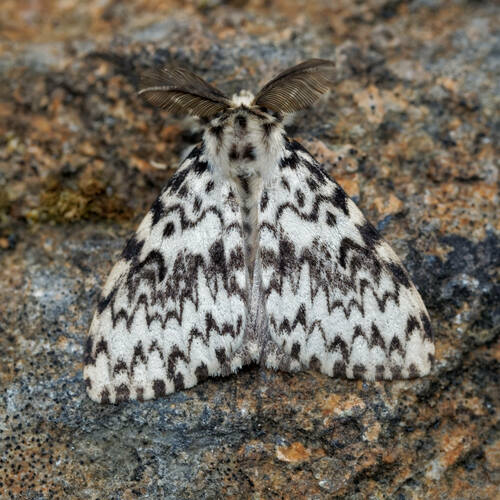
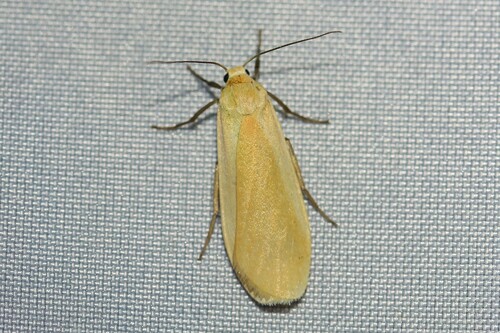
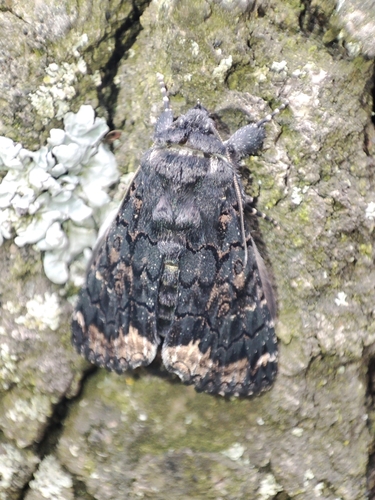
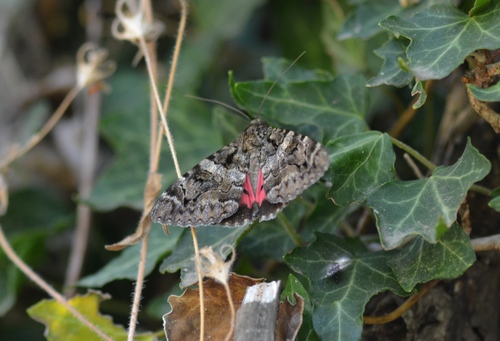
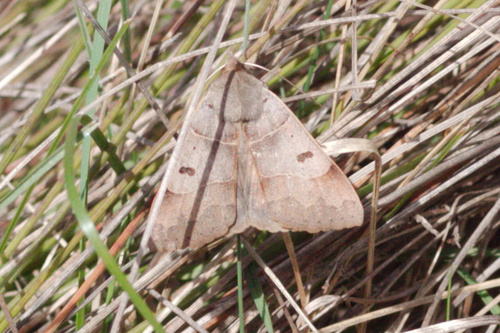
Mother Shipton
Daily sighting probability ~10% · With luck
at Cévennes National Park

In 3 days ~30% in a week ~50%

26 Verified sightings at Cévennes National Park From 2019 to 2026
81 In all 6 parks
May Best month
☀️ Diurnal When it's spotted

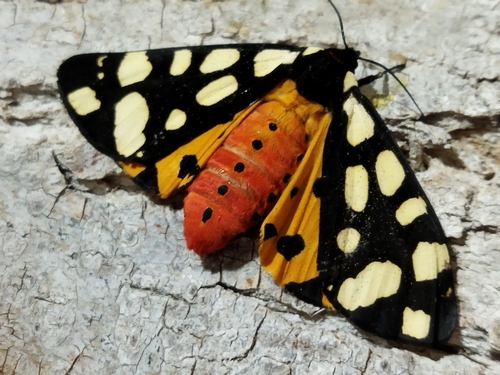
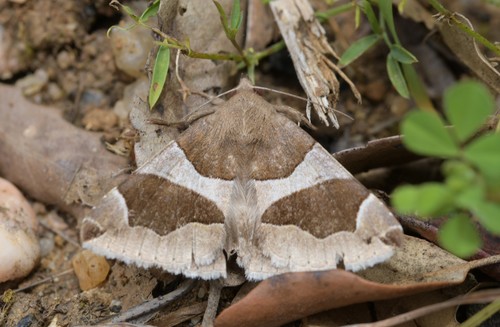
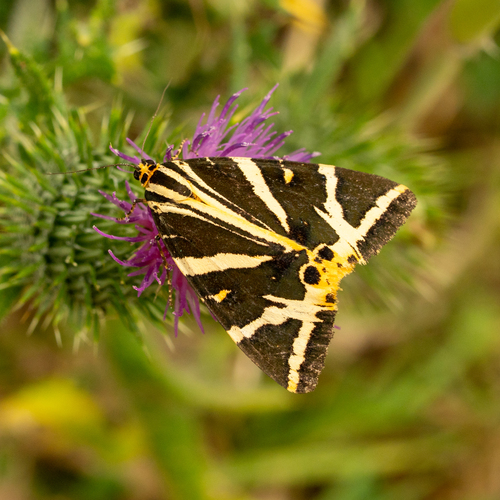
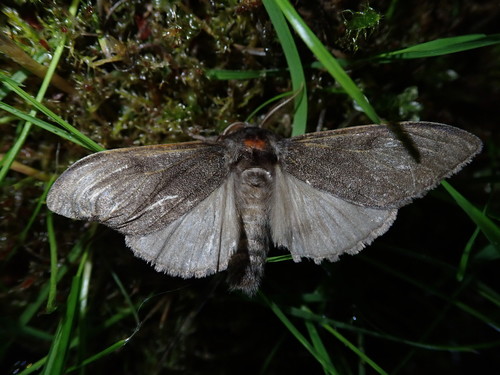
About the Mother Shipton

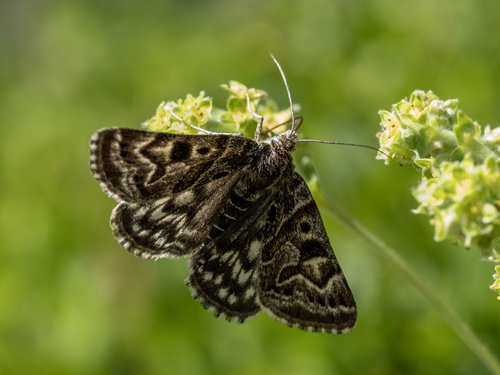
Callistege mi, the Mother Shipton moth, is a moth of the family Erebidae. It was classified by Carl Alexander Clerck in 1759, and is also known under the name of Euclidia mi. In Finnish it is known as piirtoyökkönen and in German as Scheck-Tageule.

Variations include: Callistege mi ab. ochrea Tutt has the ground colour of hindwing yellow; this is the usual form in Britain, where sometimes the forewing also is tinged with yellowish: the underside of both being yellow;

Callistege mi ab. illuminata ab. nov. [Warren] is a paler form of the type in which the dark areas are restricted by the amplification of the pale spaces, the underside yellowish white; in litterata Cyr. from Italy the white is pure, the underside bluish white; but the white spots of the upperside are restricted in size;

Callistege mi ab. extrema B.-Haas from Amurland and Central Asia, the white predominates still more over the black than in illuminata, the underside being also pure white; Callistege mi ab suffusa ab. nov. [Warren] from Italy, the white spaces are almost crowded out and both wings are nearly black: the underside with all the veins black and the ground colour yellowish white; ab. explanata... Wikipedia →
Global Distribution

Parks Where Found

# Park Country Daily sighting probability
1 Kiskunság National Park 🇭🇺 Hungary
~20%
2 Mercantour National Park 🇫🇷 France
~10%
3 Cévennes National Park 🇫🇷 France
~10%
4 Fertő-Hanság National Park 🇭🇺 Hungary
~10%
5 Pyrénées National Park 🇫🇷 France
~10%
6 Wadden Sea National Park 🇩🇪 Germany
<5%

Cities Where Found

# City Country Daily sighting probability
1 Birmingham 🇬🇧 United Kingdom
~10%
2 London 🇬🇧 United Kingdom
~10%
3 Liverpool 🇬🇧 United Kingdom
<5%
4 Helsinki 🇫🇮 Finland
<5%
5 Prague 🇨🇿 Czechia
<5%
6 Vienna 🇦🇹 Austria
<5%

Before you go

What are the chances of seeing a Mother Shipton in Cévennes National Park?

With luck

About 10% of wildlife watchers report a Mother Shipton sighting in Cévennes National Park on a given day, based on 26 verified sightings from GBIF citizen-science data from 2019 to 2026. It is the 259th most-seen of the 996 insects we can rate there. Over three days the chance rises to about 30%, and over a week to about 50%, if each day is a fresh chance.

When is the best time to see a Mother Shipton in Cévennes National Park?

May

In that month about 20% of wildlife watchers report a Mother Shipton in Cévennes National Park on a given day, against under 5% in July–August and October–March, the lowest months.

What time of day is best to see a Mother Shipton?

Between 10 am and 1 pm

Across all the parks we cover, that three-hour window holds the most Mother Shipton sightings with a recorded time, and about 9 in 10 of them come between 6 am and 6 pm: it is a daytime animal.

Is Cévennes National Park the best place to see a Mother Shipton?

3rd of 6

Of the 6 parks where we can rate Mother Shipton sightings, Cévennes National Park ranks 3rd at about 10%. The best odds are in Kiskunság National Park (Hungary, about 20%) and Mercantour National Park (France, about 10%).

Which relatives of the Mother Shipton live in Cévennes National Park?

Same family: Erebidae

The closest relatives of the Mother Shipton that you can see in Cévennes National Park (family Erebidae, Underwing, Tiger, Tussock, and Allied Moths) are Cream-Spot Tiger (about 20%), Spongy Moth (about 20%) and Four-Spotted Footman (about 20%), with each one's daily chance of a sighting.

Where does the Mother Shipton sighting chance come from?

GBIF citizen-science records

It is estimated from how often the Mother Shipton is recorded against all the insects logged in Cévennes National Park (26 verified sightings from 2019 to 2026), calibrated against known sighting rates. Figures are rounded to the nearest 10% because citizen-science data supports honest approximations, not decimals, and months with records from fewer than five people show "—". How it works.

← Back to Cévennes National Park