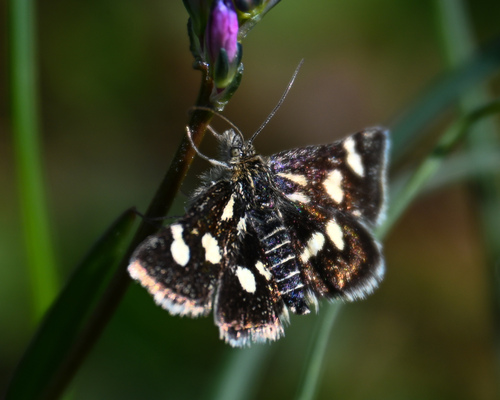
Small Magpie

Small Magpie

Anania hortulata

Daily sighting probability ~10% · With luck
at Cévennes National Park

In 3 days ~10% in a week ~30%

8 Verified sightings at Cévennes National Park From 2019 to 2026
108 In all 5 parks
June Best month
☀️🌙 Day & Night When it's spotted

About the Small Magpie

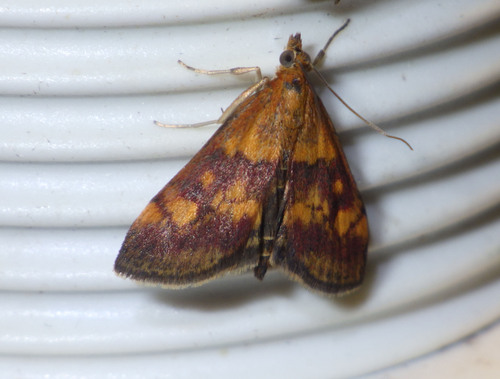
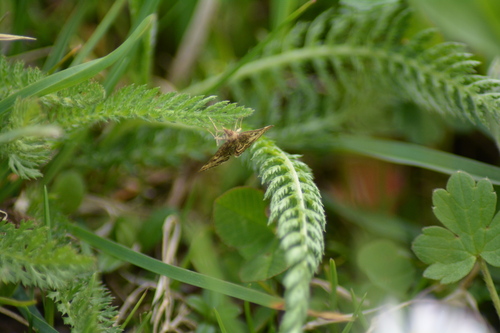
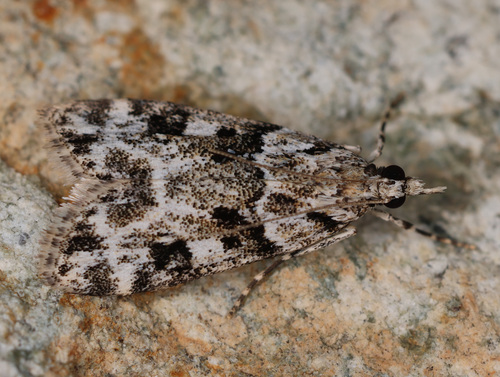
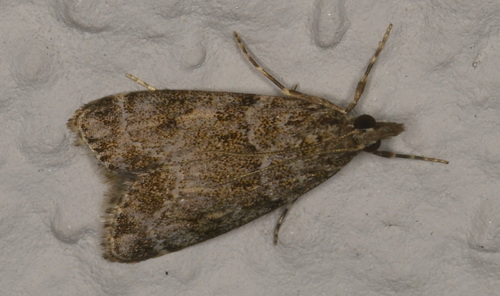
Anania hortulata, also known as the small magpie, is a species of moth of the family Crambidae found in Asia, Europe and North America. It was described, in 1758, by the 18th-century Swedish taxonomist, botanist, and zoologist, Carl Linnaeus.

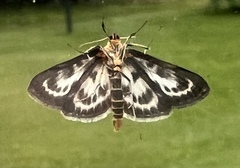
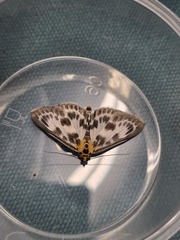
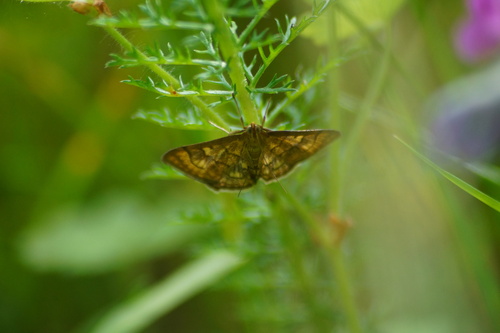
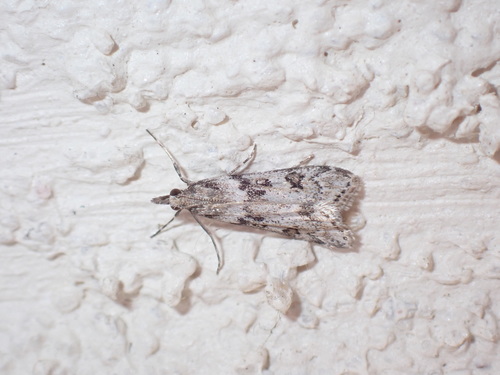
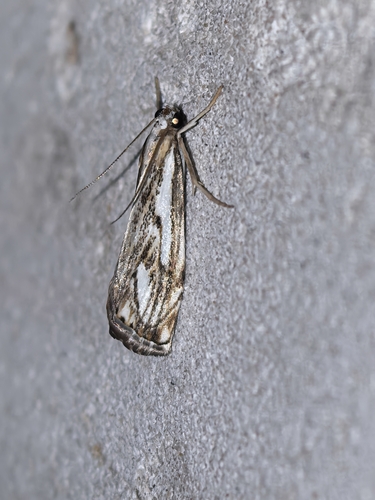
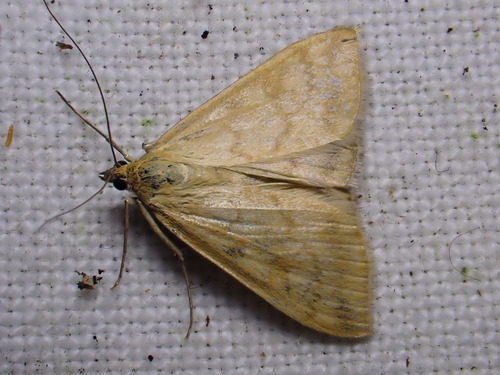
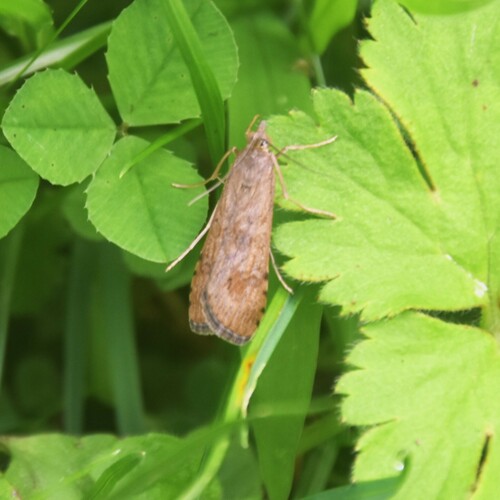
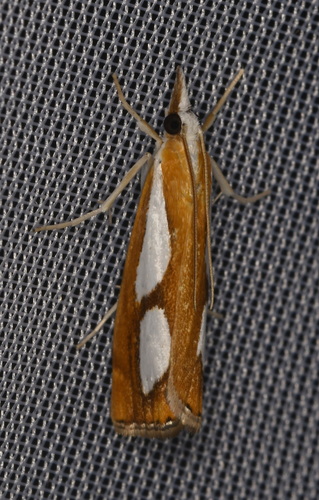
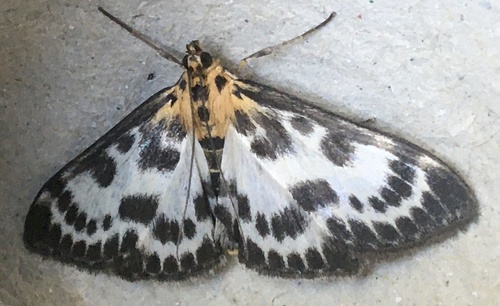
The wingspan is 24–28 millimetres (0.94–1.10 in) The head and thorax are deep ochreous-yellow, black-spotted. Forewings are yellowish-white, markings blackish; base blackish, with two ochreous-yellow marks; a suffused costal streak; lines thick, first irregular, second tending to form spots, curved, narrowest below middle; small orbicular and large round discal spots, touching costal streak; a terminal fascia tending to form spots, edge parallel to second line. Hind wings with colour, second line, and terminal fascia as in forewings; a blackish discal spot. The larva is whitish; dorsal line dull green, white-edged; head and plate of 2 black. See also Parsons et al.

The moth flies from June to July depending on the location and is easily disturbed by day. It flies from dusk onward and comes to light. Ovum Eggs are mostly laid on stinging nettle (Urtica dioica) and occasionally on Labiatae such as white horehound (Marrubium vulgare... Wikipedia →
Global Distribution

Parks Where Found

# Park Country Daily sighting probability
1 Snowdonia National Park 🇬🇧 United Kingdom
~10%
2 Bavarian Forest National Park 🇩🇪 Germany
~10%
3 Wadden Sea National Park 🇩🇪 Germany
~10%
4 Pyrénées National Park 🇫🇷 France
~10%
5 Cévennes National Park 🇫🇷 France
~10%

Cities Where Found

# City Country Daily sighting probability
1 Liverpool 🇬🇧 United Kingdom
~20%
2 Birmingham 🇬🇧 United Kingdom
~10%
3 Manchester 🇬🇧 United Kingdom
~10%
4 Leeds 🇬🇧 United Kingdom
~10%
5 Amsterdam 🇳🇱 Netherlands
~10%
6 London 🇬🇧 United Kingdom
~10%
7 Kyiv 🇺🇦 Ukraine
~10%
8 Brussels 🇧🇪 Belgium
~10%
9 Copenhagen 🇩🇰 Denmark
~10%
10 Hamburg 🇩🇪 Germany
~10%

Before you go

What are the chances of seeing a Small Magpie in Cévennes National Park?

With luck

About 10% of wildlife watchers report a Small Magpie sighting in Cévennes National Park on a given day, based on 8 verified sightings from GBIF citizen-science data from 2019 to 2026. It is the 666th most-seen of the 996 insects we can rate there. Over three days the chance rises to about 10%, and over a week to about 30%, if each day is a fresh chance.

When is the best time to see a Small Magpie in Cévennes National Park?

June

In that month about 10% of wildlife watchers report a Small Magpie in Cévennes National Park on a given day, against under 5% in July to May, the lowest months.

What time of day is best to see a Small Magpie?

Between 10 pm and 1 am

Across all the parks we cover, that three-hour window holds the most Small Magpie sightings with a recorded time, and about half of them come between 6 pm and 6 am: it is seen both by day and at night.

Is Cévennes National Park the best place to see a Small Magpie?

Among the best

Of the 5 parks where we can rate Small Magpie sightings, Cévennes National Park ranks 5th at about 10%, level with the leaders once rounded. The best odds are in Snowdonia National Park (United Kingdom, about 10%), Bavarian Forest National Park (Germany, about 10%) and Wadden Sea National Park (Germany, about 10%).

Where does the Small Magpie sighting chance come from?

GBIF citizen-science records

It is estimated from how often the Small Magpie is recorded against all the insects logged in Cévennes National Park (8 verified sightings from 2019 to 2026), calibrated against known sighting rates. Figures are rounded to the nearest 10% because citizen-science data supports honest approximations, not decimals, and months with records from fewer than five people show "—". How it works.

← Back to Cévennes National Park