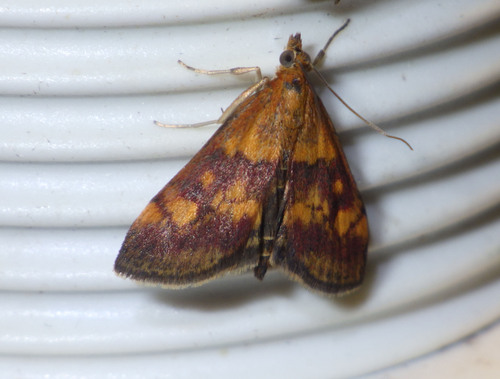
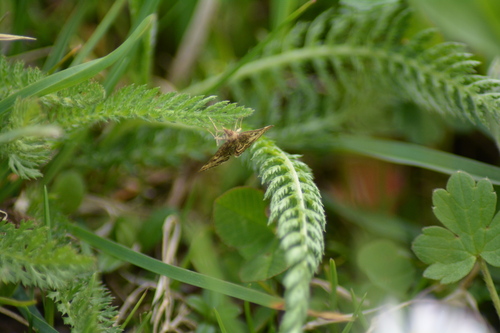
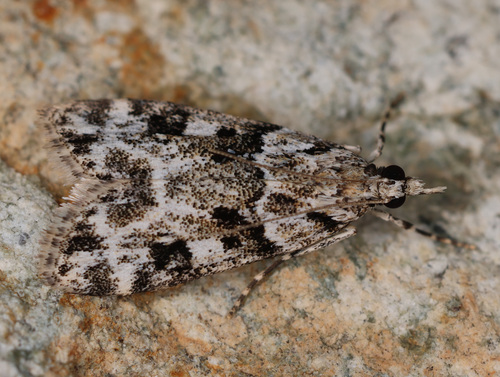
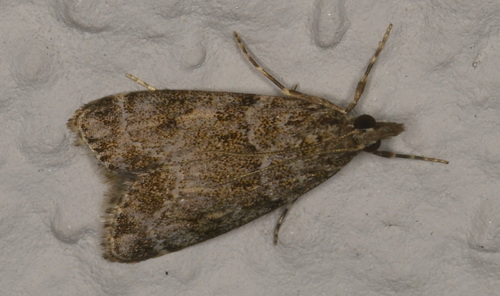
Box Tree Moth

Box Tree Moth

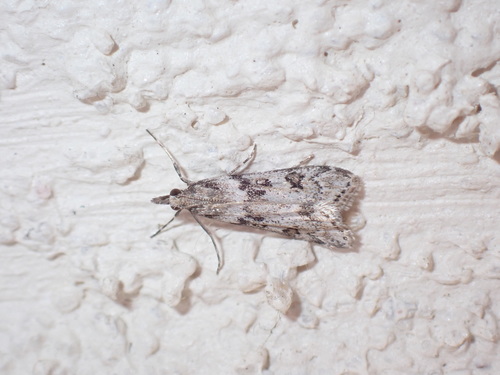
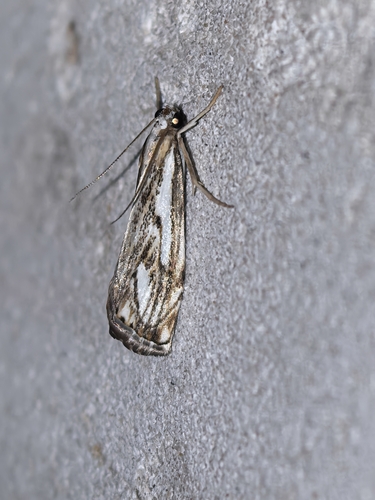
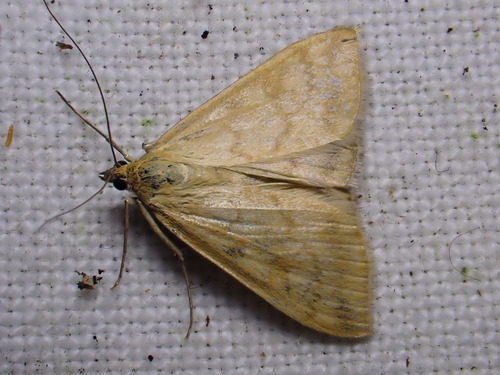
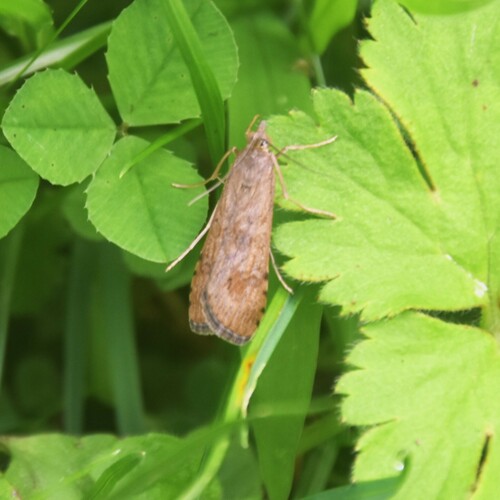
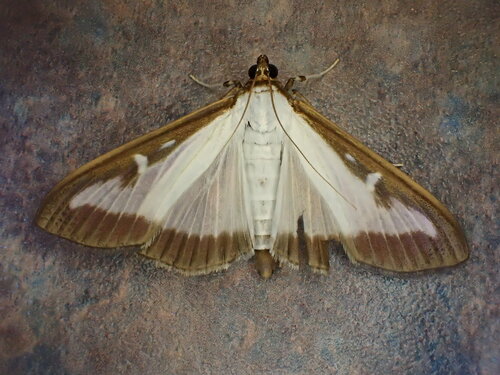
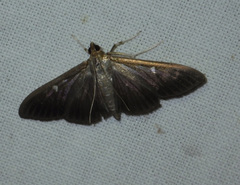
Cydalima perspectalis

Daily sighting probability ~30% · Possible
at Cévennes National Park

In 3 days ~60% in a week ~90%

223 Verified sightings at Cévennes National Park From 2019 to 2026
429 In all 5 parks
August Best month
☀️🌙 Day & Night When it's spotted

About the Box Tree Moth

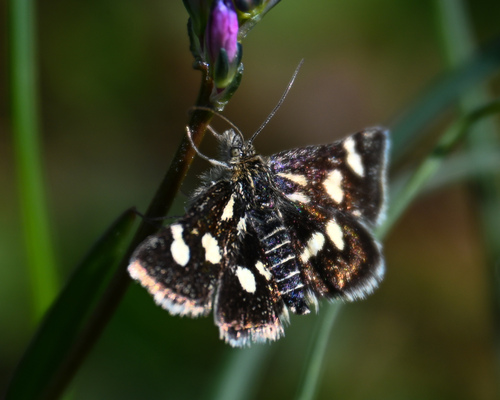
Cydalima perspectalis, the box moth or box tree moth, is a species of moth of the family Crambidae that feeds on box. It was first described by Francis Walker, the English entomologist, in 1859. It is native to China, Taiwan, Korea, and India; its native status in Japan and the Russian far east is uncertain, some sources saying native, but others saying possibly invasive there. It has invaded Europe; first recorded in Germany in 2006, then Great Britain, the Netherlands, and Switzerland in 2007, France and Austria in 2009, Hungary in 2011, then Romania in 2012, Denmark in 2013, and Spain in 2014. It has also been recorded in Slovakia, Belgium, and Croatia.

During preparations for the 2014 Winter Olympics in 2012, it was introduced accidentally from Italy to Sochi, European Russia, with planting stock of Buxus sempervirens. The following year it defoliated local native box populations extensively.

The eggs are 1 mm in diameter, flat, pale yellow-green, and placed in clusters under green leaves without herbivory present. The larvae emerging from the egg are about 1–2 mm long... Wikipedia →
Global Distribution

Parks Where Found

# Park Country Daily sighting probability
1 Cévennes National Park 🇫🇷 France
~30%
2 Pyrénées National Park 🇫🇷 France
~10%
3 Mercantour National Park 🇫🇷 France
~10%
4 Bavarian Forest National Park 🇩🇪 Germany
~10%
5 Wadden Sea National Park 🇩🇪 Germany
~10%

Cities Where Found

# City Country Daily sighting probability
1 Liverpool 🇬🇧 United Kingdom
~40%
2 London 🇬🇧 United Kingdom
~30%
3 Manchester 🇬🇧 United Kingdom
~20%
4 Copenhagen 🇩🇰 Denmark
~20%
5 Nanchang 🇨🇳 China
~20%
6 Jinan 🇨🇳 China
~20%
7 Berlin 🇩🇪 Germany
~20%
8 Birmingham 🇬🇧 United Kingdom
~20%
9 Shanghai 🇨🇳 China
~20%
10 Dublin 🇮🇪 Ireland
~20%

Before you go

What are the chances of seeing a Box Tree Moth in Cévennes National Park?

Possible

About 30% of wildlife watchers report a Box Tree Moth sighting in Cévennes National Park on a given day, based on 223 verified sightings from GBIF citizen-science data from 2019 to 2026. It is the 13th most-seen of the 996 insects we can rate there. Over three days the chance rises to about 60%, and over a week to about 90%, if each day is a fresh chance.

When is the best time to see a Box Tree Moth in Cévennes National Park?

June and August

In those months about 40% of wildlife watchers report a Box Tree Moth in Cévennes National Park on a given day, against under 5% in November to March, the lowest months.

What time of day is best to see a Box Tree Moth?

Between 10 pm and 1 am

Across all the parks we cover, that three-hour window holds the most Box Tree Moth sightings with a recorded time, and about half of them come between 6 pm and 6 am: it is seen both by day and at night.

Is Cévennes National Park the best place to see a Box Tree Moth?

Yes

Of the 5 parks where we can rate Box Tree Moth sightings, Cévennes National Park has the highest daily chance: about 30%. Next come Pyrénées National Park (France, about 10%) and Mercantour National Park (France, about 10%).

Which relatives of the Box Tree Moth live in Cévennes National Park?

Same family: Crambidae

The closest relatives of the Box Tree Moth that you can see in Cévennes National Park (family Crambidae, Crambid Snout Moths) are Mint Moth (about 20%), Straw-Barred Pearl (about 10%) and Pied Grey (about 10%), with each one's daily chance of a sighting.

Where does the Box Tree Moth sighting chance come from?

GBIF citizen-science records

It is estimated from how often the Box Tree Moth is recorded against all the insects logged in Cévennes National Park (223 verified sightings from 2019 to 2026), calibrated against known sighting rates. Figures are rounded to the nearest 10% because citizen-science data supports honest approximations, not decimals, and months with records from fewer than five people show "—". How it works.

← Back to Cévennes National Park