The Bordered Straw

The Bordered Straw

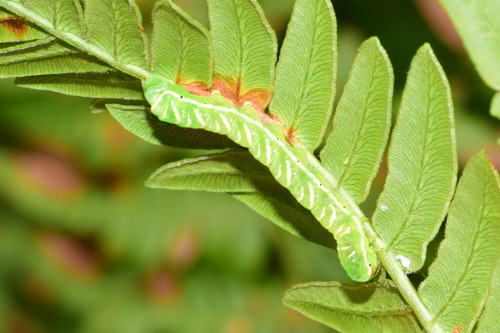
Heliothis peltigera

Daily sighting probability ~10% · With luck
at Cévennes National Park

In 3 days ~20% in a week ~30%

9 Verified sightings at Cévennes National Park From 2019 to 2026
54 In all 4 parks
May Best month
☀️🌙 Day & Night When it's spotted

About the The Bordered Straw

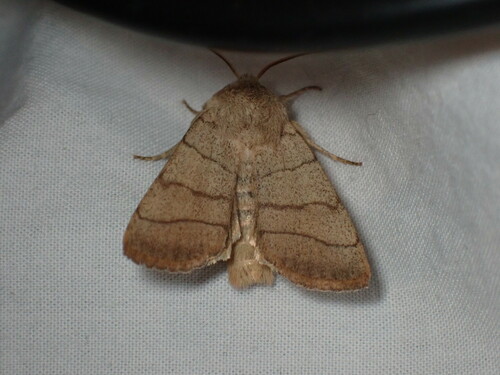
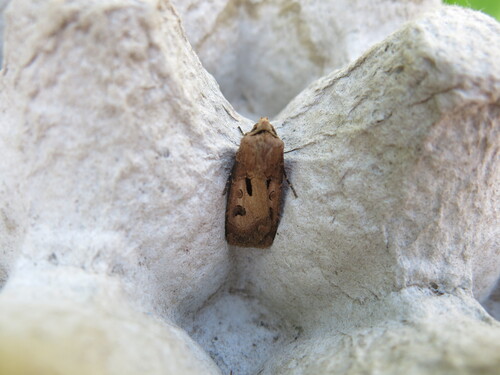
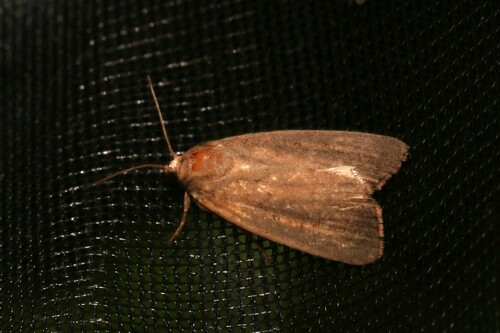
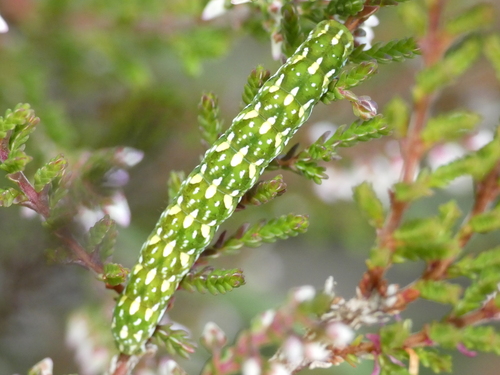
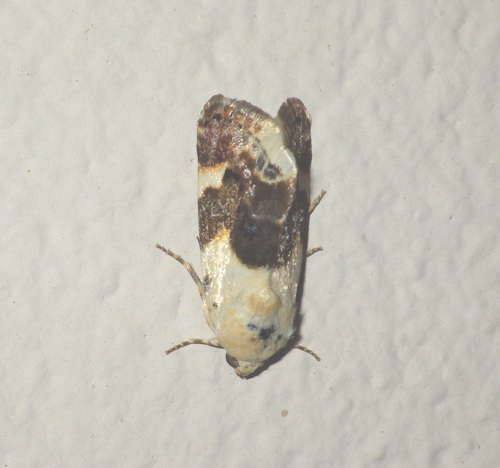
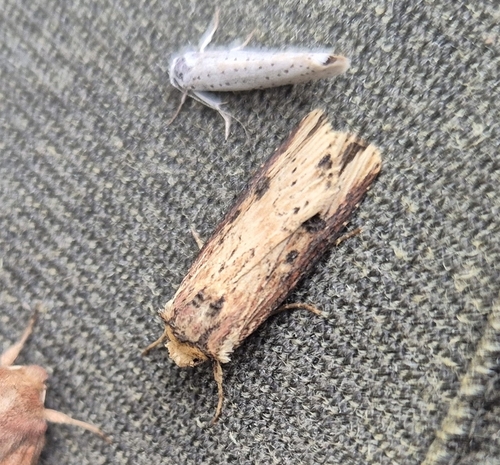
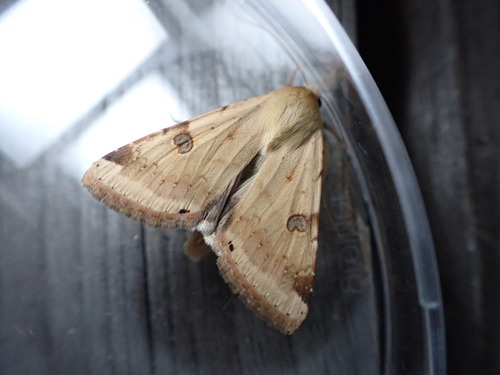
Heliothis peltigera, also known as the bordered straw, is a species of moth of the family Noctuidae. The Greek epithet "Heliothis" means "scorched by the sun", while the Latin species name peltigera means wearing a small shield, with reference to the reniform marking on the forewings.

This species can be found in Southern Europe and the Near East, but it is present further north too, because it is a regular migratory species northbound. It is also present in most of Africa (Algeria, Chad, Egypt, Eritrea, Gambia, Libya, Mauritania, Morocco, Niger, Somalia, Tunisia) and in Asia, ranging to China and Laos.

This heat-loving species occurs mainly on hot wastelands and warm slopes. Heliothis peltigera has a wingspan of 29–40 mm and forewings reaching a length of 16–19 mm. These moths are rather variable in pattern and colour.

Forewings are usually greyish ochreous, flushed with pale brown, except the narrow marginal area; lines are brown, indistinct; orbicular stigma is a dark dot. On middle of costa there is a reniform grey dot, with dark brown edge and centre, joined to a brown mark. A brown band... Wikipedia →
Global Distribution

Parks Where Found

# Park Country Daily sighting probability
1 Sierra Nevada National Park 🇪🇸 Spain
~20%
2 Sierra de Guadarrama National Park 🇪🇸 Spain
~10%
3 Cévennes National Park 🇫🇷 France
~10%
4 Pyrénées National Park 🇫🇷 France
<5%

Cities Where Found

# City Country Daily sighting probability
1 Kuwait City 🇰🇼 Kuwait
~30%
2 Valencia 🇪🇸 Spain
~20%
3 Marrakesh 🇲🇦 Morocco
~10%
4 Jerusalem 🇮🇱 Israel
~10%
5 Tel Aviv 🇮🇱 Israel
~10%
6 Porto 🇵🇹 Portugal
~10%
7 Madrid 🇪🇸 Spain
~10%
8 Athens 🇬🇷 Greece
~10%
9 Barcelona 🇪🇸 Spain
<5%
10 Lisbon 🇵🇹 Portugal
<5%

Before you go

What are the chances of seeing a The Bordered Straw in Cévennes National Park?

With luck

About 10% of wildlife watchers report a The Bordered Straw sighting in Cévennes National Park on a given day, based on 9 verified sightings from GBIF citizen-science data from 2019 to 2026. It is the 619th most-seen of the 996 insects we can rate there. Over three days the chance rises to about 20%, and over a week to about 30%, if each day is a fresh chance.

When is the best time to see a The Bordered Straw in Cévennes National Park?

May–June and August

In those months about 10% of wildlife watchers report a The Bordered Straw in Cévennes National Park on a given day, against under 5% in July and September–April, the lowest months.

What time of day is best to see a The Bordered Straw?

Between 9 pm and midnight

Across all the parks we cover, that three-hour window holds the most The Bordered Straw sightings with a recorded time, and about 6 in 10 of them come between 6 pm and 6 am: it is seen both by day and at night.

Is Cévennes National Park the best place to see a The Bordered Straw?

3rd of 4

Of the 4 parks where we can rate The Bordered Straw sightings, Cévennes National Park ranks 3rd at about 10%. The best odds are in Sierra Nevada National Park (Spain, about 20%) and Sierra de Guadarrama National Park (Spain, about 10%).

Which relatives of the The Bordered Straw live in Cévennes National Park?

Same family: Noctuidae

The closest relatives of the The Bordered Straw that you can see in Cévennes National Park (family Noctuidae, Cutworm Moths and Allies) are The Latin (about 10%), Treble Lines (about 10%) and Heart And Dart (about 10%), with each one's daily chance of a sighting.

Where does the The Bordered Straw sighting chance come from?

GBIF citizen-science records

It is estimated from how often the The Bordered Straw is recorded against all the insects logged in Cévennes National Park (9 verified sightings from 2019 to 2026), calibrated against known sighting rates. Figures are rounded to the nearest 10% because citizen-science data supports honest approximations, not decimals, and months with records from fewer than five people show "—". How it works.

← Back to Cévennes National Park