Bat Ray

Bat Ray

Myliobatis californica

Silhouette: Nick Schooler · PhyloPic

Daily sighting probability ~40% · Likely
at Channel Islands National Park

In 3 days ~80% in a week >90%

27 Verified sightings at Channel Islands National Park From 2019 to 2026
27 In 1 park
July Best month
🌙 Nocturnal When it's spotted

About the Bat Ray

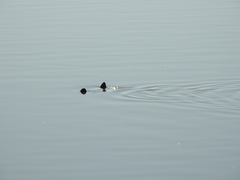
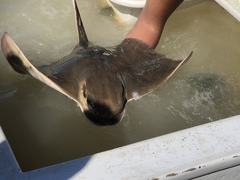
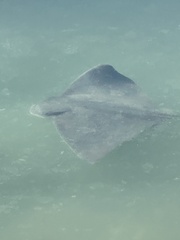
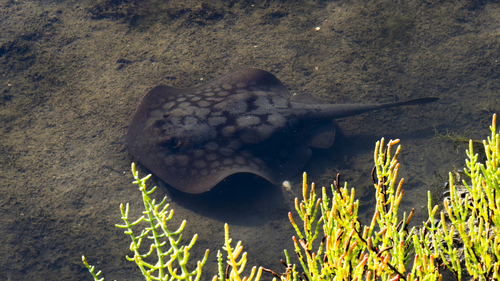
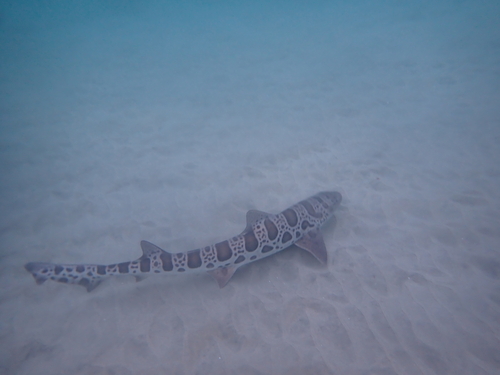
The bat ray (Myliobatis californica) is an eagle ray that has a diamond ray-like form that consists of pectoral fins that are wing-like and end in blunt points. The head is broad and raised higher than the pectoral fins. The eyes are laterally situated on the broad head. Below the front of the head projection is a horizontal depression. This means that instead of the head being flat, there is a slight indent in the top of the head in between the eyes. The tail is whip-like and is typically incomplete with at least one venomous spine at the base of the tail. The incomplete aspect means that the tail consists of cartilage instead of bone. The dorsal side is black or a dark brown while the ventral side is white with the exception of the areas close to the tips or disk.

The largest specimens can grow to a wingspan of 1.8 m (5 ft 11 in) and a mass of 91 kg (201 lb). There is a record of this species reaching 240 pounds, however large specimens are typically closer to 200 pounds. They typically range from 9.07–13.61 kg (20.0–30.0 lb). The size of the bat ray is dependent on many factors, such as habitat alterations and different oceanographic and environmental conditions. Some bat rays are solitary, while others form schools numbering in the thousands.

There has only been one record of albinism in this species during 1865 off the west coast of Baja California, Mexico. There has been a record of an abnormal cephalic horn formation in a juvenile male on the coast of Baja California Sur, Mexico. This specimen had a total of three cephalic horns with one in the rostral middle area and two in the cephalic lobe zone. This could indicate morphogenetic plasticity in this species and could be an indication of how evolution of other species occurred. Morphogenetic plasticity is essentially the concept that organisms are able to change their physical structures due to genetic mutations or environmental factors and this can give us more information about the factors that may have caused these changes. Cephalic horns are a flexible projection from the front of the head and can be described as a modified aspect of their pectoral fins. These cephalic horns are used for pushing food into its mouth while feeding. Bat rays typically only have two cephalic horns and they are more reduced as compared to other ray species. Wikipedia →

Global Distribution

Parks Where Found

# Park Country Daily sighting probability
1 Channel Islands National Park 🇺🇸 United States
~40%

More parks will be added in future updates.

Zoos & Centres Where Found

# Zoo / Centre Country
1 SeaWorld Orlando 🇺🇸 United States In captivity
2 SeaWorld San Diego 🇺🇸 United States In captivity
3 California Academy of Sciences 🇺🇸 United States In captivity
4 Kansas City Zoo 🇺🇸 United States In captivity
5 Discovery Cove 🇺🇸 United States In captivity
6 Oregon Coast Aquarium 🇺🇸 United States In captivity
7 Aquarium of the Pacific 🇺🇸 United States In captivity
8 Monterey Bay Aquarium 🇺🇸 United States In captivity
9 Oklahoma Aquarium 🇺🇸 United States In captivity
10 Birch Aquarium 🇺🇸 United States In captivity
11 Sobela Ocean Aquarium 🇺🇸 United States In captivity
12 Aquarium of the Bay 🇺🇸 United States In captivity
13 Ocean World 🇺🇸 United States In captivity
14 Tennessee Aquarium 🇺🇸 United States In captivity
15 Austin Aquarium 🇺🇸 United States In captivity
16 Hill City AquaZoo 🇺🇸 United States In captivity
17 Idaho Aquarium 🇺🇸 United States In captivity
18 San Antonio Aquarium 🇺🇸 United States In captivity
19 Sea Life at Mall of America 🇺🇸 United States In captivity
20 SEA LIFE Minnesota Aquarium 🇺🇸 United States In captivity

Before you go

What are the chances of seeing a Bat Ray in Channel Islands National Park?

Likely

About 40% of wildlife watchers report a Bat Ray sighting in Channel Islands National Park on a given day, based on 27 verified sightings from GBIF citizen-science data from 2019 to 2026. It is the 2nd most-seen of the 7 sharks and rays we can rate there. Over three days the chance rises to about 80%, and over a week to over 90%, if each day is a fresh chance.

When is the best time to see a Bat Ray in Channel Islands National Park?

June to September

In those months about 80% of wildlife watchers report a Bat Ray in Channel Islands National Park on a given day, against about 10% in April and November, the lowest months. Those are among Channel Islands National Park's driest months, with almost no rain against 60 mm in January. December to February have too few records to rate.

What time of day is best to see a Bat Ray?

Between 6 and 9 pm

Across all the parks we cover, that three-hour window holds the most Bat Ray sightings with a recorded time, and about 9 in 10 of them come between 6 pm and 6 am: it is mostly seen at night.

Where else can you see a Bat Ray?

Only Channel Islands National Park, in our data

Channel Islands National Park is the only park on Wallace's Line with enough records to rate Bat Ray sightings: about 40% of wildlife watchers there report one on a given day.

Where does the Bat Ray sighting chance come from?

GBIF citizen-science records

It is estimated from how often the Bat Ray is recorded against all the sharks and rays logged in Channel Islands National Park (27 verified sightings from 2019 to 2026), calibrated against known sighting rates. Figures are rounded to the nearest 10% because citizen-science data supports honest approximations, not decimals, and months with records from fewer than five people show "—". How it works.

← Back to Channel Islands National Park