

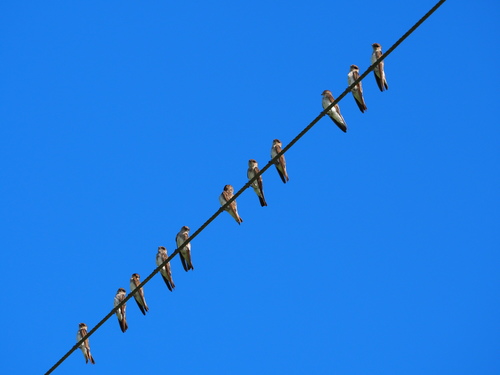
Bengal Weaver

Bengal Weaver

Ploceus benghalensis

Silhouette: Sheatherius · PhyloPic

LCLeast ConcernNTVUENCR
Daily sighting probability <5% · Rare
at Chitwan National Park

In 3 days ~10% in a week ~20%

55 Verified sightings at Chitwan National Park From 2019 to 2026
154 In all 5 parks
January Best month
☀️ Diurnal When it's spotted

About the Bengal Weaver

The black-breasted weaver (Ploceus benghalensis), also known as the Bengal weaver or black-throated weaver, is a weaver resident in the northern river plains of the Indian subcontinent. Like the other weavers, the males build an enclosed nest from reeds and mud, and visiting females select a mate at least partially based on the quality of the nest.

The black-breasted weaver was formally described in 1758 by the Swedish naturalist Carl Linnaeus in the tenth edition of his Systema Naturae. He placed it with the crossbills in the genus Loxia and coined the binomial name Loxia benghalensis. Linnaeus based his account on two earlier descriptions and hand-coloured illustrations by English naturalists. In 1734 Eleazar Albin had included the "Bengal sparrow" in his A Natural History of Birds, while in 1751 George Edwards had included the "yellow-headed Indian sparrow" in his A Natural History of Uncommon Birds. Both authors had access to specimens owned by the silk-pattern designer Joseph Dandridge that had been collected in Bengal. The black-breasted weaver is now one of 67 species placed in the genus Ploceus that was introduced by the French naturalist Georges Cuvier in 1816... Wikipedia →

Sounds

Song and call0:20

India · 2025

© Peter Boesman · XC1030793 · CC BY-NC-ND 4.0

Call0:09

India · 2012

© vir joshi · XC105866 · CC BY-NC-ND 2.5

Global Distribution

Parks Where Found

# Park Country Daily sighting probability
1 Royal Bardia National Park 🇳🇵 Nepal
~10%
2 Chitwan National Park 🇳🇵 Nepal
<5%
3 Kaziranga National Park 🇮🇳 India
<5%
4 Keoladeo National Park 🇮🇳 India
<5%
5 Manas National Park 🇮🇳 India
<5%

Cities Where Found

# City Country Daily sighting probability
1 Vijayawada 🇮🇳 India
~10%
2 Surat 🇮🇳 India
~10%
3 Vasai-Virar 🇮🇳 India
<5%
4 Vadodara 🇮🇳 India
<5%
5 Jaipur 🇮🇳 India
<5%
6 New Delhi 🇮🇳 India
<5%
7 Kolkata 🇮🇳 India
<5%

Before you go

What are the chances of seeing a Bengal Weaver in Chitwan National Park?

Rare

Under 5% of wildlife watchers report a Bengal Weaver sighting in Chitwan National Park on a given day, based on 55 verified sightings from GBIF citizen-science data from 2019 to 2026. It is the 197th most-seen of the 367 birds we can rate there. Over three days the chance rises to about 10%, and over a week to about 20%, if each day is a fresh chance.

When is the best time to see a Bengal Weaver in Chitwan National Park?

June and December–January

In those months about 10% of wildlife watchers report a Bengal Weaver in Chitwan National Park on a given day, against under 5% in February–May and July–November, the lowest months.

What time of day is best to see a Bengal Weaver?

Between 7 and 10 am

Across all the parks we cover, that three-hour window holds the most Bengal Weaver sightings with a recorded time, and nearly all of them come between 6 am and 6 pm: it is a daytime animal.

Is Chitwan National Park the best place to see a Bengal Weaver?

2nd of 5

Of the 5 parks where we can rate Bengal Weaver sightings, Chitwan National Park ranks 2nd at under 5%. The best odds are in Royal Bardia National Park (Nepal, about 10%).

Where does the Bengal Weaver sighting chance come from?

GBIF citizen-science records

It is estimated from how often the Bengal Weaver is recorded against all the birds logged in Chitwan National Park (55 verified sightings from 2019 to 2026), calibrated against known sighting rates. Figures are rounded to the nearest 10% because citizen-science data supports honest approximations, not decimals, and months with records from fewer than five people show "—". How it works.

← Back to Chitwan National Park