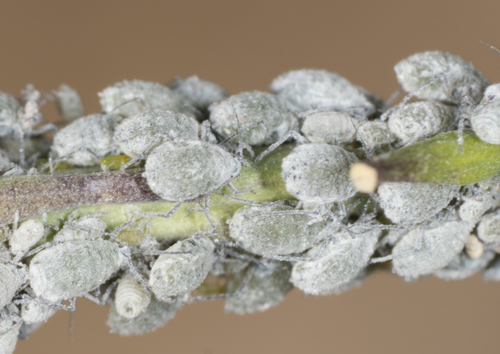
About the Giant Willow Aphid
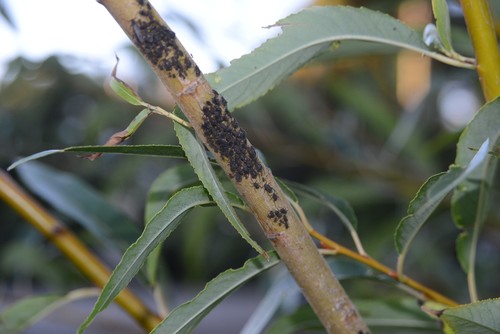
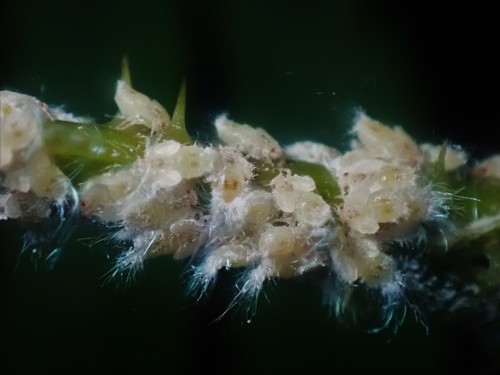
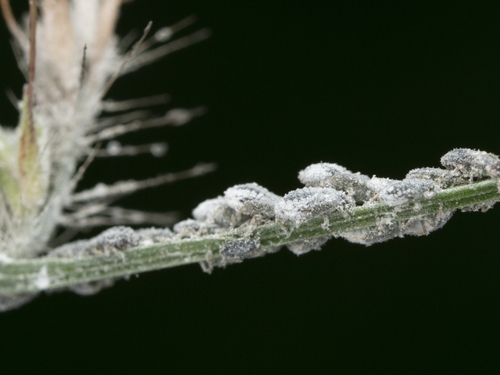
Tuberolachnus salignus, the giant willow aphid, is a species of aphid, in the genus Tuberolachnus. They are reputed to be the largest aphids, with a body length of up to 5.8mm. First described by Johann Friedrich Gmelin in 1790, it feeds on many species of willow (Salix species), and has one known host-specific parasite, Pauesia salignae.
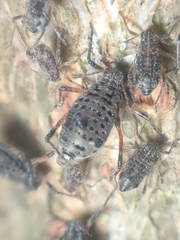
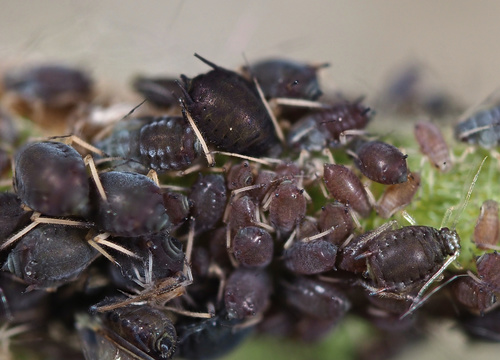
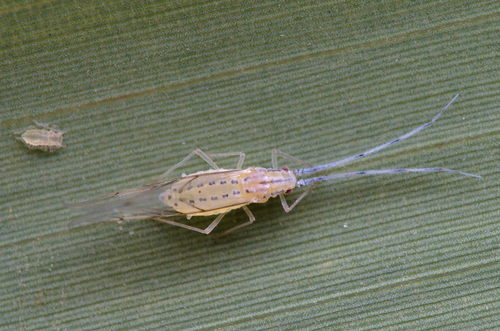
Tuberolachnus salignus does not require a male for reproduction. Only females have ever been recorded, which suggests that reproduction is parthenogenetic and all offspring produced are genetically identical clones. Adults exhibit a pear-shaped body with dark brown/grayish coloration. This aphid species has distinct black dots that form rows along its body. Along the dorsal side of their abdomen, about 2/3 of the way down, T. salignus displays a defining single large conical tubercle or bump that resembles a thorn which can grow to 0.2-0.3 mm. Closer to the posterior and along the sides of the body are two smaller black cone structures (siphunculi).
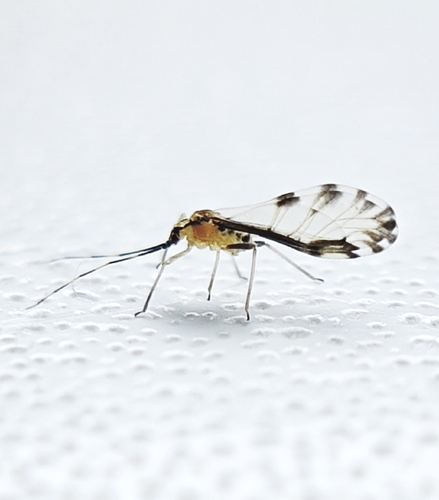
Tuberolachnus salignus reproduces solely through parthenogenesis so all aphid adults are female. Adults can be either winged or wingless. The two pairs of wings are clear with a dark brown... Wikipedia →