About the Cecropia Moth
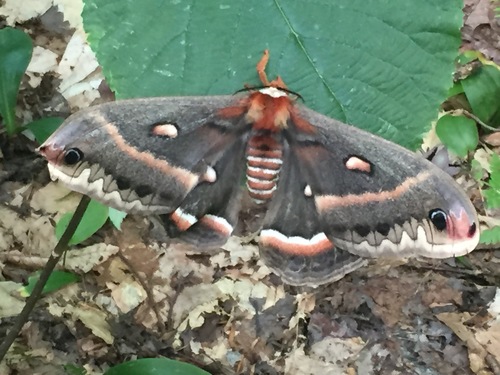
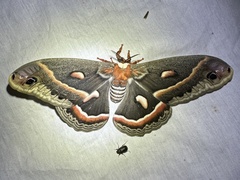
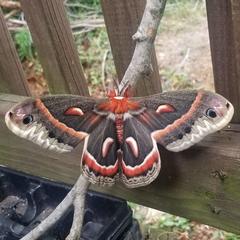
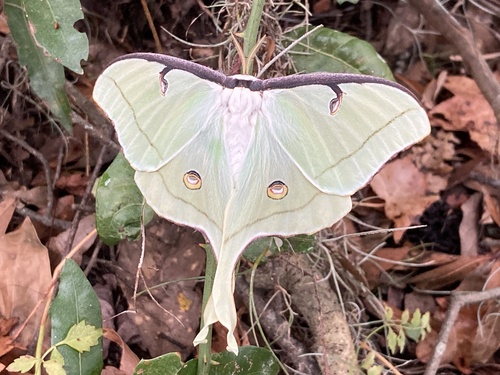
Hyalophora cecropia, the cecropia moth, is North America's largest native moth. It is a member of the family Saturniidae, or giant silk moths. Females have been documented with a wingspan of 5 to 7 in (13 to 18 cm) or more. These moths can be found predominantly across eastern North America, with occurrences as far west as Washington and north into most Canadian provinces. Cecropia moth larvae are most commonly found on maple trees, but they have also been found on cherry and birch trees, among many others. The species was first described by Carl Linnaeus in his 1758 10th edition of Systema Naturae.
Like other members of the giant silk moth family, the adult cecropia moth lacks functional mouth parts and a digestive system, so they only survive for around 2 weeks. To find a mate, the female cecropia moth emits pheromones, which the male detects with his sensitive antennae. Male cecropia moths can detect these pheromones from up to a mile away, although a male may fly up to 7 miles while searching for a female. Mating typically begins early in the morning and lasts until the evening.
After mating, the female lays up to 100 eggs. These eggs are mottled reddish brown and... Wikipedia →