Clubbed Mydas Fly

Clubbed Mydas Fly

Mydas clavatus

Daily sighting probability <5% · Rare
at Baltimore

In 3 days ~10% in a week ~30%

14 Verified sightings at Baltimore
31 In all 5 parks From 2019 to 2026
July Best month
☀️ Diurnal When it's spotted

About the Clubbed Mydas Fly

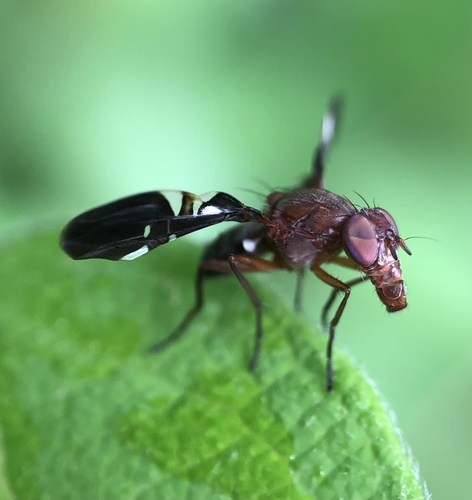
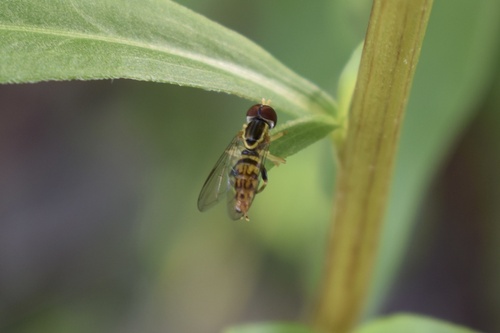
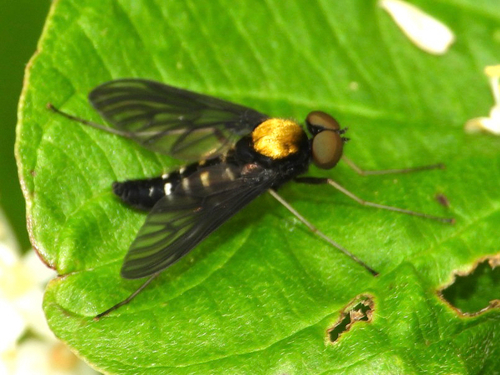
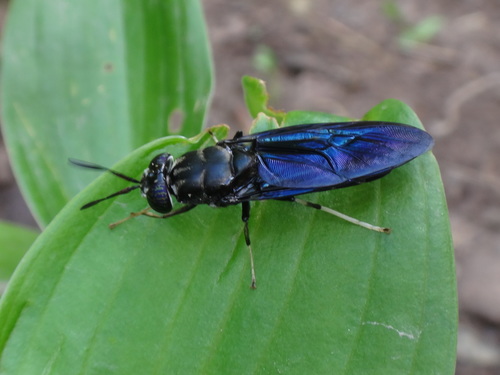
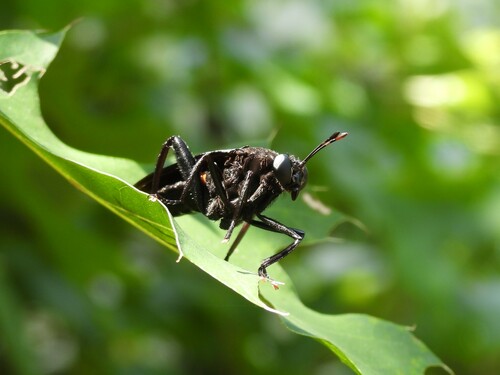
Mydas clavatus, the clubbed mydas fly, is a species of Mydas fly that is native to temperate, eastern North America. It is named for its clubbed antennae, which is however a general feature of the Mydas flies. An orange to red mark on the abdomen is distinctive. It is a Batesian mimic of certain spider wasps, and is consequently quite bold in its movements. Adults fly in mid-summer.

They are large, black and somewhat glabrate flies that measure some 25 to 30 mm in length, with a wingspan that may exceed 50 mm. A prominent orange to red mark is evident on the ventral side of the second abdominal segment. Their visual mimicry is apparently complemented by curling and jabbing of the abdomen in a mock stinging routine.

The eggs are deposited singly in soil or rotting wood. The larvae, as with M. brunneus and M. tibialis, are predatory on the larvae of deadwood-feeding scarab beetles (Osmoderma species.) and can be found in standing and downed trees with extensive heart rot. The adults seem to be pollen and nectar feeders only, and have been observed at Asclepias, Saponana, Spiraea, Monarda, Pycnanthemum, Teucrium and Verbena flowers. When not nectaring,... Wikipedia →
Global Distribution

Parks Where Found

# Park Country Daily sighting probability
1 Point Pelee National Park 🇨🇦 Canada
~10%
2 Shenandoah National Park 🇺🇸 United States
~10%
3 Merritt Island National Wildlife Refuge 🇺🇸 United States
<5%
4 Everglades National Park 🇺🇸 United States
<5%
5 Great Smoky Mountains National Park 🇺🇸 United States
<5%

Cities Where Found

# City Country Daily sighting probability
1 Detroit 🇺🇸 United States
~10%
2 Houston 🇺🇸 United States
~10%
3 Chicago 🇺🇸 United States
<5%
4 Baltimore 🇺🇸 United States
<5%
5 Austin 🇺🇸 United States
<5%
6 Philadelphia 🇺🇸 United States
<5%
7 Boston 🇺🇸 United States
<5%
8 Dallas 🇺🇸 United States
<5%
9 Washington 🇺🇸 United States
<5%
10 San Antonio 🇺🇸 United States
<5%

Before you go

What are the chances of seeing a Clubbed Mydas Fly in Baltimore?

Rare

Under 5% of wildlife watchers report a Clubbed Mydas Fly sighting in Baltimore on a given day, based on 14 verified sightings from GBIF citizen-science data. It is the 322nd most-seen of the 705 insects we can rate there. Over three days the chance rises to about 10%, and over a week to about 30%, if each day is a fresh chance.

When is the best time to see a Clubbed Mydas Fly in Baltimore?

July

In that month about 10% of wildlife watchers report a Clubbed Mydas Fly in Baltimore on a given day, against under 5% in August to June, the lowest months.

What time of day is best to see a Clubbed Mydas Fly?

Between noon and 3 pm

Across all the parks we cover, that three-hour window holds the most Clubbed Mydas Fly sightings with a recorded time, and nearly all of them come between 6 am and 6 pm: it is a daytime animal.

Is Baltimore the best place to see a Clubbed Mydas Fly?

4th of 11

Of the 11 cities where we can rate Clubbed Mydas Fly sightings, Baltimore ranks 4th at under 5%. The best odds are in Detroit (United States, about 10%), Houston (United States, about 10%) and Chicago (United States, under 5%).

Where does the Clubbed Mydas Fly sighting chance come from?

GBIF citizen-science records

It is estimated from how often the Clubbed Mydas Fly is recorded against all the insects logged in Baltimore (14 verified sightings), calibrated against known sighting rates. Figures are rounded to the nearest 10% because citizen-science data supports honest approximations, not decimals, and months with records from fewer than five people show "—". How it works.

← Back to Baltimore