Brown Marmorated Stink Bug

Brown Marmorated Stink Bug

Halyomorpha halys

Daily sighting probability ~20% · Possible
at Barcelona

In 3 days ~40% in a week ~70%

110 Verified sightings at Barcelona
643 In all 10 parks From 2019 to 2026
October Best month
☀️ Diurnal When it's spotted

About the Brown Marmorated Stink Bug

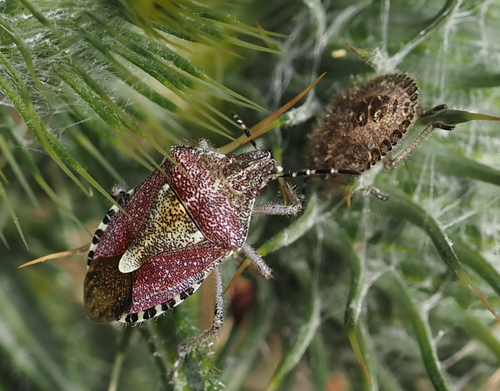
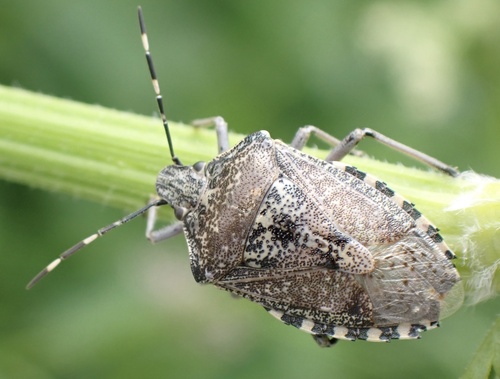
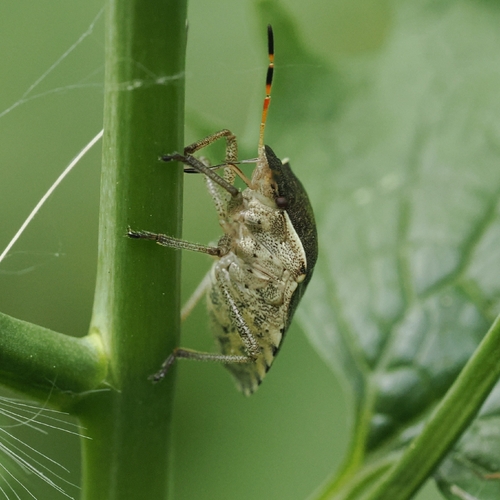
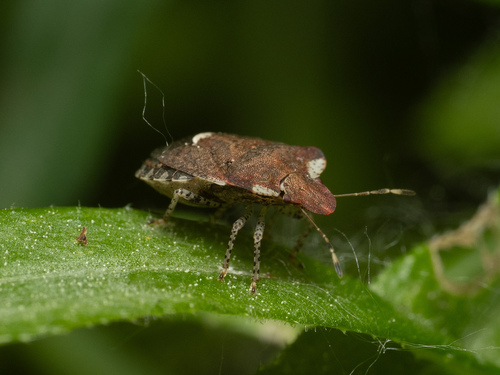
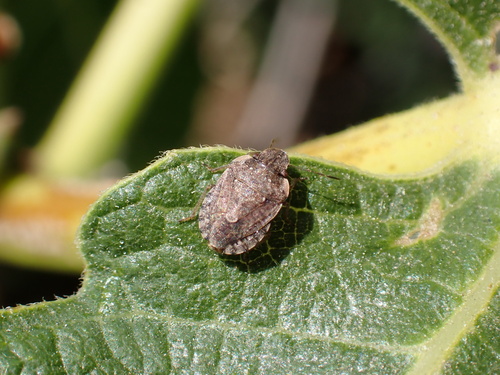
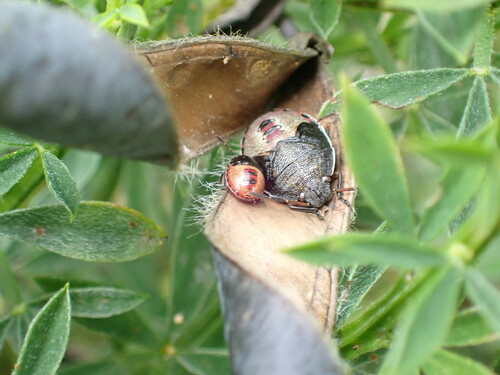
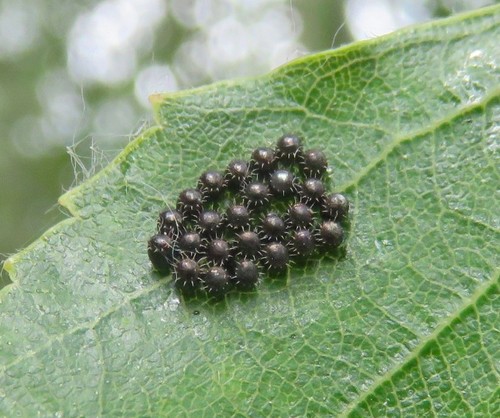
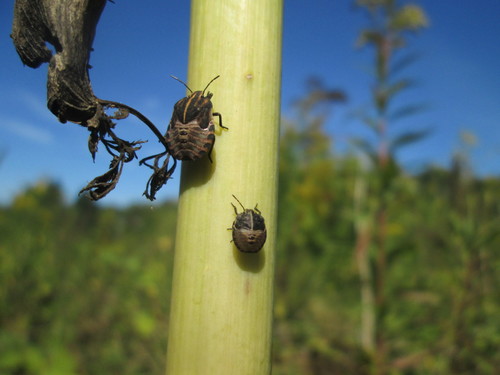
The brown marmorated stink bug (Halyomorpha halys) is an insect in the family Pentatomidae, native to China, Japan, Korea, and other Asian regions. In September 1998, it was collected in Allentown, Pennsylvania, where it is believed to have been accidentally introduced. The nymphs and adults of the brown marmorated stink bug feed on over 100 species of plants, including many agricultural crops, and by 2010–11 had become a season-long pest in orchards in the Eastern United States. In 2010, in the Mid-Atlantic United States, $37 million in apple crops were lost, and some stone fruit growers lost more than 90% of their crops. Since the 2010s, the bug has spread to countries such as Georgia and Turkey and caused extensive damage to hazelnut production. It is now established in many parts of North America and has recently become established in Europe and South America.

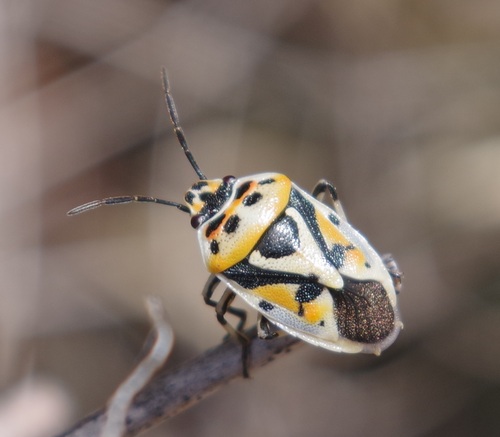
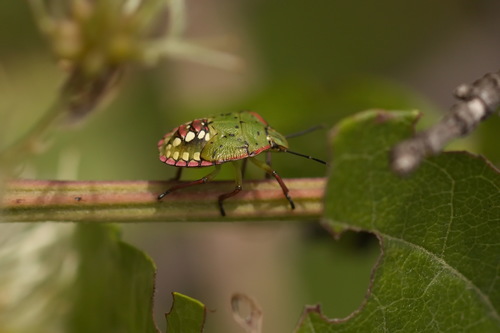
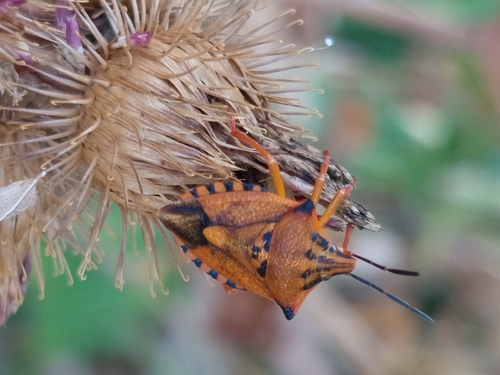
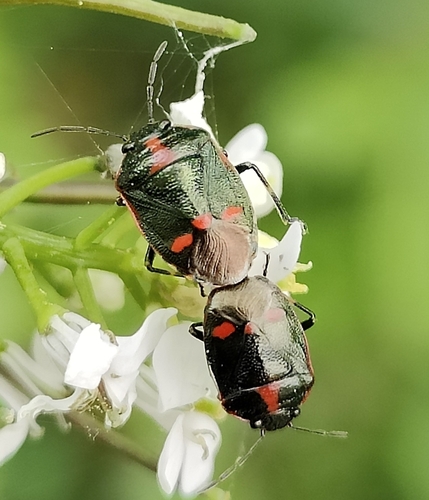
Adult brown marmorated stink bugs are approximately 1.7 cm (0.67 in) long and about as wide, forming the shield shape characteristic of bugs in the superfamily Pentatomoidea. They are generally dark brown when viewed from above, with a creamy white-brown underside. Individual coloration may vary, with some... Wikipedia →
Global Distribution

Parks Where Found

# Park Country Daily sighting probability
1 Taroko National Park 🇹🇼 Taiwan
~40%
2 Nikko National Park 🇯🇵 Japan
~30%
3 Cévennes National Park 🇫🇷 France
~20%
4 Kiskunság National Park 🇭🇺 Hungary
~20%
5 Triglav National Park 🇸🇮 Slovenia
~20%
6 Shenandoah National Park 🇺🇸 United States
~20%
7 Great Smoky Mountains National Park 🇺🇸 United States
~20%
8 Bavarian Forest National Park 🇩🇪 Germany
~10%
9 Pyrénées National Park 🇫🇷 France
~10%
10 Fertő-Hanság National Park 🇭🇺 Hungary
~10%

Cities Where Found

# City Country Daily sighting probability
1 Ankara 🇹🇷 Turkey
~40%
2 Valencia 🇪🇸 Spain
~40%
3 Turin 🇮🇹 Italy
~30%
4 Sofia 🇧🇬 Bulgaria
~30%
5 Essen 🇩🇪 Germany
~30%
6 Hamburg 🇩🇪 Germany
~30%
7 Vienna 🇦🇹 Austria
~30%
8 Budapest 🇭🇺 Hungary
~30%
9 Lyon 🇫🇷 France
~30%
10 Berlin 🇩🇪 Germany
~30%

Before you go

What are the chances of seeing a Brown Marmorated Stink Bug in Barcelona?

Possible

About 20% of wildlife watchers report a Brown Marmorated Stink Bug sighting in Barcelona on a given day, based on 110 verified sightings from GBIF citizen-science data. It is the 31st most-seen of the 381 insects we can rate there. Over three days the chance rises to about 40%, and over a week to about 70%, if each day is a fresh chance.

When is the best time to see a Brown Marmorated Stink Bug in Barcelona?

October

In that month about 30% of wildlife watchers report a Brown Marmorated Stink Bug in Barcelona on a given day, against about 10% in February, April–June and November–December, the lowest months. That is one of Barcelona's wettest months, with about 95 mm of rain against 35 mm in December.

What time of day is best to see a Brown Marmorated Stink Bug?

Between 2 and 5 pm

Across all the parks we cover, that three-hour window holds the most Brown Marmorated Stink Bug sightings with a recorded time, and about 8 in 10 of them come between 6 am and 6 pm: it is a daytime animal.

Is Barcelona the best place to see a Brown Marmorated Stink Bug?

28th of 76

Of the 76 cities where we can rate Brown Marmorated Stink Bug sightings, Barcelona ranks 28th at about 20%. The best odds are in Ankara (Turkey, about 40%), Valencia (Spain, about 40%) and Turin (Italy, about 30%).

Where does the Brown Marmorated Stink Bug sighting chance come from?

GBIF citizen-science records

It is estimated from how often the Brown Marmorated Stink Bug is recorded against all the insects logged in Barcelona (110 verified sightings), calibrated against known sighting rates. Figures are rounded to the nearest 10% because citizen-science data supports honest approximations, not decimals, and months with records from fewer than five people show "—". How it works.

← Back to Barcelona