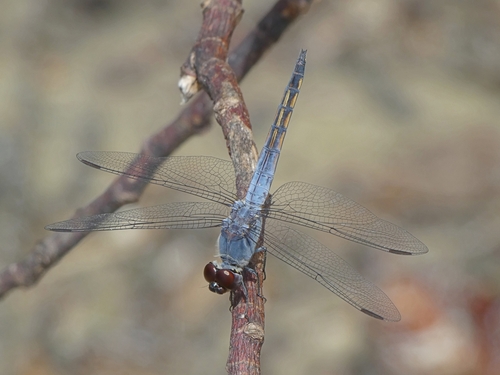
Blue Marsh Hawk

Blue Marsh Hawk

Orthetrum glaucum

Daily sighting probability <5% · Rare
at Bengaluru

In 3 days ~10% in a week ~20%

7 Verified sightings at Bengaluru
292 In all 14 parks From 2019 to 2026
November Best month
☀️ Diurnal When it's spotted

About the Blue Marsh Hawk

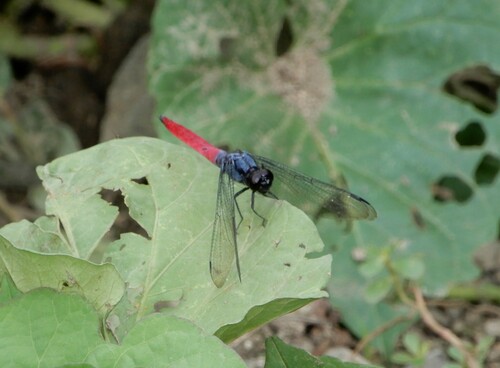
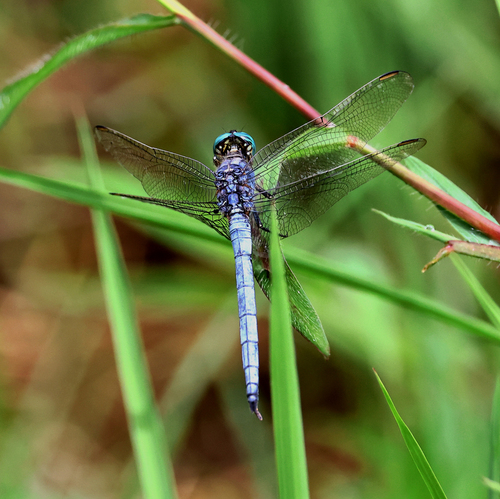
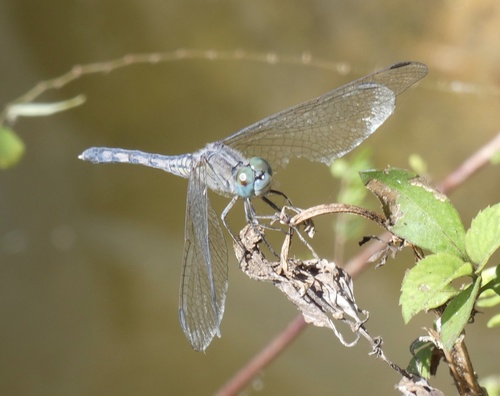
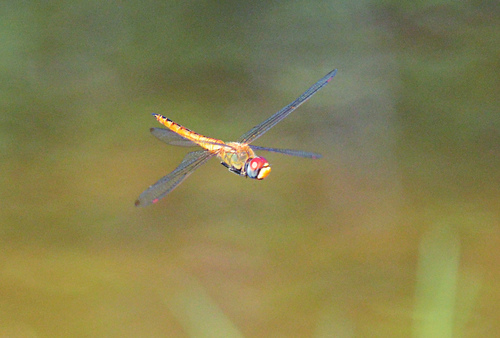
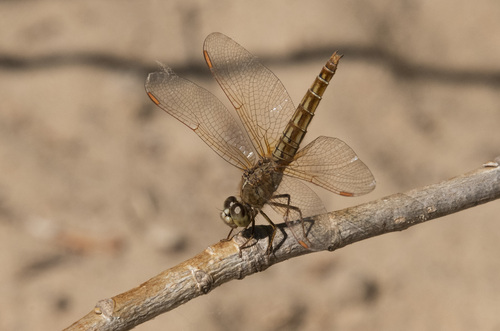
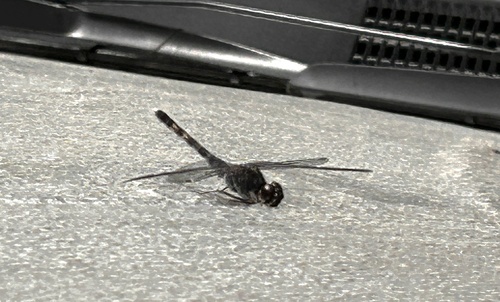
Orthetrum glaucum is an Asian dragonfly species, common across much of tropical and subtropical Asia. The common name for this species is blue marsh hawk. It is a medium sized dragonfly with dark face and greenish blue eyes. The thorax of old males are dark blue due to pruinescence. Its wings are transparent with dark amber-yellow tint in the extreme base. Its abdomen is pruinosed with blue color up to segment 8; last two segments are black. The abdomens of females and juvenile males are golden in color, with brown stripes along the sides of the thorax. Despite their visual similarities, females and juvenile males can be distinguished by the shape of their final abdomen segment.

It breeds in marshes associated with forest streams, plantations and canals. Wikipedia →

Global Distribution

Parks Where Found

# Park Country Daily sighting probability
1 Periyar National Park 🇮🇳 India
~40%
2 Danum Valley Conservation Area 🇲🇾 Malaysia
~30%
3 Gunung Leuser National Park 🇮🇩 Indonesia
~30%
4 Namdapha National Park 🇮🇳 India
~30%
5 Kerinci Seblat National Park 🇮🇩 Indonesia
~30%
6 Kinabalu Park 🇲🇾 Malaysia
~30%
7 Sinharaja Forest Reserve 🇱🇰 Sri Lanka
~20%
8 Khao Luang National Park 🇹🇭 Thailand
~20%
9 Doi Inthanon National Park 🇹🇭 Thailand
~20%
10 Khao Yai National Park 🇹🇭 Thailand
~20%
11 Kaeng Krachan National Park 🇹🇭 Thailand
~20%
12 Khao Sok National Park 🇹🇭 Thailand
~20%
13 Taroko National Park 🇹🇼 Taiwan
~20%
14 Taman Negara National Park 🇲🇾 Malaysia
~10%

Cities Where Found

# City Country Daily sighting probability
1 Hong Kong 🇨🇳 China
~30%
2 Dehradun 🇮🇳 India
~20%
3 Singapore 🇸🇬 Singapore
~20%
4 Tuen Mun 🇨🇳 China
~20%
5 Kuala Lumpur 🇲🇾 Malaysia
~10%
6 Taichung 🇹🇼 Taiwan
~10%
7 Taipei 🇹🇼 Taiwan
~10%
8 Xiamen City 🇨🇳 China
~10%
9 Guangzhou 🇨🇳 China
~10%
10 Bandung 🇮🇩 Indonesia
~10%

Before you go

What are the chances of seeing a Blue Marsh Hawk in Bengaluru?

Rare

Under 5% of wildlife watchers report a Blue Marsh Hawk sighting in Bengaluru on a given day, based on 7 verified sightings from GBIF citizen-science data. It is the 395th most-seen of the 477 insects we can rate there. Over three days the chance rises to about 10%, and over a week to about 20%, if each day is a fresh chance.

When is the best time to see a Blue Marsh Hawk in Bengaluru?

January and October–November

In those months about 10% of wildlife watchers report a Blue Marsh Hawk in Bengaluru on a given day, against under 5% in February–September and December, the lowest months.

What time of day is best to see a Blue Marsh Hawk?

Between 10 am and 1 pm

Across all the parks we cover, that three-hour window holds the most Blue Marsh Hawk sightings with a recorded time, and about 9 in 10 of them come between 6 am and 6 pm: it is a daytime animal.

Is Bengaluru the best place to see a Blue Marsh Hawk?

15th of 15

Of the 15 cities where we can rate Blue Marsh Hawk sightings, Bengaluru ranks 15th at under 5%. The best odds are in Hong Kong (China, about 30%), Dehradun (India, about 20%) and Singapore (Singapore, about 20%).

Which relatives of the Blue Marsh Hawk live in Bengaluru?

Same genus: Orthetrum

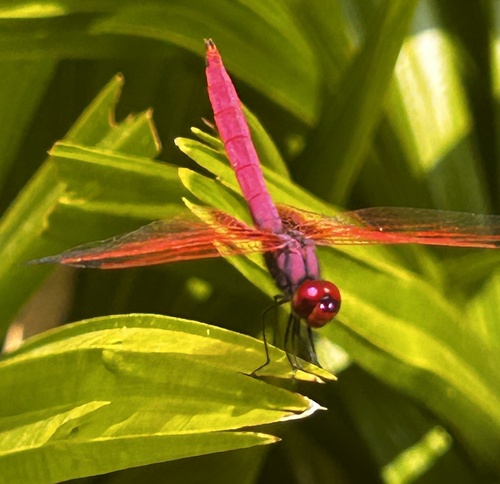
The closest relatives of the Blue Marsh Hawk that you can see in Bengaluru (genus Orthetrum) are Slender Skimmer (about 10%) and Crimson-Tailed Marsh Hawk (about 10%), with each one's daily chance of a sighting.

Where does the Blue Marsh Hawk sighting chance come from?

GBIF citizen-science records

It is estimated from how often the Blue Marsh Hawk is recorded against all the insects logged in Bengaluru (7 verified sightings), calibrated against known sighting rates. Figures are rounded to the nearest 10% because citizen-science data supports honest approximations, not decimals, and months with records from fewer than five people show "—". How it works.

← Back to Bengaluru