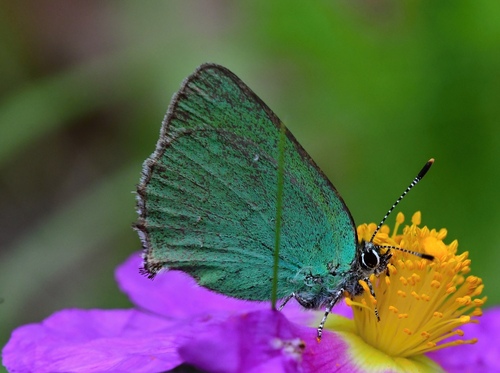
Green Hairstreak

Green Hairstreak

Callophrys rubi

Daily sighting probability ~10% · With luck
at Birmingham

In 3 days ~20% in a week ~40%

33 Verified sightings at Birmingham
407 In all 16 parks From 2019 to 2026
May Best month
☀️ Diurnal When it's spotted

About the Green Hairstreak

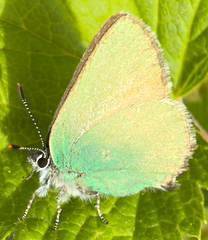
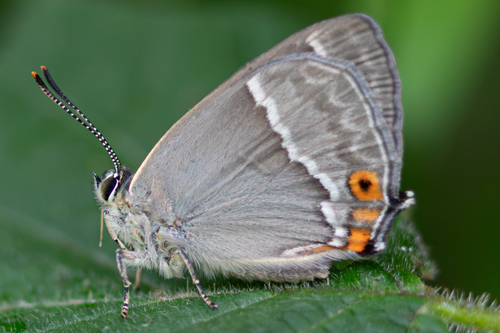
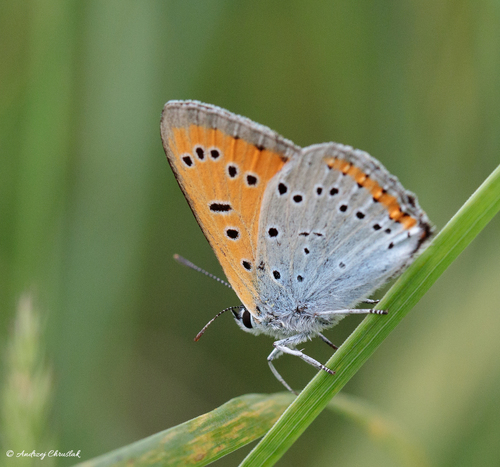
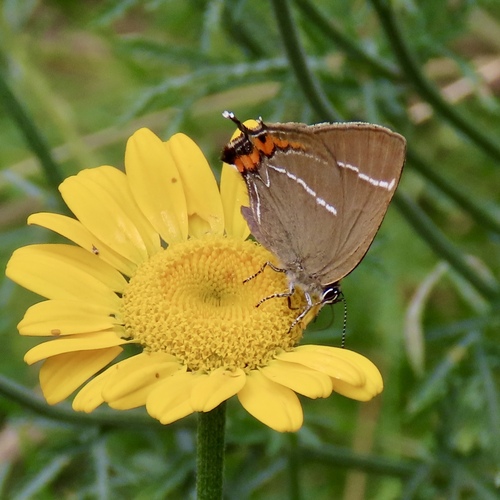
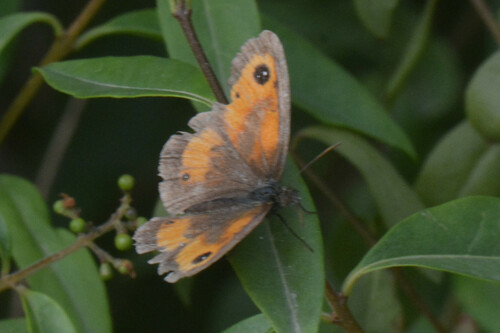
The green hairstreak (Callophrys rubi) is a small butterfly in the family Lycaenidae. The genus name Callophrys is a Greek word meaning "beautiful eyebrows", while the species Latin name rubi derives from Rubus (bramble), one of the host plants.

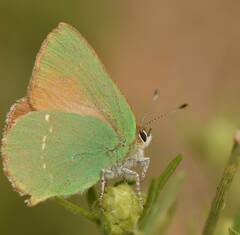
Callophrys rubi sibirica (Rühl, 1895) Tien-Shan, Altai, Siberia, Transbaikalia, Far East, Amur (Outer Manchuria), Ussuri and Sakhalin. Callophrys rubi has a wingspan reaching about 26–30 millimetres (1.0–1.2 in) in length. The oversides of the wings are a uniform dull brown, with two paler patches on the male's forewings made up of scent scales. The undersides are a bright green with a thin white line, often reduced to a faint row of dots or even missing altogether. The iridescent green colour of the undersides is a structural colour caused by diffraction and interference of light by microscopic repeating structures forming a diffraction grating in the wing scales. The... Wikipedia →

Global Distribution

Parks Where Found

# Park Country Daily sighting probability
1 Vanoise National Park 🇫🇷 France
~20%
2 Hohe Tauern National Park 🇦🇹 Austria
~20%
3 Gauja National Park 🇱🇻 Latvia
~20%
4 Mercantour National Park 🇫🇷 France
~20%
5 Triglav National Park 🇸🇮 Slovenia
~20%
6 Aigüestortes National Park 🇪🇸 Spain
~20%
7 Cévennes National Park 🇫🇷 France
~20%
8 Ordesa y Monte Perdido National Park 🇪🇸 Spain
~20%
9 Sierra Nevada National Park 🇪🇸 Spain
~20%
10 Ecrins National Park 🇫🇷 France
~10%
11 Pyrénées National Park 🇫🇷 France
~10%
12 Picos de Europa National Park 🇪🇸 Spain
~10%
13 Cairngorms National Park 🇬🇧 United Kingdom
~10%
14 Bavarian Forest National Park 🇩🇪 Germany
~10%
15 Sierra de Guadarrama National Park 🇪🇸 Spain
~10%
16 Wadden Sea National Park 🇩🇪 Germany
~10%

Cities Where Found

# City Country Daily sighting probability
1 Helsinki 🇫🇮 Finland
~10%
2 Stockholm 🇸🇪 Sweden
~10%
3 London 🇬🇧 United Kingdom
~10%
4 Birmingham 🇬🇧 United Kingdom
~10%
5 Istanbul 🇹🇷 Turkey
~10%
6 Rome 🇮🇹 Italy
~10%
7 Barcelona 🇪🇸 Spain
~10%
8 Copenhagen 🇩🇰 Denmark
<5%
9 Vienna 🇦🇹 Austria
<5%
10 Yekaterinburg 🇷🇺 Russia
<5%

Before you go

What are the chances of seeing a Green Hairstreak in Birmingham?

With luck

About 10% of wildlife watchers report a Green Hairstreak sighting in Birmingham on a given day, based on 33 verified sightings from GBIF citizen-science data. It is the 250th most-seen of the 811 insects we can rate there. Over three days the chance rises to about 20%, and over a week to about 40%, if each day is a fresh chance.

When is the best time to see a Green Hairstreak in Birmingham?

May

In that month about 20% of wildlife watchers report a Green Hairstreak in Birmingham on a given day, against under 5% in July to April, the lowest months.

What time of day is best to see a Green Hairstreak?

Between 10 am and 1 pm

Across all the parks we cover, that three-hour window holds the most Green Hairstreak sightings with a recorded time, and about 9 in 10 of them come between 6 am and 6 pm: it is a daytime animal.

Is Birmingham the best place to see a Green Hairstreak?

Among the best

Of the 12 cities where we can rate Green Hairstreak sightings, Birmingham ranks 4th at about 10%, level with the leaders once rounded. The best odds are in Helsinki (Finland, about 10%), Stockholm (Sweden, about 10%) and London (United Kingdom, about 10%).

Which relatives of the Green Hairstreak live in Birmingham?

Same family: Lycaenidae

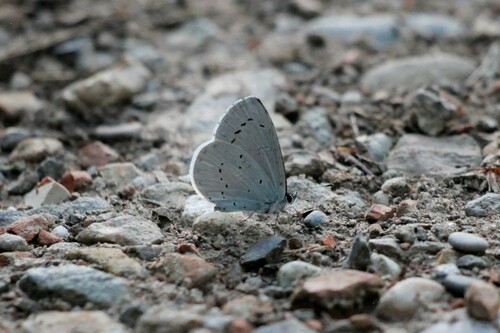
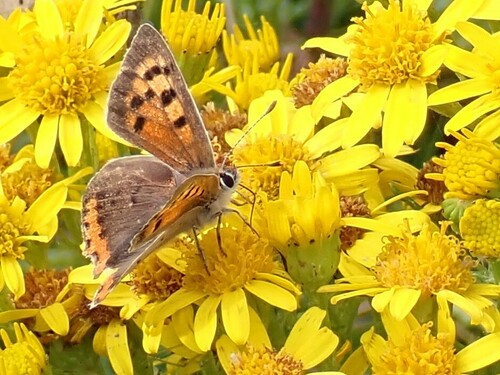
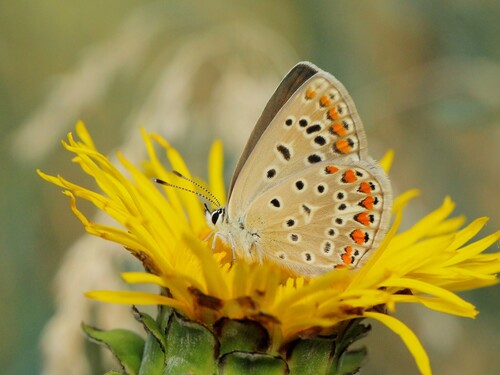
The closest relatives of the Green Hairstreak that you can see in Birmingham (family Lycaenidae, Gossamer-winged Butterflies) are Holly Blue (about 30%), Small Copper (about 20%) and Common Blue (about 20%), with each one's daily chance of a sighting.

Where does the Green Hairstreak sighting chance come from?

GBIF citizen-science records

It is estimated from how often the Green Hairstreak is recorded against all the insects logged in Birmingham (33 verified sightings), calibrated against known sighting rates. Figures are rounded to the nearest 10% because citizen-science data supports honest approximations, not decimals, and months with records from fewer than five people show "—". How it works.
← Back to Birmingham