Common Halfband

Common Halfband

Melangyna viridiceps

Endemic
Daily sighting probability <5% · Rare
at Brisbane

In 3 days ~10% in a week ~20%

12 Verified sightings at Brisbane
75 In all 4 parks From 2019 to 2026
August Best month
☀️ Diurnal When it's spotted

About the Common Halfband

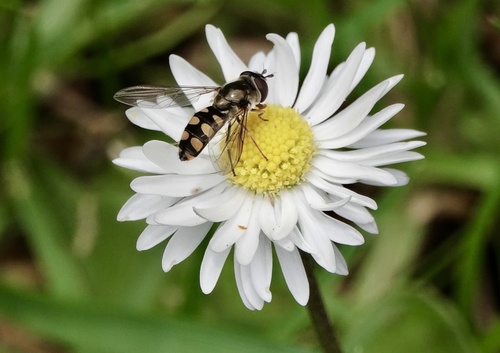
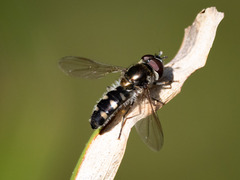
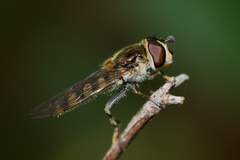
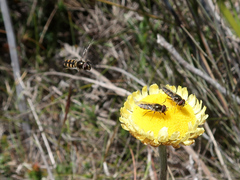
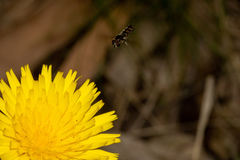
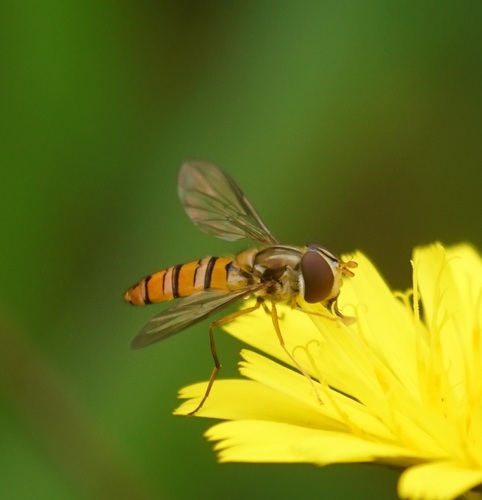
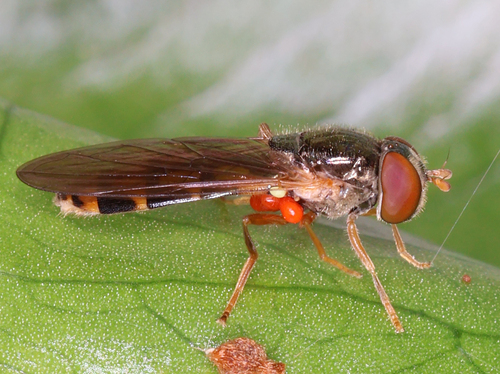
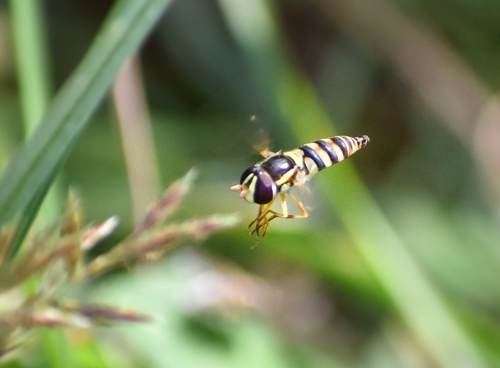
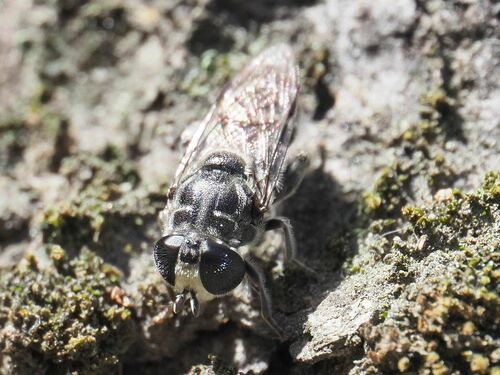
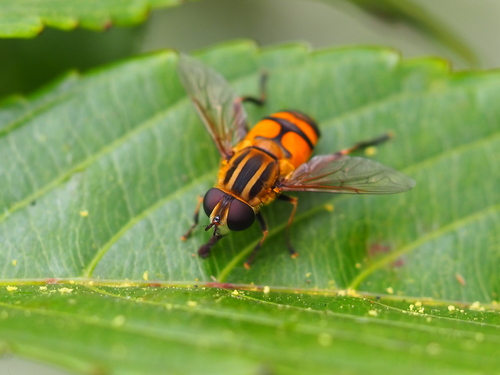
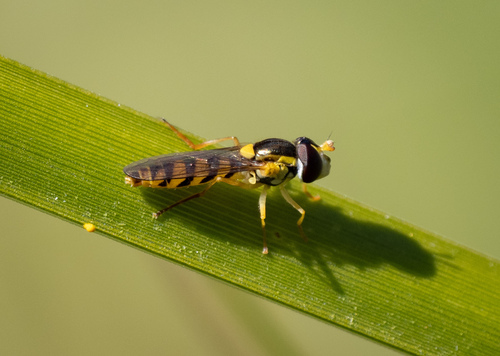
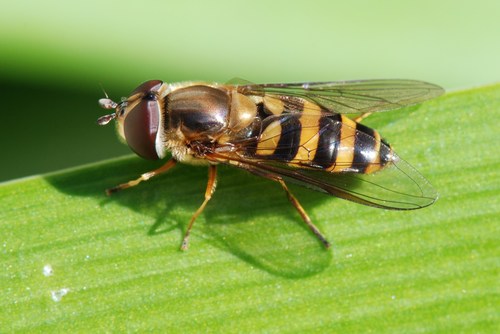
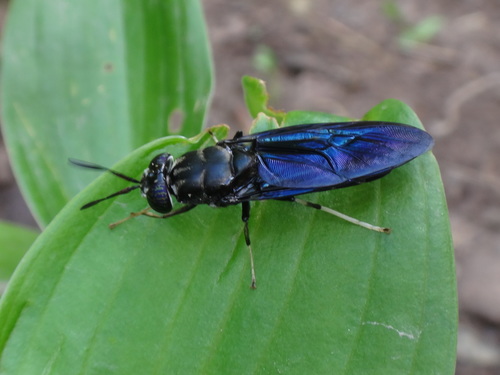
Melangyna viridiceps is an Australian hoverfly, known as the common hover fly. It is one of the two most common hoverflies in Australia, alongside Simosyrphus grandicornis, with which it has often been confused, but can be distinguished by its all black thorax.

M. viridiceps has a body up to 1 cm in length. The adult flies feed on pollen and nectar which they gather from flowers, while the larvae feed on aphids. It is found widely across Eastern Australia. Some sources indicate that the species is also present in New Zealand, either on the Kermadec Islands only, or on both the Kermadecs and the mainland. Most recent sources, however, do not record this species as being present outside of Australia. Miller's 1921 mention for the Kermadec was found to be a misidentification for Simosyrphus grandicornis, and Macfarlane et al. failed to cite specimens or published reports for their claim of the species' presence in the Kermadec.

Data related to Melangyna viridiceps at Wikispecies Wikipedia →

Global Distribution

Parks Where Found

# Park Country Daily sighting probability
1 Grampians National Park 🇦🇺 Australia
~20%
2 Hattah-Kulkyne National Park 🇦🇺 Australia
~10%
3 Great Otway National Park 🇦🇺 Australia
~10%
4 Blue Mountains National Park 🇦🇺 Australia
~10%

Cities Where Found

# City Country Daily sighting probability
1 Melbourne 🇦🇺 Australia
~20%
2 Hobart 🇦🇺 Australia
~10%
3 Perth 🇦🇺 Australia
~10%
4 Sydney 🇦🇺 Australia
<5%
5 Brisbane 🇦🇺 Australia
<5%

Before you go

What are the chances of seeing a Common Halfband in Brisbane?

Rare

Under 5% of wildlife watchers report a Common Halfband sighting in Brisbane on a given day, based on 12 verified sightings from GBIF citizen-science data. It is the 680th most-seen of the 1083 insects we can rate there. Over three days the chance rises to about 10%, and over a week to about 20%, if each day is a fresh chance.

When is the best time to see a Common Halfband in Brisbane?

July and August

In those months about 10% of wildlife watchers report a Common Halfband in Brisbane on a given day, against under 5% in September to June, the lowest months. Those are among Brisbane's driest months, with about 40 mm of rain a month against 160 mm in February.

What time of day is best to see a Common Halfband?

Between 11 am and 2 pm

Across all the parks we cover, that three-hour window holds the most Common Halfband sightings with a recorded time, and about 9 in 10 of them come between 6 am and 6 pm: it is a daytime animal.

Is Brisbane the best place to see a Common Halfband?

5th of 5

Of the 5 cities where we can rate Common Halfband sightings, Brisbane ranks 5th at under 5%. The best odds are in Melbourne (Australia, about 20%), Hobart (Australia, about 10%) and Perth (Australia, about 10%).

Where does the Common Halfband sighting chance come from?

GBIF citizen-science records

It is estimated from how often the Common Halfband is recorded against all the insects logged in Brisbane (12 verified sightings), calibrated against known sighting rates. Figures are rounded to the nearest 10% because citizen-science data supports honest approximations, not decimals, and months with records from fewer than five people show "—". How it works.

← Back to Brisbane