About the Southern Meat Ant
The meat ant (Iridomyrmex purpureus), also known as the gravel ant or southern meat ant, is a species of ant endemic to Australia. A member of the genus Iridomyrmex in the subfamily Dolichoderinae, it was described by British entomologist Frederick Smith in 1858. The meat ant is associated with many common names due to its appearance, nest-building behaviour and abundance, of which its specific name, purpureus, refers to its coloured appearance. It is among the best-known species of ant found throughout Australia; it occurs in almost all states and territories except for Tasmania. Its enormous distribution, aggression and ecological importance have made this ant a dominant species.
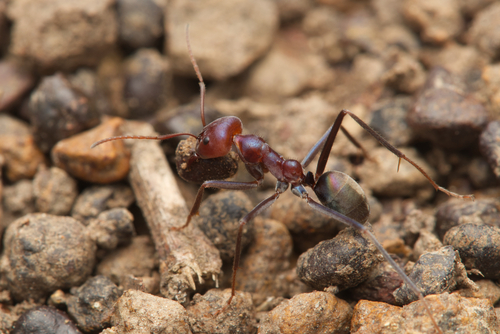
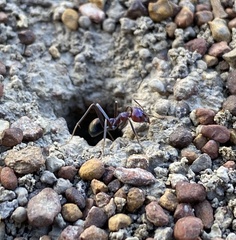
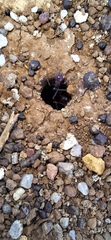
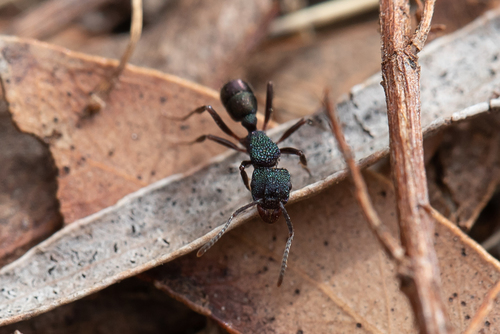
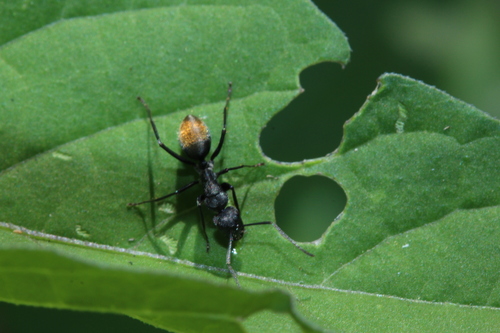
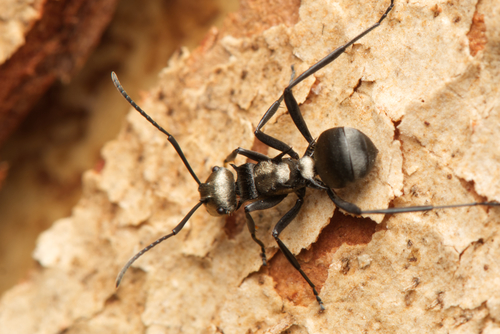
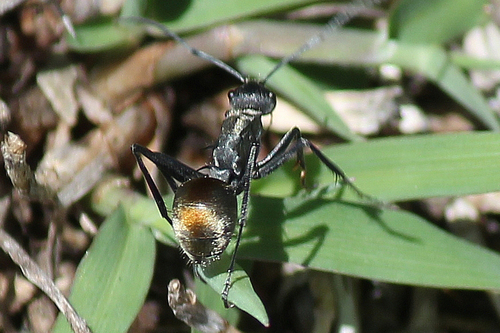
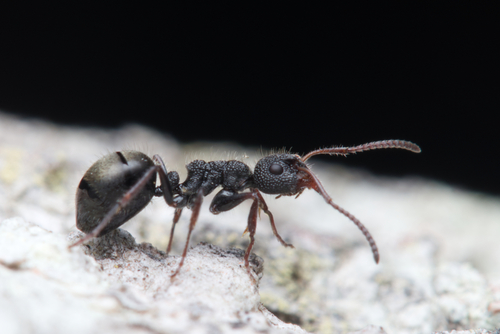
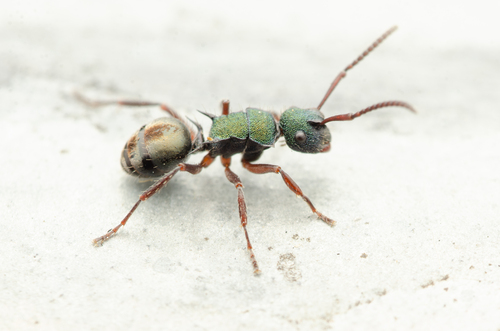
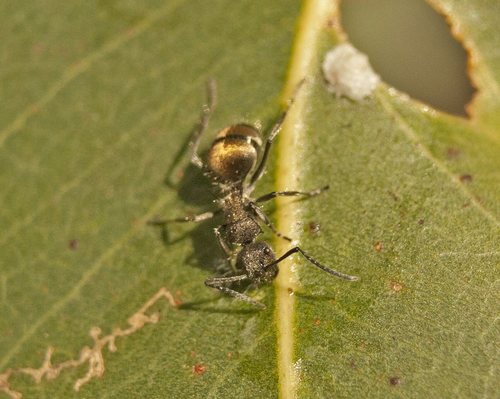
The meat ant is monomorphic (occurs in a particular form), although there is evidence that certain populations can be polymorphic. It is characterised by its dark-bluish body and red head. It is a medium to large species, measuring 6–12 mm (0.24–0.47 in). The workers and males are approximately the same sizes at 6–7 mm (0.24–0.28 in) and 8 mm (0.31 in), respectively. The queens are the largest and appear mostly black, measuring 12.7 mm (0.50 in). The iridescence in workers ranges from green or blue to plain green and purple, varying in different body parts and castes. Meat ants inhabit open and warm areas in large, oval-shaped mounds that are accompanied by many entrance holes. The nest area is always cleared of vegetation and covered with materials including gravel, pebbles and dead vegetation. They are also polydomous, where a colony may be established in a series of satellite nests connected by well-defined paths and trails. Satellite nests are constructed away from the main nest in nearby areas with valuable food sources so workers can exploit them.
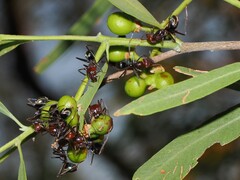
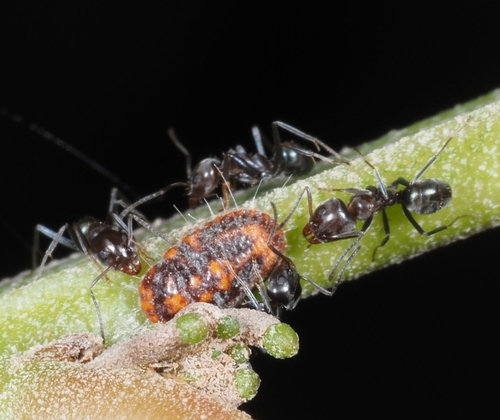
Queens mate with a single male and colonies may have more than one queen until the workers arrive, where they both exhibit antagonism. It takes around one or two months for an individual egg to develop into an adult. Colonies range in size, varying between 11,000 individuals to over 300,000. The meat ant is a diurnal species (active throughout most of the day), especially when it is warm. It forages on trees and collects sweet substances such as honeydew and nectar, and also captures insects or collects the remains of animals. A number of predators eat these ants, including the short-beaked echidna (Tachyglossus aculeatus), numerous species of birds, blind snakes and spiders. This species is also a competitor of the banded sugar ant (Camponotus consobrinus). Wikipedia →