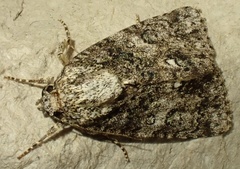
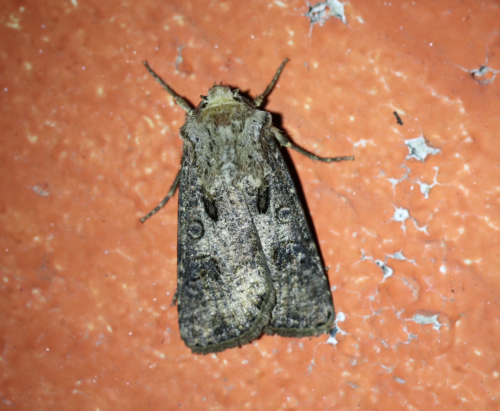
Knot Grass Moth

Knot Grass Moth

Acronicta rumicis

Daily sighting probability ~10% · With luck
at Brussels

In 3 days ~20% in a week ~30%

10 Verified sightings at Brussels
316 In all 9 parks From 2019 to 2026
August Best month
☀️🌙 Day & Night When it's spotted

About the Knot Grass Moth

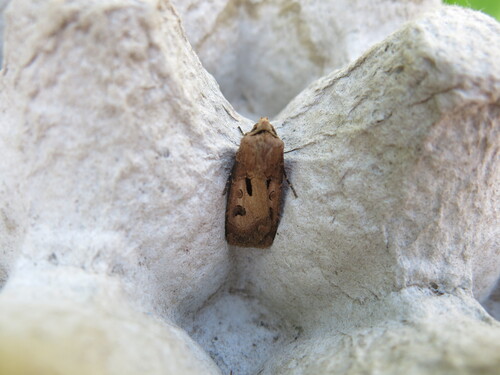
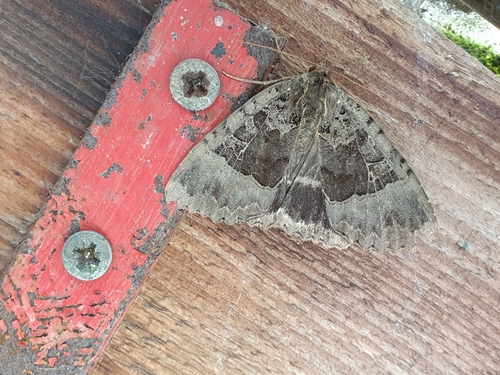
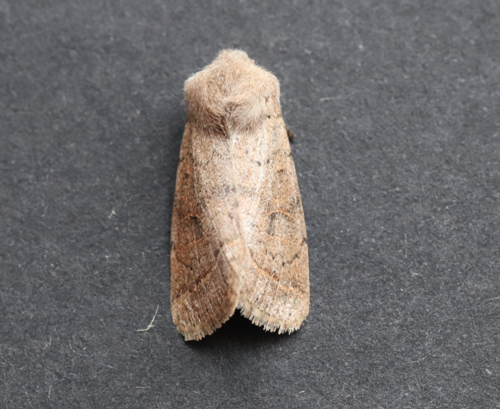
Acronicta rumicis, the knot grass moth, is a species of moth which is part of the genus Acronicta and family Noctuidae. It was first described by Carl Linnaeus in his 1758 10th edition of Systema Naturae. It is found in the Palearctic region. A. rumicis lives and feeds on plants located in wide-open areas. At its larval stage, as a caterpillar, it causes such a large impact as a crop pest that it has received much attention and research. A. rumicis feeds on maize, strawberries and other herbaceous plants.

The moth's evolution has been affected by the industrial melanism that occurred in Europe during the late 19th and early 20th centuries, causing a dramatic increase in two aberrations (salicin and lugubris), which have darker grey wings. Today, A. rumicis is important to conservation efforts in the United Kingdom, because, like many other species, it is in decline. However, as it is part of a UK Priority Biodiversity Action Plan and receiving greater awareness and conservation, the species may become more abundant.

A. rumicis has a wingspan of 34–44 mm. The forewings are blotched with a mixture of dark and light-grey shades, while the hindwings... Wikipedia →

Global Distribution

Parks Where Found

# Park Country Daily sighting probability
1 Gauja National Park 🇱🇻 Latvia
~20%
2 Bavarian Forest National Park 🇩🇪 Germany
~20%
3 Snowdonia National Park 🇬🇧 United Kingdom
~10%
4 Wadden Sea National Park 🇩🇪 Germany
~10%
5 Cairngorms National Park 🇬🇧 United Kingdom
~10%
6 Cévennes National Park 🇫🇷 France
~10%
7 Pyrénées National Park 🇫🇷 France
~10%
8 Fertő-Hanság National Park 🇭🇺 Hungary
~10%
9 Sierra de Guadarrama National Park 🇪🇸 Spain
~10%

Cities Where Found

# City Country Daily sighting probability
1 London 🇬🇧 United Kingdom
~20%
2 Birmingham 🇬🇧 United Kingdom
~20%
3 Turin 🇮🇹 Italy
~10%
4 Bucharest 🇷🇴 Romania
~10%
5 Kyiv 🇺🇦 Ukraine
~10%
6 Lyon 🇫🇷 France
~10%
7 Porto 🇵🇹 Portugal
~10%
8 Budapest 🇭🇺 Hungary
~10%
9 Paris 🇫🇷 France
~10%
10 Milan 🇮🇹 Italy
~10%

Before you go

What are the chances of seeing a Knot Grass Moth in Brussels?

With luck

About 10% of wildlife watchers report a Knot Grass Moth sighting in Brussels on a given day, based on 10 verified sightings from GBIF citizen-science data. It is the 181st most-seen of the 337 insects we can rate there. Over three days the chance rises to about 20%, and over a week to about 30%, if each day is a fresh chance.

When is the best time to see a Knot Grass Moth in Brussels?

July to September

In those months about 10% of wildlife watchers report a Knot Grass Moth in Brussels on a given day, against under 5% in October to June, the lowest months.

What time of day is best to see a Knot Grass Moth?

Between 11 pm and 2 am

Across all the parks we cover, that three-hour window holds the most Knot Grass Moth sightings with a recorded time, and about 6 in 10 of them come between 6 am and 6 pm: it is seen both by day and at night.

Is Brussels the best place to see a Knot Grass Moth?

24th of 33

Of the 33 cities where we can rate Knot Grass Moth sightings, Brussels ranks 24th at about 10%. The best odds are in London (United Kingdom, about 20%), Birmingham (United Kingdom, about 20%) and Turin (Italy, about 10%).

Which relatives of the Knot Grass Moth live in Brussels?

Same family: Noctuidae

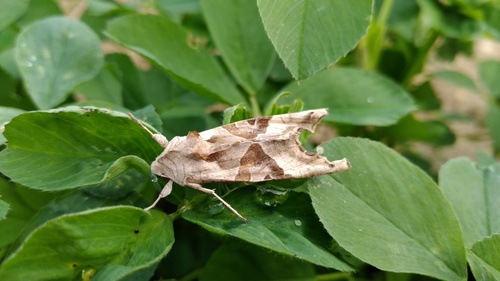
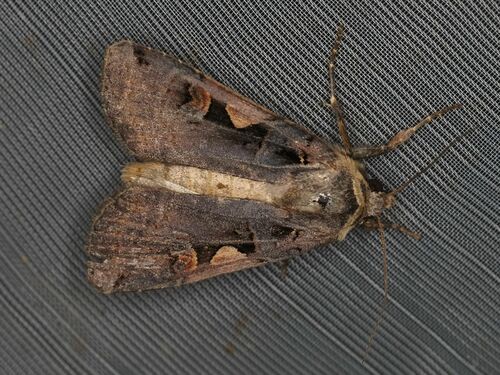
The closest relatives of the Knot Grass Moth that you can see in Brussels (family Noctuidae, Cutworm Moths and Allies) are Large Yellow Underwing (about 20%), Silver Υ (about 10%) and Angle Shades (about 10%), with each one's daily chance of a sighting.

Where does the Knot Grass Moth sighting chance come from?

GBIF citizen-science records

It is estimated from how often the Knot Grass Moth is recorded against all the insects logged in Brussels (10 verified sightings), calibrated against known sighting rates. Figures are rounded to the nearest 10% because citizen-science data supports honest approximations, not decimals, and months with records from fewer than five people show "—". How it works.

← Back to Brussels