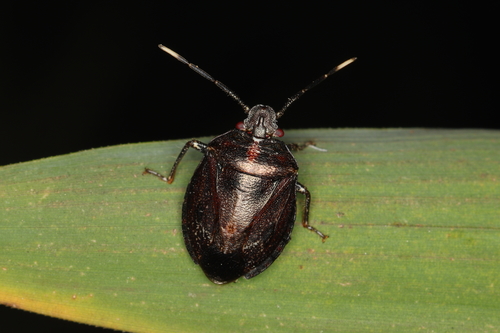
Hairy Darkling Beetle

Hairy Darkling Beetle

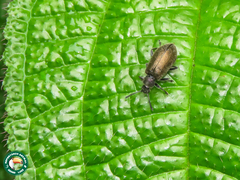
Lagria villosa

Daily sighting probability ~10% · With luck
at Campo Grande

In 3 days ~30% in a week ~60%

5 Verified sightings at Campo Grande
79 In all 6 parks From 2019 to 2026
February Best month
☀️ Diurnal When it's spotted

About the Hairy Darkling Beetle

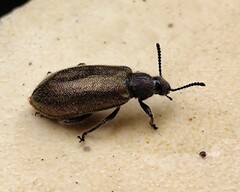
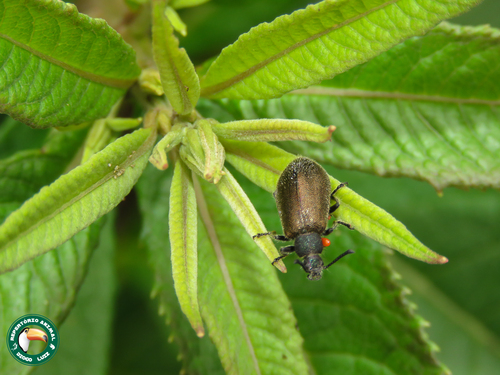
Lagria villosa is a Tenebrionidae beetle of tropical and subtropical African origin which is invasive in South America. The larva as well as the adult feed off a large variety of crops, among them sorghum, ananas, bananas, coffee, potatoes, corn and peach. It also transmits several bacterial pathogens of the genera Fusarium and Pseudomonas, and is considered a significant crop pest.

The first findings outside of Africa were in Brazil (1976), and the insects are now present in large areas of Brazil, Bolivia, Paraguay and northern Argentina. The first recorded specimen in Europe was found in Finland in 2020, in a box of table grapes shipped from Brazil. L. villosa can be easily distinguished from all European Lagria species by two features: In L. villosa, the integuments are dark with purple-green metallic reflections; other European species have brown to black integuments. Also, the L. villosa elytra has copper and golden colors, the European's elytra is pale yellow to black-brown.

The beetles live in symbiosis with a strain of the Burkholderia gladioli bacterium, which produces a polyketide that protects the beetle's eggs against fungal and also bacterial infections. Under controlled laboratory conditions, the symbionts defend the beetle's eggs from fungal infections while present on the egg surface during vertical transmission.The substance, lagriamide, is structurally similar to bistramides like bistramide A, which have similar defensive functions in marine tunicates. Wikipedia →
Global Distribution

Parks Where Found

# Park Country Daily sighting probability
1 Serra dos Órgãos National Park 🇧🇷 Brazil
~20%
2 Iguazú National Park 🇦🇷 Argentina
~10%
3 Iguaçu National Park 🇧🇷 Brazil
~10%
4 Tijuca National Park 🇧🇷 Brazil
~10%
5 Addo Elephant National Park 🇿🇦 South Africa
~10%
6 Table Mountain National Park 🇿🇦 South Africa
<5%

Cities Where Found

# City Country Daily sighting probability
1 Curitiba 🇧🇷 Brazil
~20%
2 Santa Cruz de la Sierra 🇧🇴 Bolivia
~20%
3 Niterói 🇧🇷 Brazil
~20%
4 Belo Horizonte 🇧🇷 Brazil
~20%
5 Brasilia 🇧🇷 Brazil
~20%
6 Campinas 🇧🇷 Brazil
~20%
7 Cordoba 🇦🇷 Argentina
~10%
8 Goiânia 🇧🇷 Brazil
~10%
9 Porto Alegre 🇧🇷 Brazil
~10%
10 São Paulo 🇧🇷 Brazil
~10%

Before you go

What are the chances of seeing a Hairy Darkling Beetle in Campo Grande?

With luck

About 10% of wildlife watchers report a Hairy Darkling Beetle sighting in Campo Grande on a given day, based on 5 verified sightings from GBIF citizen-science data. It is the 11th most-seen of the 21 insects we can rate there. Over three days the chance rises to about 30%, and over a week to about 60%, if each day is a fresh chance.

When is the best time to see a Hairy Darkling Beetle in Campo Grande?

February

In that month about 30% of wildlife watchers report a Hairy Darkling Beetle in Campo Grande on a given day, against under 5% in March–April, June, August and November–January, the lowest months.

What time of day is best to see a Hairy Darkling Beetle?

Between 10 am and 1 pm

Across all the parks we cover, that three-hour window holds the most Hairy Darkling Beetle sightings with a recorded time, and nearly all of them come between 6 am and 6 pm: it is a daytime animal.

Is Campo Grande the best place to see a Hairy Darkling Beetle?

11th of 14

Of the 14 cities where we can rate Hairy Darkling Beetle sightings, Campo Grande ranks 11th at about 10%. The best odds are in Curitiba (Brazil, about 20%), Santa Cruz de la Sierra (Bolivia, about 20%) and Niterói (Brazil, about 20%).

Which relatives of the Hairy Darkling Beetle live in Campo Grande?

Same order: Coleoptera

The closest relatives of the Hairy Darkling Beetle that you can see in Campo Grande (order Coleoptera, Beetles) are Spotless Lady Beetle (about 10%) and Rutela lineola (about 10%), with each one's daily chance of a sighting.

Where does the Hairy Darkling Beetle sighting chance come from?

GBIF citizen-science records

It is estimated from how often the Hairy Darkling Beetle is recorded against all the insects logged in Campo Grande (5 verified sightings), calibrated against known sighting rates. Figures are rounded to the nearest 10% because citizen-science data supports honest approximations, not decimals, and months with records from fewer than five people show "—". How it works.

← Back to Campo Grande