Lemon Migrant

Lemon Migrant

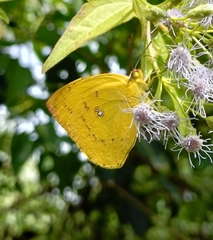
Catopsilia pomona

Daily sighting probability ~20% · Possible
at Chattogram

In 3 days ~50% in a week ~80%

6 Verified sightings at Chattogram
173 In all 13 parks From 2019 to 2026
March Best month
☀️ Diurnal When it's spotted

About the Lemon Migrant

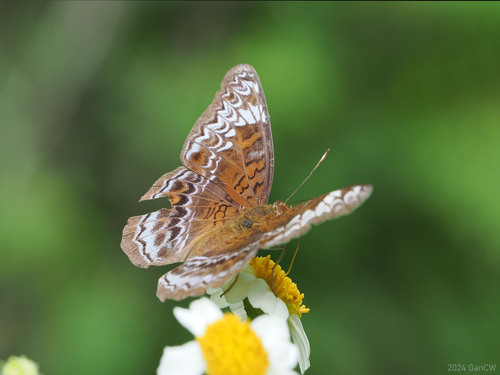
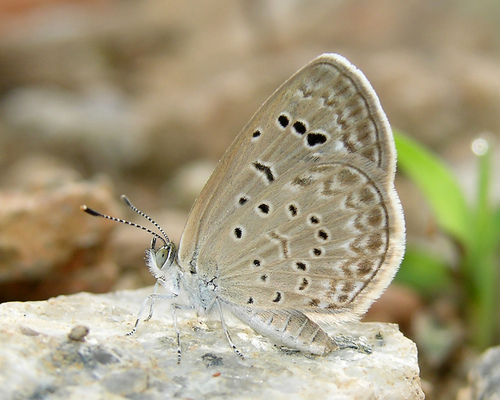
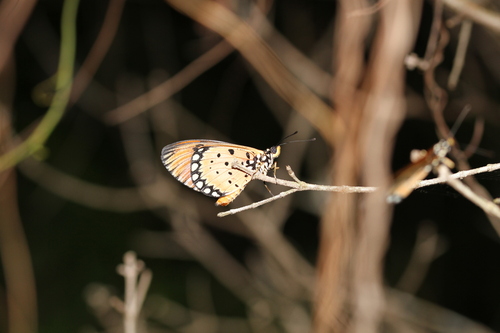
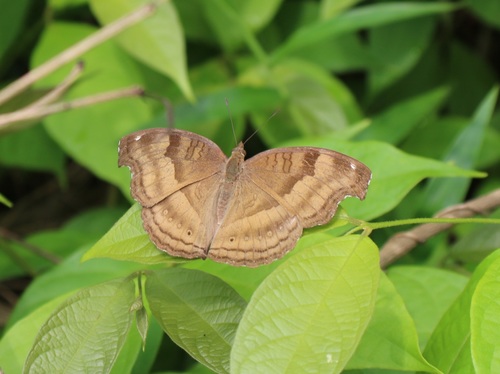
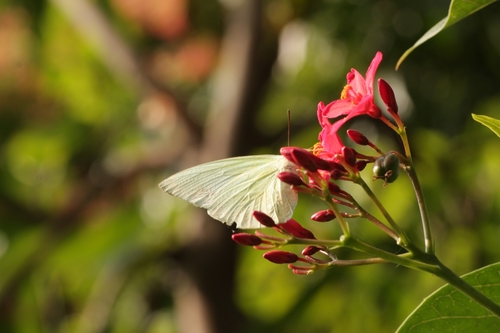
Catopsilia pomona, the common emigrant or lemon emigrant, is a medium-sized pierid butterfly found in Asia and parts of Australia. The species gets its name from its habit of migration. Some early authors considered them as two distinct species Catopsilia crocale and Catopsilia pomona.

The species has pale and dark morphs in Australia. The form crocale has the antennae black and the form pomona has the antennae pinkish or red. The development of these forms has been linked to photoperiod and temperature during growth.

Quoted from Bingham, C. T. (1907) The Fauna of British India, Including Ceylon and Burma: Butterflies volume 2. "The upperside of the male is chalky-white, sometimes with a more or less broad and clearly defined basal sulphur-yellow area on both fore and hind wings; this sulphur-yellow colour is at times diffused over the whole surface of the wings, though generally it becomes paler towards the terminal margins. For the fore wing, the whole, or sometimes only the apical half, of the costa narrowly black, this color widened out irregularly at the apex; termen widely black at the apex, the colour narrowed posteriorly. This border in some specimens... Wikipedia →
Global Distribution

Parks Where Found

# Park Country Daily sighting probability
1 Cuc Phuong National Park 🇻🇳 Vietnam
~40%
2 Bandhavgarh National Park 🇮🇳 India
~30%
3 Nagarhole National Park 🇮🇳 India
~20%
4 Periyar National Park 🇮🇳 India
~20%
5 Kanha National Park 🇮🇳 India
~20%
6 Cat Tien National Park 🇻🇳 Vietnam
~20%
7 Yala National Park 🇱🇰 Sri Lanka
~20%
8 Khao Yai National Park 🇹🇭 Thailand
~10%
9 Kaeng Krachan National Park 🇹🇭 Thailand
~10%
10 Gunung Leuser National Park 🇮🇩 Indonesia
~10%
11 Taroko National Park 🇹🇼 Taiwan
~10%
12 Springbrook National Park 🇦🇺 Australia
~10%
13 Daintree National Park 🇦🇺 Australia
~10%

Cities Where Found

# City Country Daily sighting probability
1 Salem 🇮🇳 India
~50%
2 Hanoi 🇻🇳 Vietnam
~40%
3 Indore 🇮🇳 India
~40%
4 Pune 🇮🇳 India
~40%
5 Raipur 🇮🇳 India
~40%
6 Nashik 🇮🇳 India
~40%
7 Jabalpur 🇮🇳 India
~30%
8 Mumbai 🇮🇳 India
~30%
9 Surat 🇮🇳 India
~30%
10 Hyderabad 🇮🇳 India
~30%

Before you go

What are the chances of seeing a Lemon Migrant in Chattogram?

Possible

About 20% of wildlife watchers report a Lemon Migrant sighting in Chattogram on a given day, based on 6 verified sightings from GBIF citizen-science data. It is the 21st most-seen of the 35 insects we can rate there. Over three days the chance rises to about 50%, and over a week to about 80%, if each day is a fresh chance.

When is the best time to see a Lemon Migrant in Chattogram?

March

In that month about 40% of wildlife watchers report a Lemon Migrant in Chattogram on a given day, against under 5% in April and August–February, the lowest months. That is one of Chattogram's driest months, with about 40 mm of rain against 780 mm in July.

What time of day is best to see a Lemon Migrant?

Between 10 am and 1 pm

Across all the parks we cover, that three-hour window holds the most Lemon Migrant sightings with a recorded time, and about 9 in 10 of them come between 6 am and 6 pm: it is a daytime animal.

Is Chattogram the best place to see a Lemon Migrant?

45th of 64

Of the 64 cities where we can rate Lemon Migrant sightings, Chattogram ranks 45th at about 20%. The best odds are in Salem (India, about 50%), Hanoi (Vietnam, about 40%) and Indore (India, about 40%).

Where does the Lemon Migrant sighting chance come from?

GBIF citizen-science records

It is estimated from how often the Lemon Migrant is recorded against all the insects logged in Chattogram (6 verified sightings), calibrated against known sighting rates. Figures are rounded to the nearest 10% because citizen-science data supports honest approximations, not decimals, and months with records from fewer than five people show "—". How it works.

← Back to Chattogram