About the Oak Marble Gall Wasp
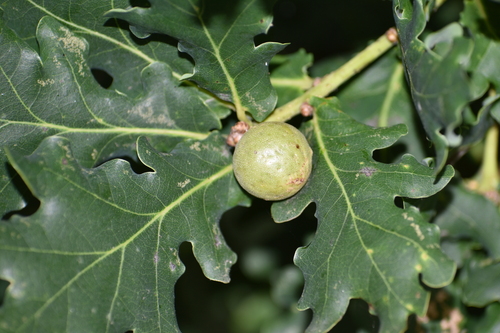
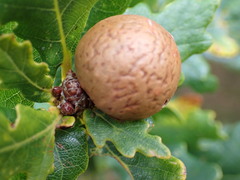
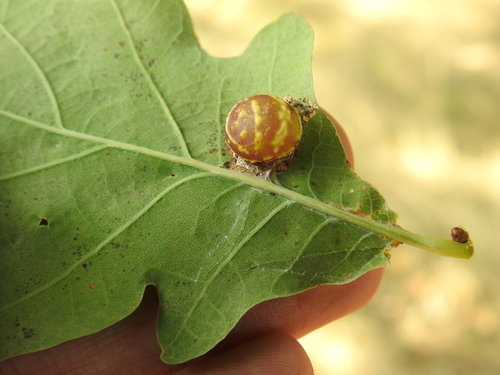
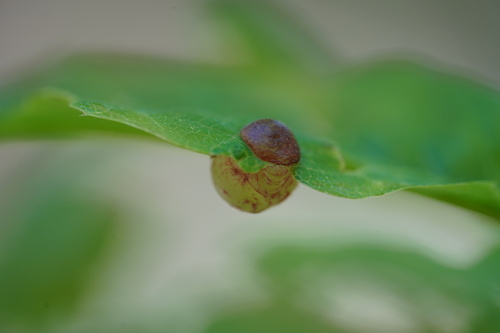
Andricus kollari, also known as the marble gall wasp, is a species of wasp which causes the formation of marble galls on oak trees. Synonyms for the species include Cynips kollari, Andricus quercusgemmae, A. minor, A. indigenus and A. circulans.
Adult Andricus kollari are dark brown, and about 1.5–2.0 millimetres (0.059–0.079 in) in length. It has alternating sexual and asexual generations, each often taking two years to complete. Like all gall wasps, it causes the formation of parasitic galls on trees in which it lays its larvae.
In May or June, a sexual female lays her eggs in the developing buds of susceptible oak trees using her ovipositor. Chemicals produced by both the adult and developing wasps cause the formation of a gall. Pedunculate oak (Quercus robur), sessile oak (Q. petraea) and the hybrid Quercus × rosacea can all be parasitized. The host trees are often immature or retarded specimens; galls are rarer on older, healthier trees. The Turkey oak (Q. cerris), introduced into Britain in 1735, is required for the completion of the wasp's life cycle. The oak marble gall is frequently conflated with the oak apple gall, caused by another gall wasp, Biorhiza... Wikipedia →