Great Purple Hairstreak

Great Purple Hairstreak

Atlides halesus

Daily sighting probability ~10% · With luck
at Dallas

In 3 days ~20% in a week ~30%

96 Verified sightings at Dallas
282 In all 8 parks From 2019 to 2026
October Best month
☀️ Diurnal When it's spotted

About the Great Purple Hairstreak

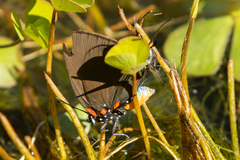
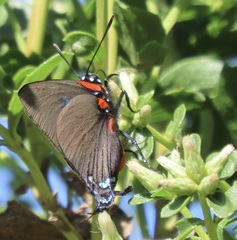
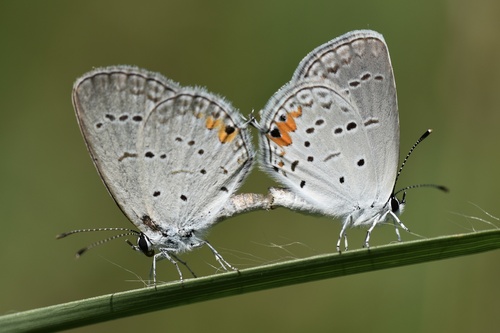
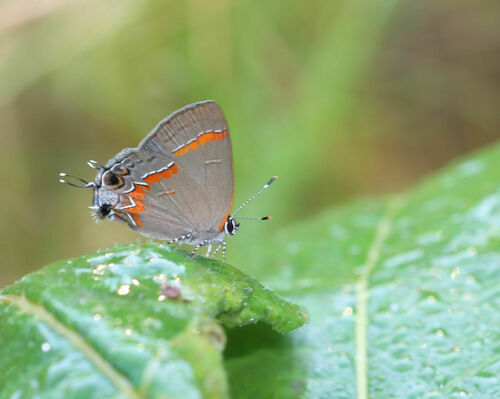
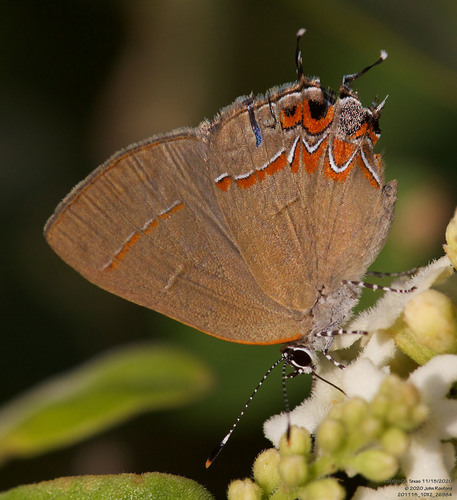
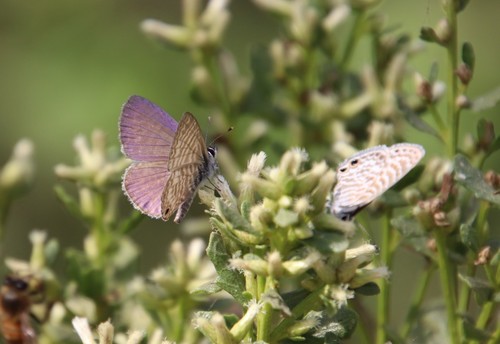
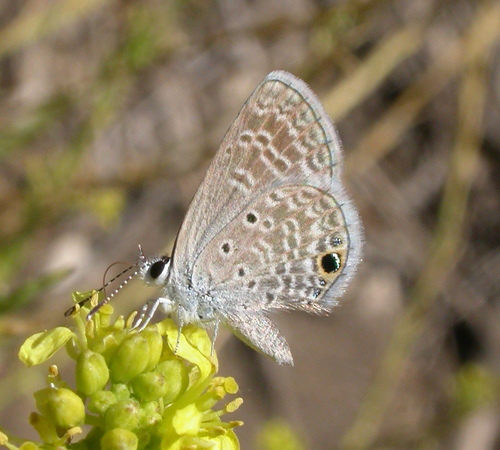
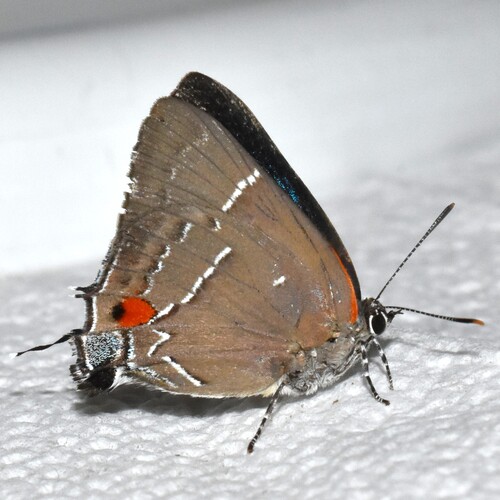
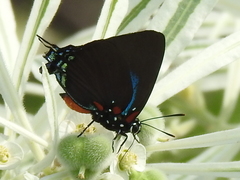
The great purple hairstreak (Atlides halesus), also called the great blue hairstreak, is a common gossamer-winged butterfly species in parts of the United States. It is actually a Neotropical species; its North American range only includes the warm-temperate and subtropical parts of that continent, and it ranges southwards almost to the Isthmus of Panama. The type specimen, however, was shipped to Europe from the Colony of Virginia, probably around the time of the United States Declaration of Independence.

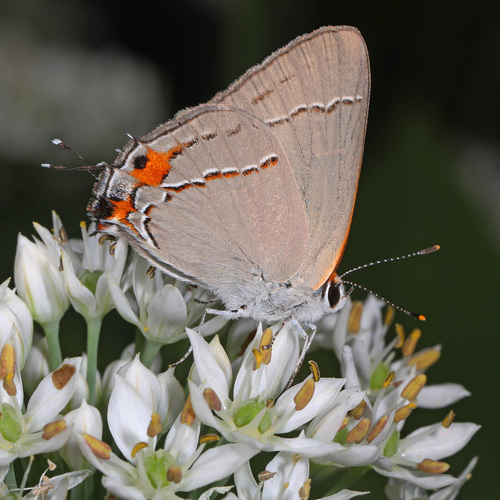
The common names refer to the butterfly's two main colors – dusky purple on the underside, and iridescent blue above. Particularly the males are very colorful in flight – brilliant blue and velvety black, with bright red and golden markings – but when sitting down they show their inconspicuous dusky purple underside. On each hindwing, there are two tails, with one short and one long tail, lending itself to the name "hairstreak". Several subspecies are recognized.

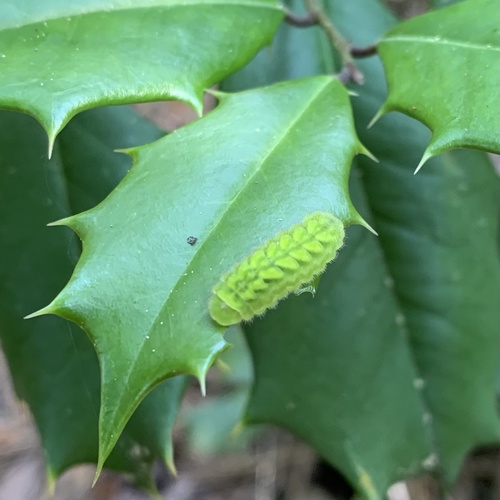
Its caterpillar larvae feed on the mistletoe genus Phoradendron. The wingspan on the adult butterfly ranges from 1.25 to 1.5 inches. Despite its common name "great purple hairstreak", this butterfly does... Wikipedia →
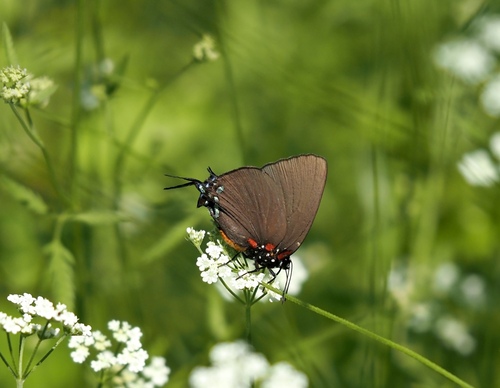
Global Distribution

Parks Where Found

# Park Country Daily sighting probability
1 Joshua Tree National Park 🇺🇸 United States
~30%
2 Guadalupe Mountains National Park 🇺🇸 United States
~20%
3 Saguaro National Park 🇺🇸 United States
~10%
4 Big Bend National Park 🇺🇸 United States
~10%
5 Bahía de Loreto National Park 🇲🇽 Mexico
~10%
6 Death Valley National Park 🇺🇸 United States
~10%
7 Merritt Island National Wildlife Refuge 🇺🇸 United States
~10%
8 Yosemite National Park 🇺🇸 United States
<5%

Cities Where Found

# City Country Daily sighting probability
1 Austin 🇺🇸 United States
~10%
2 San Antonio 🇺🇸 United States
~10%
3 Dallas 🇺🇸 United States
~10%
4 Las Vegas 🇺🇸 United States
<5%
5 Orlando 🇺🇸 United States
<5%
6 Sacramento 🇺🇸 United States
<5%
7 Phoenix 🇺🇸 United States
<5%
8 Monterrey 🇲🇽 México
<5%
9 Houston 🇺🇸 United States
<5%
10 San Francisco 🇺🇸 United States
<5%

Before you go

What are the chances of seeing a Great Purple Hairstreak in Dallas?

With luck

About 10% of wildlife watchers report a Great Purple Hairstreak sighting in Dallas on a given day, based on 96 verified sightings from GBIF citizen-science data. It is the 234th most-seen of the 1412 insects we can rate there. Over three days the chance rises to about 20%, and over a week to about 30%, if each day is a fresh chance.

When is the best time to see a Great Purple Hairstreak in Dallas?

May and September–December

In those months about 10% of wildlife watchers report a Great Purple Hairstreak in Dallas on a given day, against under 5% in January–April and June–August, the lowest months.

What time of day is best to see a Great Purple Hairstreak?

Between 10 am and 1 pm

Across all the parks we cover, that three-hour window holds the most Great Purple Hairstreak sightings with a recorded time, and about 9 in 10 of them come between 6 am and 6 pm: it is a daytime animal.

Is Dallas the best place to see a Great Purple Hairstreak?

Among the best

Of the 10 cities where we can rate Great Purple Hairstreak sightings, Dallas ranks 3rd at about 10%, level with the leaders once rounded. The best odds are in Austin (United States, about 10%) and San Antonio (United States, about 10%).

Which relatives of the Great Purple Hairstreak live in Dallas?

Same family: Lycaenidae

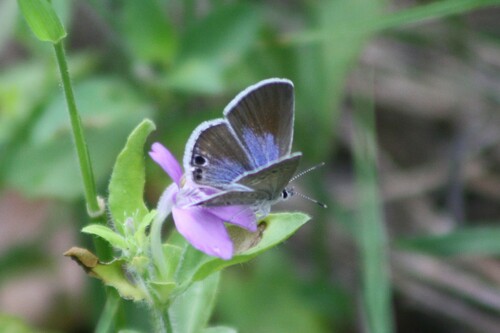
The closest relatives of the Great Purple Hairstreak that you can see in Dallas (family Lycaenidae, Gossamer-winged Butterflies) are Gray Hairstreak (about 30%), Reakirt's Blue (about 10%) and Elkalyce comyntas (about 10%), with each one's daily chance of a sighting.

Where does the Great Purple Hairstreak sighting chance come from?

GBIF citizen-science records

It is estimated from how often the Great Purple Hairstreak is recorded against all the insects logged in Dallas (96 verified sightings), calibrated against known sighting rates. Figures are rounded to the nearest 10% because citizen-science data supports honest approximations, not decimals, and months with records from fewer than five people show "—". How it works.

← Back to Dallas