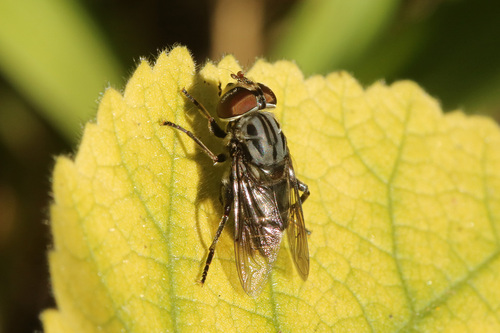
About the Transverse-Banded Flower Fly
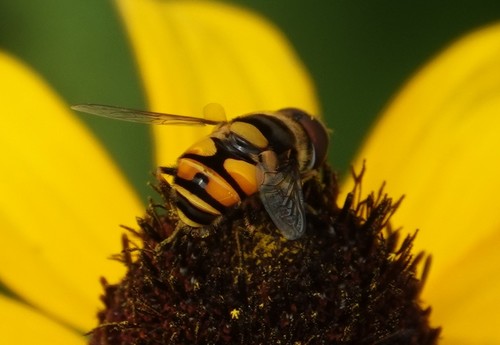
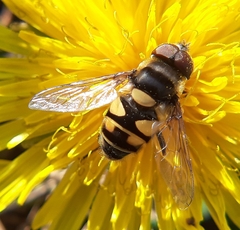
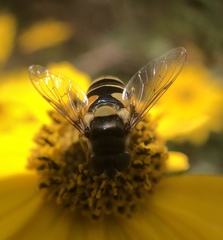
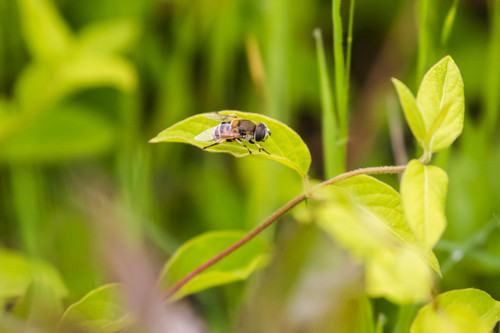
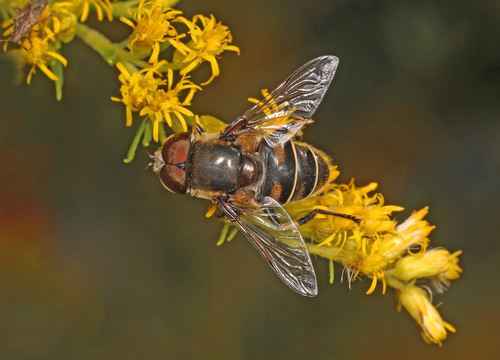
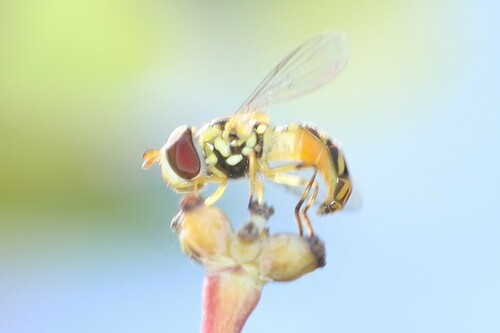
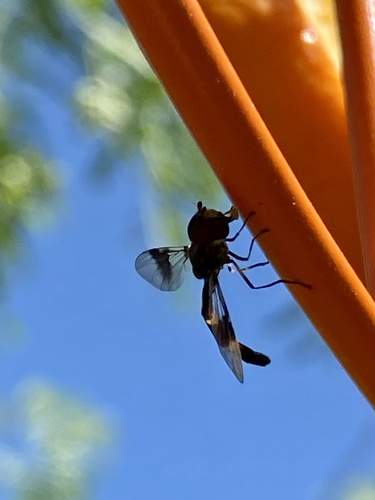
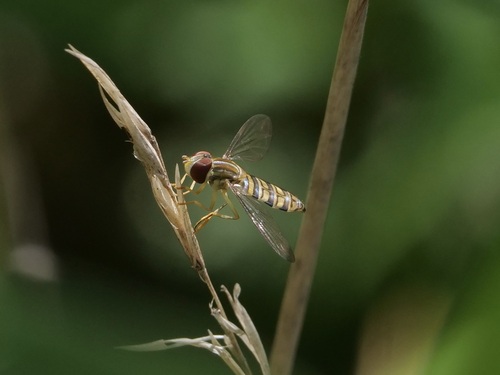
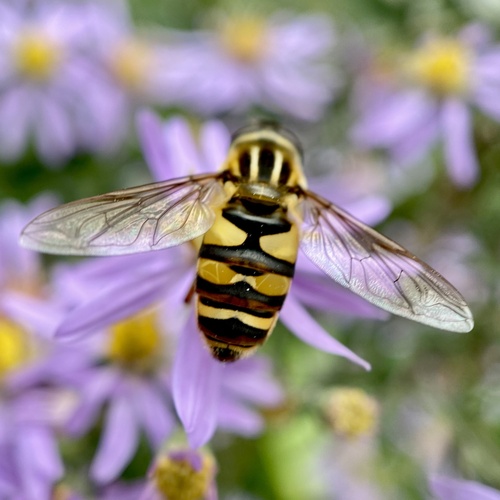
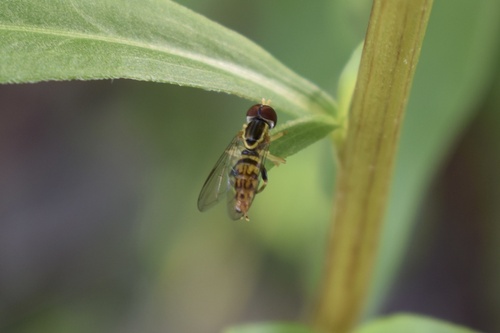
Eristalis transversa, the transverse banded drone fly, is a common species of hoverfly first officially described by Wiedemann in 1830. Hoverflies get their names from the ability to remain nearly motionless while in flight. The adults are also known as flower flies for they are commonly found around and on flowers, from which they get both energy-giving nectar and protein-rich pollen. The larvae are rat-tailed type but larvae of this specific species has not been reported.
external map Species reported from North America east of the Mississippi River and into Southeastern Canada. For terms see Morphology of Diptera. external images Size 7–12 mm (0.28–0.47 in) Head The eyes are pilose on upper half and broadly contiguous in the male. The front is black, shining in the middle, black pile on the sides. The female also with black pile, narrowed above but on the lower two-thirds reddish pollinose. The antennae are reddish yellow. The basal portion of arista sparsely plumose. The sides of the face covered with dense whitish pollen and whitish pile, the median stripe (tubercle) and cheeks are shining black.
Thorax The notum is opaque black, with three... Wikipedia →