About the Tiger Bee Fly
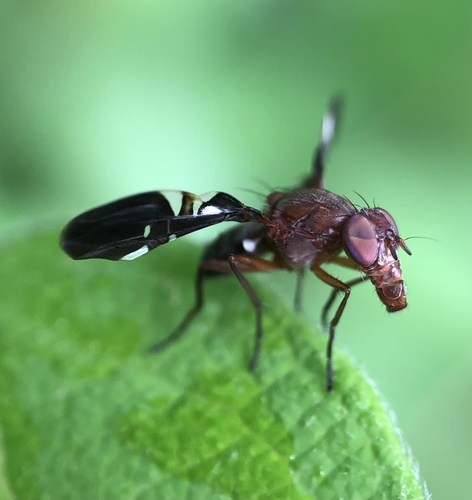
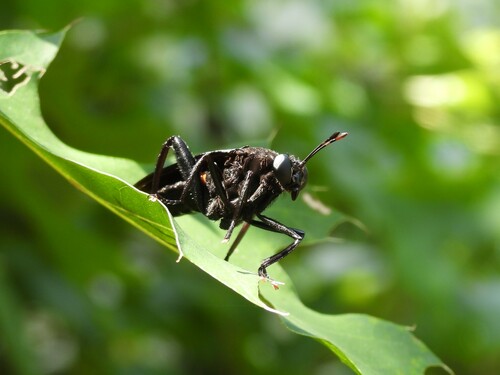
Xenox tigrinus, commonly known as the tiger bee fly, is a species of bee fly in the family Bombyliidae. It is native to eastern North America and is found across the eastern United States and southern Ontario. The species is recognized by its large size and distinctive dark wing markings. Its larvae are parasitoids of carpenter bees, particularly the eastern carpenter bee, Xylocopa virginica.
The species was described by Charles De Geer in 1776 as Nemotelus tigrinus and was later classified as Anthrax tigrinus. It is currently placed in the genus Xenox. The common name and specific epithet tigrinus refer to the species' tiger-like wing pattern.
Adults measure approximately 12–19 millimetres (0.47–0.75 in) in body length, excluding the wings, antennae, and legs. The body is predominantly black, while the transparent wings bear bold, irregular black markings that distinguish the species from other bee flies.
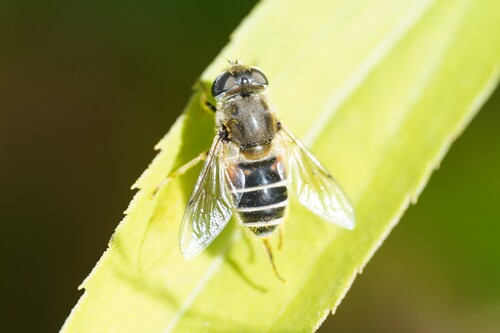
The tiger bee fly may initially be mistaken for a large bee because of its size, coloration, and hovering flight. Like other members of the order Diptera, however, it has only one functional pair of wings. Its bee-like appearance may discourage... Wikipedia →